

If you’ve ever stepped into a yoga studio and heard the word Vinyasa, you might have noticed a certain energy in the room—a rhythm that feels alive, almost like a dance guided by breath. The question many people ask is, “What is Vinyasa Yoga?”
To answer that is to enter a world where movement meets mindfulness, where every inhale and exhale becomes a path toward presence. Vinyasa Yoga is not just a form of exercise; it’s an experience—an elegant flow between postures that mirrors the natural rhythms of life itself.
In this in-depth guide, we’ll explore what makes Vinyasa so special, how it differs from other yoga styles, its history, its benefits, and how you can start your journey with confidence. This is Part 1 of a two-part exploration that will give you everything you need to understand and feel the essence of Vinyasa Yoga.
1. Understanding the Meaning of Vinyasa
Let’s start with the core question—what is Vinyasa Yoga? The term Vinyasa comes from Sanskrit, meaning “to place in a special way.” It refers to the alignment of movement and breath, where each motion is consciously linked to an inhalation or exhalation.
Unlike static yoga styles where you hold a pose for several breaths, Vinyasa is dynamic and continuous. The transitions between poses are as important as the poses themselves. It feels like a dance—flowing, smooth, and full of grace.
Every inhale lifts you into expansion; every exhale grounds you into stability. This rhythm creates a moving meditation—one that strengthens the body, focuses the mind, and opens the heart.
2. The Philosophy Behind Vinyasa
At its core, Vinyasa Yoga embodies impermanence. Every pose, like every moment, flows into the next. You can’t cling to one posture just as you can’t hold on to one moment in time. This makes Vinyasa not only a physical practice but a profound life lesson.
The flow reminds us to embrace change, to let go of control, and to move forward with awareness. The breath becomes the teacher, guiding you to stay grounded even when transitions feel uncertain—on the mat and off.
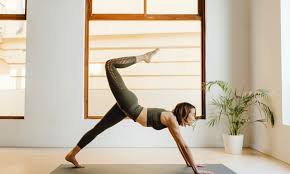
Vinyasa’s essence is mindfulness in motion. It encourages practitioners to surrender to the present, accepting every movement as part of a greater flow.
3. A Brief History of Vinyasa Yoga
While modern Vinyasa classes look contemporary, their roots go deep. The concept of linking breath and movement originates from ancient yoga traditions.
In the early 20th century, the legendary teacher T. Krishnamacharya developed a system of yoga that synchronized movement with breath, giving rise to Ashtanga Yoga—a structured and disciplined practice. From this foundation, Vinyasa Yoga emerged as a more flexible, creative interpretation.
Teachers began modifying sequences, allowing freedom and intuition in how poses flowed together. What remained constant was the rhythm of breath as the guiding force.
Today, Vinyasa has evolved into one of the most popular forms of yoga globally—beloved for its creativity, energy, and ability to unite strength, flexibility, and meditation.
4. The Essence of Flow
To truly understand What is Vinyasa Yoga, imagine a river. The river doesn’t resist the rocks in its path—it moves around them, adapting while maintaining flow. That’s what Vinyasa feels like on the mat.
Each sequence is like a current, pulling you deeper into awareness. You move with your breath, feeling your body awaken, your heart steady, and your thoughts soften.
There’s no rigidity—only movement, breath, and surrender. The flow teaches balance between effort and ease, strength and surrender, power and stillness.
5. Breath: The Heartbeat of Vinyasa
In Vinyasa, breath is everything. It’s what connects your mind to your body and transforms simple motion into meditation.
Each inhalation expands your body, inviting lightness. Each exhalation grounds you, releasing tension. When practiced mindfully, this rhythm awakens something deep—a sense of peace within motion.
The breathing technique used is often Ujjayi Pranayama, or “victorious breath.” It involves gently constricting the throat to create a soft, ocean-like sound. This keeps your attention anchored and your nervous system calm even through challenging sequences.
Through the breath, you learn control without force, patience without stagnation, and presence without distraction.
6. The Flow Structure: How a Vinyasa Class Unfolds
A typical Vinyasa Yoga class follows a structure designed to awaken, strengthen, and calm the body. While each class is unique, it often flows like this:
- Centering and Breathwork – Beginning in stillness, connecting to your breath and intention.
- Warm-Up Flows – Gentle stretches or Cat-Cow to prepare the spine and joints.
- Sun Salutations (Surya Namaskar) – The signature Vinyasa sequence that builds heat and sets rhythm.
- Standing Poses – Such as Warrior I, II, Triangle, or Chair Pose—developing strength and balance.
- Creative Flows – Linking poses into fluid transitions, each movement guided by breath.
- Seated and Floor Poses – Hip openers, forward folds, and gentle twists to release tension.
- Backbends and Inversions – Energizing and heart-opening postures for vitality.
- Savasana (Final Rest) – Complete stillness to absorb the benefits of the practice.
Each part of the sequence works in harmony—awakening body, refining focus, and ultimately cultivating inner peace.
7. Vinyasa and the Art of Transitions
In many yoga styles, transitions are often overlooked. In Vinyasa Yoga, transitions are the practice.
Moving from one pose to another with awareness is where mindfulness deepens. You learn to stay conscious not just at the destination, but through every movement that leads there.
This teaches resilience. It’s in the in-between spaces—the challenging shift from balance to surrender—that growth happens. Life, too, is a series of transitions, and Vinyasa helps us flow through them with grace.
8. The Emotional Journey Through Vinyasa
Many people begin yoga seeking physical strength or flexibility, but over time, Vinyasa Yoga transforms far more than the body—it reshapes the heart.
As you breathe and flow, emotional layers begin to lift. Movement releases stored tension and emotions, often revealing feelings long buried. You might find yourself tearing up during savasana or smiling unexpectedly mid-flow.
That’s the beauty of Vinyasa—it reconnects you with yourself. Every practice becomes a dialogue between your body and your soul, reminding you that healing doesn’t always happen in stillness—it can also happen in motion.
Vinyasa becomes your moving therapy—gentle yet powerful, physical yet deeply emotional.
9. The Physical Benefits of Vinyasa Yoga
Beyond emotional transformation, the physical benefits of Vinyasa Yoga are remarkable. Regular practice can:
- Improve flexibility and mobility
- Build strength in major muscle groups
- Boost cardiovascular health through dynamic movement
- Enhance posture and spinal alignment
- Detoxify the body through heat and breath
- Improve coordination and balance
Because it’s fluid, no two classes are the same—your body keeps learning, adapting, and growing stronger. Vinyasa’s continuous movement also keeps your heart rate elevated, blending strength training with endurance and mindfulness.
10. The Mental and Spiritual Benefits
Physically, Vinyasa strengthens your body. Mentally, it strengthens your focus. Spiritually, it deepens your connection to the present moment.
Each class is a chance to practice mindfulness—to let go of what you can’t control and stay anchored in what you can: your breath.
Over time, practitioners often report a greater sense of calm, better emotional regulation, and deeper empathy. Stress begins to fade, replaced by clarity and purpose.
Vinyasa is not just exercise; it’s meditation in motion. It’s a moving prayer—a celebration of breath, awareness, and life itself.
11. How to Begin Your Vinyasa Yoga Journey
Starting your Vinyasa Yoga practice doesn’t require perfection—it requires presence. The most beautiful part of yoga is that it meets you where you are, not where you think you should be.
Here’s how to begin your journey gracefully:
Step 1: Create Your Space
Find a quiet area where you can roll out your mat without distractions. You don’t need an elaborate setup—just a space that feels safe and sacred. Light a candle or play soft instrumental music to set a calming tone.
Step 2: Choose the Right Equipment
A good-quality yoga mat, comfortable clothing, and maybe a pair of yoga blocks or a strap can make your practice smoother. If you sweat easily, keep a towel and a water bottle nearby.
Step 3: Start with Breath
Before moving, sit quietly and focus on your breath. This helps ground your mind. Practice a few rounds of Ujjayi breathing—slow inhalations and exhalations through the nose with a gentle constriction in the throat.
Step 4: Begin with Simple Flows
If you’re new, start with Sun Salutation A (Surya Namaskar A)—the foundation of Vinyasa. This sequence links essential poses like Mountain, Forward Fold, Plank, Cobra, and Downward Dog through breath.
Here’s a simple beginner sequence:
| Step | Pose | Breath |
|---|---|---|
| 1 | Mountain Pose (Tadasana) | Inhale |
| 2 | Forward Fold (Uttanasana) | Exhale |
| 3 | Half Lift (Ardha Uttanasana) | Inhale |
| 4 | Plank | Exhale |
| 5 | Cobra (Bhujangasana) | Inhale |
| 6 | Downward-Facing Dog | Exhale |
| 7 | Step or jump to front | Inhale |
| 8 | Forward Fold | Exhale |
| 9 | Return to Mountain | Inhale |
Repeat this flow three to five times to build rhythm and connection.
12. Common Mistakes to Avoid in Vinyasa
While Vinyasa Yoga looks effortless, beginners often make mistakes that can hinder progress or lead to discomfort. Let’s address them gently:
- Holding the breath: Remember—breath is the foundation. Never sacrifice breath for the sake of movement.
- Rushing through transitions: Flow doesn’t mean fast. Move slowly and intentionally.
- Forcing flexibility: Respect your limits; yoga is not about touching your toes but about touching your awareness.
- Neglecting alignment: Engage your core and align your joints to protect yourself from injury.
- Skipping rest: Savasana is part of the practice, not an optional ending.
Each mistake is a teacher. Embrace them, learn from them, and flow forward with kindness.
13. Building a Consistent Practice
Consistency transforms curiosity into wisdom. The more you practice, the deeper your understanding grows—not only of yoga but of yourself.
Try to practice Vinyasa Yoga at least 3–5 times per week. It doesn’t have to be long—even 15 minutes of mindful movement counts. On busy days, focus on breathwork or a few sun salutations.
To stay consistent:
- Set a specific time each day—morning or evening.
- Keep your mat visible as a reminder.
- Track your progress in a journal.
- Celebrate small milestones—like your first full Chaturanga or your first calm savasana.
Remember: it’s not about perfection, but presence.
14. Emotional Healing Through Flow
Vinyasa is a mirror—it reflects what you carry inside. The way you move, breathe, and respond on the mat often mirrors how you handle life’s challenges.
When frustration arises during a difficult pose, it teaches patience. When your body feels heavy, it teaches surrender. When you finally find balance after many falls, it teaches resilience.
Through consistent practice, many yogis experience emotional release—tears, laughter, or deep calm. These moments are signs of healing, of energy shifting and old patterns dissolving.
Vinyasa gives you permission to feel—to let your body speak the emotions your mind cannot express.
15. The Science Behind Vinyasa Yoga
Modern research supports what yogis have felt for centuries. The physical, mental, and neurological benefits of Vinyasa Yoga are profound.
| Benefit | Explanation |
|---|---|
| Improved Heart Health | Continuous movement enhances circulation and heart rate. |
| Stress Reduction | Controlled breathing lowers cortisol levels and activates the parasympathetic nervous system. |
| Enhanced Focus | Mindful motion strengthens neural pathways linked to attention. |
| Better Sleep | Vinyasa’s relaxation effect helps regulate melatonin and improve sleep quality. |
| Emotional Stability | Regular practice balances hormones like serotonin and dopamine. |
Science is finally catching up to what ancient practitioners always knew: when body, breath, and mind move together, healing follows.
16. Exploring the Variations of Vinyasa
While the essence of Vinyasa remains the same, teachers often bring unique interpretations to the practice. You may encounter:
- Power Vinyasa: A vigorous, athletic style that builds strength and endurance.
- Gentle Vinyasa: Slower and more meditative, ideal for beginners or those recovering from injury.
- Slow Flow: Focuses on alignment and awareness in each transition.
- Creative Vinyasa: A free-flowing class where teachers design unique, artistic sequences.
- Vinyasa Krama: A traditional style rooted in Krishnamacharya’s teachings—structured yet deeply meditative.
No version is “better” than another. Each is simply a different melody of the same song—flow, breath, and awareness.
17. How Vinyasa Yoga Differs from Other Styles
People often ask: how is Vinyasa Yoga different from Hatha, Ashtanga, or Yin? Let’s compare briefly:
| Style | Description | Tempo |
|---|---|---|
| Hatha Yoga | Focuses on individual poses and alignment | Slow |
| Ashtanga Yoga | A fixed series of postures in a strict sequence | Fast, structured |
| Yin Yoga | Long, passive holds to release tension | Very slow |
| Vinyasa Yoga | Breath-linked, creative, flowing movement | Moderate to dynamic |
Vinyasa stands out for its flexibility. It allows teachers to adapt sequences to energy, theme, or intention. This makes it ideal for anyone seeking variety, creativity, and rhythm in their practice.
18. Bringing Vinyasa Off the Mat
True yoga doesn’t end when you roll up your mat. The real magic happens when you carry its lessons into your life.
Vinyasa teaches us:
- Adaptability: Just like transitions on the mat, life flows from one phase to another. Breathe and move through them.
- Awareness: Stay conscious in every action, no matter how small.
- Presence: The now is your home—every moment is a sacred posture.
- Balance: Between effort and ease lies harmony.
When traffic tests your patience, when uncertainty challenges your peace—remember your flow. Inhale calm, exhale resistance.
This is the ultimate Vinyasa: the graceful rhythm of living mindfully.
19. Finding the Right Teacher or Class
While you can start Vinyasa at home, having a skilled teacher can elevate your journey. A good teacher doesn’t just correct postures—they guide you to understand yourself through your practice.
Look for instructors who emphasize breath, alignment, and mindfulness over performance. Attend local studios or online classes, and explore different teachers until one resonates with your spirit.
Remember, yoga is a lifelong journey. A great teacher helps you fall in love with that process.
20. Building Your Own Home Vinyasa Practice
As your confidence grows, you may want to design your own flows. Start simple. Choose 5–7 poses and link them through breath.
Here’s a sample 20-minute home sequence:
| Phase | Poses | Duration |
|---|---|---|
| Warm-up | Cat-Cow, Downward Dog, Low Lunge | 5 minutes |
| Standing Flow | Warrior I, Warrior II, Triangle | 8 minutes |
| Balance | Tree Pose, Half Moon | 4 minutes |
| Floor Work | Pigeon, Forward Fold | 2 minutes |
| Rest | Savasana | 1 minute |
End with gratitude. Whisper a quiet thank you—to your body, your breath, and the present moment.
21. The Emotional Power of Flow
Each Vinyasa sequence tells a story. Some days your flow will be powerful and full of energy; other days, soft and introspective. Both are beautiful.
The emotional depth of Vinyasa comes from its surrender—its reminder that movement doesn’t always need a destination. Sometimes, the act of breathing and moving consciously is enough to bring peace to the heart.
As you deepen your practice, you begin to feel emotions move through you—not as storms but as waves, temporary yet powerful.
That’s the healing rhythm of Vinyasa.
22. Vinyasa Yoga as a Lifelong Journey
Vinyasa Yoga isn’t something you master in weeks or months—it’s a lifelong dance. As your body changes, so does your flow. As your mind evolves, your breath follows a new rhythm.
It’s a journey that mirrors life itself: unpredictable, beautiful, and full of movement.
The deeper you go, the more you realize—Vinyasa is not about perfect poses or choreography. It’s about connection. To your body, to your breath, to your life.
23. Final Thoughts: Flow Like Water, Live Like Breath
So, what is Vinyasa Yoga? It’s not just a style of yoga—it’s an invitation to live fully, to move gracefully through the changing tides of life.
It teaches strength through surrender, focus through flow, and peace through presence. When practiced with heart, it becomes a meditation in motion—a reminder that every breath is a chance to begin again.
Every class, every inhale, every exhale carries the same truth: you are the flow, not separate from it.
Let your breath lead. Let your heart guide. And as you roll up your mat after each session, remember—the real Vinyasa begins when you step back into the rhythm of your life.