

There’s something quietly powerful about a person who stands tall — shoulders relaxed, head high, back straight, and a calm presence that radiates confidence. Good posture isn’t just about appearances; it reflects how you feel within yourself. In our modern world, where hours are spent hunched over phones, computers, or car steering wheels, posture problems have become all too common. The body slumps, the spine curves, and fatigue takes over. But here’s the good news — with awareness, breath, and the mindful movement of yoga, you can realign both your body and your inner energy.
Yoga for improving posture isn’t just physical exercise. It’s a journey of rediscovery — a chance to reconnect with your natural balance and reclaim strength in every part of your being. This guide will take you through the beauty of how yoga heals poor posture, strengthens the spine, and helps you carry yourself with ease and grace.
Understanding the Importance of Posture
Before diving into the poses, it’s important to understand why posture matters so much. Good posture is more than just standing straight — it’s the foundation for a healthy body and mind. When your spine is aligned, your body functions optimally. Your lungs expand fully, your digestion improves, and your blood circulates freely. A well-aligned posture even impacts your mental health — it fosters confidence, focus, and emotional balance.
Poor posture, on the other hand, can create long-term issues. Constant slouching compresses the spine, leading to back pain, tight shoulders, headaches, and fatigue. Over time, your muscles adapt to these unhealthy patterns, making it harder to stand upright naturally. Yoga helps reverse this cycle by strengthening weak muscles, stretching tight areas, and restoring harmony throughout the body.
How Yoga Works to Improve Posture
The magic of yoga for improving posture lies in its holistic approach. It targets both the physical and mental aspects of misalignment. Every yoga pose (asana) is designed to lengthen the spine, open the chest, and engage the core — all essential for maintaining proper alignment.
Here’s how yoga works step by step:
- Strengthening the Core and Back Muscles – Yoga builds the deep muscles that support the spine. When your core is strong, your body naturally maintains an upright posture without strain.
- Increasing Flexibility – Tight hamstrings, hip flexors, and shoulders can pull the body out of alignment. Yoga stretches these muscles, allowing for easier, pain-free movement.
- Enhancing Body Awareness – Yoga helps you notice your posture throughout the day. You begin to catch yourself slouching and adjust without conscious effort.
- Promoting Balance – Many yoga poses develop balance, which keeps the spine steady and teaches the body to distribute weight evenly.
- Improving Breathing – Deep, mindful breathing expands the lungs and chest, naturally lifting the torso and supporting good posture.
Through consistent practice, these effects blend into your daily habits, helping you move with grace and confidence in every aspect of life.
The Emotional Connection Between Posture and Confidence
It’s often said that the way we hold our body reflects how we feel inside. When we feel tired, defeated, or insecure, our shoulders droop, our gaze lowers, and our breath becomes shallow. But when we stand tall, we instantly feel more open, strong, and positive.
Yoga for improving posture doesn’t just correct your stance — it rebuilds your self-assurance. Every time you rise from a pose, lift your chest, or expand your lungs with a deep breath, you’re reminding yourself that you are capable and grounded. A healthy posture mirrors inner stability, and that energy naturally influences how others perceive you.
This emotional aspect of yoga is what makes it so powerful. As your body realigns, your mind follows — and confidence becomes not something you fake, but something you feel deeply.
The Most Common Postural Problems and Their Causes
Before learning which yoga poses to practice, let’s look at a few common postural issues and how they develop:
| Postural Issue | Description | Common Causes |
|---|---|---|
| Forward Head Posture | The head juts forward, straining the neck | Long screen time, poor workstation setup |
| Rounded Shoulders | Upper back curves, chest collapses inward | Weak upper back, tight chest muscles |
| Slouched Back | Lower spine curves too much or too little | Sitting for long hours, weak core |
| Anterior Pelvic Tilt | Hips tilt forward, causing lower back arch | Tight hip flexors, weak glutes and abs |
| Uneven Shoulders | One shoulder higher than the other | Muscle imbalance, carrying weight on one side |
Each of these imbalances can be corrected with mindful and consistent yoga for improving posture, as long as you focus on both strengthening and releasing the right muscles.
Foundational Yoga Poses to Correct Posture
Now, let’s explore the foundational yoga poses that can help you rebuild posture from the ground up. These poses are not just stretches — they are powerful movements that teach your body balance, alignment, and awareness.
1. Mountain Pose (Tadasana)
This is the foundation of all standing poses. It looks simple, but it teaches awareness of how you stand and carry your weight.
How to do it:
- Stand tall with feet hip-width apart.
- Ground your feet evenly through the heels and toes.
- Engage your thighs and lift your kneecaps.
- Draw your belly in slightly, open your chest, and let your shoulders relax down.
- Keep your chin parallel to the ground.
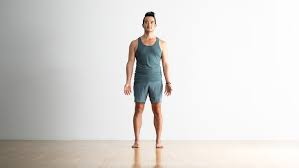
This pose helps you realign the entire body from the feet to the crown of your head. It’s a daily reminder to stand tall and proud.
2. Cat-Cow Pose (Marjaryasana-Bitilasana)
This gentle flow improves spinal mobility and brings awareness to the natural curve of your spine.
How to do it:
- Begin on hands and knees, with wrists under shoulders and knees under hips.
- Inhale, arch your back and lift your chest for Cow Pose.
- Exhale, round your spine and tuck your chin for Cat Pose.
- Move slowly with each breath, focusing on the spine’s movement.
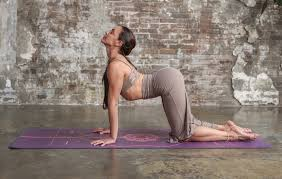
This movement relieves tension, strengthens the back, and enhances flexibility — all essential for maintaining healthy posture.
3. Downward-Facing Dog (Adho Mukha Svanasana)
A full-body pose that lengthens the spine and strengthens the shoulders, core, and legs.
How to do it:
- Start on all fours, then lift your hips up and back to form an inverted “V” shape.
- Press your palms firmly into the mat, keeping your arms straight.
- Try to straighten your legs and bring your heels toward the floor.
- Relax your neck and gaze toward your legs.
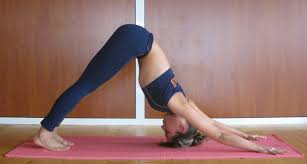
This pose decompresses the spine and opens tight shoulders and hamstrings.
4. Cobra Pose (Bhujangasana)
Cobra Pose strengthens the back muscles and counteracts slouching by opening the chest.
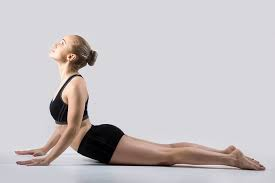
How to do it:
- Lie face down with palms under your shoulders.
- Press into your hands and lift your chest while keeping your elbows slightly bent.
- Keep your lower ribs on the mat and draw your shoulder blades together.
- Breathe deeply, feeling your spine elongate.
Practicing Cobra Pose daily can reverse the hunched-back posture caused by long sitting hours.
5. Bridge Pose (Setu Bandhasana)
Bridge Pose strengthens the glutes, back, and legs, while also opening the chest and shoulders.
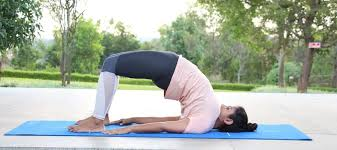
How to do it:
- Lie on your back with knees bent and feet flat on the floor.
- Press into your feet to lift your hips.
- Interlace your hands under your body and draw your shoulders closer together.
- Hold for a few breaths before lowering down.
This pose builds strength in the core and lower back, supporting upright posture naturally.
6. Plank Pose
A strong core is vital for good posture, and Plank Pose is one of the best for developing it.
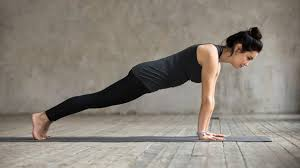
How to do it:
- From a push-up position, align your shoulders over your wrists.
- Keep your body in a straight line from head to heels.
- Engage your core and press your heels back.
This pose not only tones your core but also strengthens your shoulders and stabilizers — helping you hold yourself tall.
The Role of Breath and Awareness in Postural Yoga
It’s impossible to talk about yoga for improving posture without mentioning the breath. The breath is your guide — it reminds you to slow down, release tension, and connect with your body. As you move through each pose, pay attention to your breathing rhythm. When you inhale deeply, your spine naturally lengthens. When you exhale, your muscles relax and open up.
Practicing mindful breathing, or Pranayama, during your yoga routine will amplify the results. It oxygenates the muscles, calms the nervous system, and teaches you to stay grounded — both physically and mentally.
Building Consistency and Awareness Off the Mat
The true transformation from yoga for improving posture happens when you carry its lessons into your daily life. Notice how you sit at your desk, how you walk, and how you hold your phone. Small adjustments throughout the day can make a huge difference over time.
Try setting posture reminders — stand up every hour, roll your shoulders back, or take a few deep breaths to realign. Over time, these habits become second nature.
: The Deeper Connection Between Yoga and Postural Harmony
When you commit to yoga for improving posture, it becomes more than a series of stretches; it transforms into a dialogue between your body and your mind. The way you sit, stand, or walk is deeply influenced by your inner state. Yoga nurtures this connection, reminding you that posture isn’t just physical — it’s emotional and psychological too. Standing tall reflects self-belief, confidence, and calm. The body mirrors the mind, and yoga bridges the two beautifully.
Emotional Benefits of Good Posture Through Yoga
Posture affects how you feel, and how you feel affects your posture. Slouching can make you feel tired, shy, or unmotivated, while standing upright can boost confidence and alertness. Practicing yoga for improving posture helps you experience emotional balance. Each asana carries a message of self-love and empowerment — an unspoken invitation to hold your body with grace and pride.
When your shoulders relax and your chest opens, your breathing becomes deeper, your thoughts clearer, and your mood more stable. The nervous system finds comfort in balance, and the heart opens to positivity. That’s the hidden power of posture correction through yoga — it doesn’t just align your spine; it aligns your attitude toward life.
Everyday Posture Awareness: Beyond the Mat
Yoga for improving posture doesn’t end when your practice session does. The true transformation happens when you carry the lessons from the mat into your everyday routine. Whether you’re sitting at your desk, driving your car, or scrolling through your phone, awareness of alignment is the key.
Try this: every time you feel your back rounding or your shoulders tensing, pause and take a deep breath. Imagine your spine elongating like a tall tree, your shoulders melting away from your ears, and your heart lifting slightly forward. This micro-moment of mindfulness is yoga in action. The small reminders you create throughout your day help sustain the benefits of your practice long after your final pose.
Posture and Breathing: The Invisible Link
One of the most overlooked aspects of posture is its impact on breathing. Poor posture compresses your lungs and diaphragm, restricting oxygen flow. That’s why people with hunched shoulders often experience shallow breaths or fatigue. Yoga changes this pattern by teaching you to align your body in ways that allow for full, conscious breathing.
When practicing yoga for improving posture, focus on how your breath moves through your body. Inhale deeply as you lengthen your spine, exhale as you soften into your pose. Over time, this practice trains your body to maintain upright alignment naturally, without effort or strain.
The Mindful Approach: Building Habits That Last
Improving posture is not about forcing your body into a rigid position; it’s about cultivating awareness. Yoga teaches gentle consistency. Instead of trying to fix years of poor posture overnight, it encourages you to progress with patience. Every day on the mat, your body learns new patterns, and your muscles slowly unlearn old habits.
To make your posture improvement permanent, integrate mindfulness into your yoga routine. As you move from pose to pose, pay attention to how each part of your body feels. Notice the pull of gravity, the distribution of your weight, and the alignment of your head, neck, and spine. These subtle observations build lasting change.
Building a Home Practice for Posture
You don’t need a fancy studio or long hours to practice yoga for improving posture. A simple 15-minute routine at home can be just as powerful if done consistently. Create a peaceful space, free of distractions, where you can connect with your body and breath.
Here’s a short example of a home yoga flow for posture:
- Mountain Pose (Tadasana) – Stand tall, ground your feet, and lengthen your spine. Breathe deeply and feel your body align.
- Cat-Cow (Marjaryasana-Bitilasana) – On hands and knees, alternate arching and rounding your spine to build flexibility.
- Downward-Facing Dog (Adho Mukha Svanasana) – Strengthens your shoulders and lengthens your back.
- Cobra Pose (Bhujangasana) – Opens the chest and strengthens the lower back.
- Bridge Pose (Setu Bandhasana) – Builds strength in the core and glutes for better spinal support.
- Child’s Pose (Balasana) – Relaxes the spine and releases tension.
- Corpse Pose (Savasana) – Rest and observe your alignment as your body integrates the practice.
By repeating this sequence regularly, you will begin to notice subtle yet profound changes — not only in your posture but in how you carry yourself through life.
How Long Does It Take to Improve Posture with Yoga?
Everyone’s journey is different, but consistent yoga practice can yield visible results within a few weeks. You’ll start to feel lighter, taller, and more grounded. Your body begins to remember what proper alignment feels like, even when you’re not consciously thinking about it. Over time, your posture becomes a natural expression of your inner balance.
However, yoga is not a quick fix — it’s a lifestyle. The more you embrace it, the more it reshapes your body and mind. Consistency, patience, and self-awareness are your greatest allies.
Common Mistakes to Avoid When Using Yoga for Posture
- Rushing Through Poses: Moving too quickly can lead to misalignment. Slow, controlled movement builds awareness and muscle memory.
- Ignoring Core Engagement: The core supports your spine. Always keep it lightly engaged during postural exercises.
- Overstretching: Flexibility without control can cause injury. Focus on stability as much as mobility.
- Neglecting Breathwork: Breath is the foundation of posture. Deep breathing helps sustain alignment.
- Comparing Progress: Every body is unique. Your posture journey is personal — focus on your own growth, not others’.
Posture, Energy, and Confidence
When your body stands tall, your energy flows more freely. People who maintain good posture tend to appear more confident, trustworthy, and approachable. Yoga doesn’t just teach you to look confident; it helps you feel confident. The upright alignment of your body becomes a reflection of your inner strength and clarity.
Imagine walking into a room with shoulders relaxed, chin level, and spine aligned. That simple stance can shift how others perceive you — and how you perceive yourself. Yoga for improving posture teaches this graceful presence naturally, without forcing it.
The Spiritual Layer of Postural Alignment
Beyond the physical and emotional benefits, there’s a subtle spiritual dimension to posture. In many yoga traditions, the spine is viewed as the channel through which vital energy (prana) flows. When your posture is poor, this energy becomes blocked, leading to fatigue and imbalance. When your spine is aligned, your energy flows freely, awakening clarity, peace, and awareness.
Practicing yoga for improving posture helps you reconnect with this flow. Each time you straighten your spine and open your chest, you’re not just adjusting your body — you’re aligning yourself with your higher potential.
Long-Term Impact of Practicing Yoga for Posture
With consistent practice, yoga changes how you experience your body in space. Tasks like walking, sitting, driving, or even sleeping start to feel more natural and pain-free. You develop stronger back muscles, improved balance, and a greater sense of awareness in every movement.
More importantly, yoga empowers you to take control of your well-being. You learn that good posture isn’t something to achieve and forget — it’s something to live every day.
Final Thoughts: Standing Tall in Life
Yoga for improving posture is more than an exercise — it’s a philosophy. It teaches you that how you hold yourself reflects how you hold your life. When your body stands tall, your spirit follows. It’s a silent declaration of self-respect, strength, and presence.
So, unroll your mat, take a deep breath, and start today. The journey toward better posture is not about perfection; it’s about awareness. Each breath, each movement, each mindful moment brings you closer to harmony. Whether you practice for five minutes or fifty, the essence of yoga remains the same — to bring balance, grace, and freedom into every part of your being.
Your posture is your story. Let yoga help you write it beautifully — with strength, confidence, and love.