

Introduction: Finding Peace in Your Own Space
In the fast rhythm of modern life, peace often feels like a rare luxury. The constant rush of traffic, the endless to-do lists, and the noise of our busy world make it easy to forget one simple truth — we all have a calm place within us. Yoga is the key to discovering that space. And the best part? You don’t need to travel miles to a studio or spend large sums of money. You can start right where you are, in the comfort of your home.
Learning how to do yoga at home daily is not just about stretching your body; it’s about strengthening your connection with yourself. It’s about slowing down when the world moves too fast, about breathing when everything feels too heavy, and about healing from the inside out.
If you’ve ever wondered how to make yoga a meaningful daily habit, this guide is your personal companion. We’ll walk through everything — from setting up your home space to designing a daily routine that fits perfectly into your lifestyle. Whether you’re a beginner or have tried yoga before, this is your roadmap to consistency, motivation, and peace.
Why Practicing Yoga at Home Is More Powerful Than You Think
There’s something magical about home yoga. It removes the barriers of time, money, and fear of judgment. You can practice early in the morning in your pajamas or late at night under soft lights.
But the deeper magic lies in discipline and presence. When you commit to yoga at home daily, you build a powerful rhythm of self-care. You begin to understand your body, your thoughts, and your emotions on a much deeper level.
Here’s why learning how to do yoga at home daily can transform your life:
| Benefit | Description |
|---|---|
| Flexibility | You decide the time, the place, and the pace. Yoga at home lets you create a routine that matches your lifestyle. |
| Comfort & Privacy | No judgments, no comparisons — just you and your mat. You can focus on progress instead of perfection. |
| Consistency | Practicing at home removes travel time and excuses, helping you stay committed daily. |
| Inner Peace | Your home becomes your temple of calm. Over time, yoga creates a sense of emotional balance and focus. |
The beauty of home yoga lies in freedom — freedom to explore, freedom to make mistakes, and freedom to evolve without pressure.
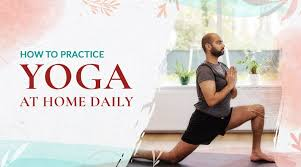
Step 1: Create Your Yoga Space
Before diving into postures, you need a sacred space that supports your energy and peace.
Your yoga space doesn’t need to be fancy or large. What it truly needs is intention — a space that feels warm, quiet, and safe.
Here’s how you can design your perfect home yoga corner:
- Choose a Peaceful Spot: Find a quiet area in your home where distractions are minimal. It could be a corner of your bedroom, balcony, or even your living room when it’s empty.
- Keep It Clean and Minimal: Remove clutter. Yoga thrives in simplicity. A clean space helps clear the mind.
- Add Personal Touches: A soft mat, a candle, or even a small plant can bring serenity. You can also place something meaningful — a photo, a quote, or an object that reminds you of peace.
- Ensure Proper Ventilation: Fresh air is essential. If possible, open a window or light some natural incense to create a calm atmosphere.
- Light and Sound: Natural light during the day or dim light in the evening can set the perfect tone. You can also play soft instrumental music to enhance focus.
Creating your own yoga space gives you a sense of belonging — a reminder that you always have a place to return to when life gets chaotic.
Step 2: Start Small, Dream Big
The biggest mistake beginners make when learning how to do yoga at home daily is starting too hard and giving up too soon. Yoga is not a race — it’s a lifelong journey.
Start small. Just 10 minutes a day can change everything. Focus on showing up, not on doing everything perfectly.
Here’s a simple approach to build your daily yoga habit:
| Stage | Duration | Focus |
|---|---|---|
| Week 1 | 10–15 minutes daily | Breathing and gentle stretching |
| Week 2 | 20 minutes | Basic asanas (poses) for strength and balance |
| Week 3 | 25–30 minutes | Add relaxation and meditation |
| Week 4 | 30–40 minutes | Mix flexibility, strength, and mindfulness |
By starting gradually, you build both physical and mental endurance. Within weeks, yoga will begin to feel less like a task and more like a ritual of renewal.
Step 3: Learn the Foundation Poses
You don’t need dozens of poses to begin. A handful of foundational asanas practiced regularly can bring amazing benefits.
Here are the five essential poses for your home yoga routine:
| Pose | Sanskrit Name | Benefits |
|---|---|---|
| Mountain Pose | Tadasana | Improves posture, balance, and grounding. |
| Downward-Facing Dog | Adho Mukha Svanasana | Stretches the spine and strengthens arms and legs. |
| Cobra Pose | Bhujangasana | Opens the chest, strengthens the back, and improves breathing. |
| Child’s Pose | Balasana | Relaxes the body and calms the mind. |
| Corpse Pose | Savasana | Promotes deep relaxation and stress relief. |
Mastering these basic poses helps you build a strong base for future growth. Remember: yoga is not about how deep you can bend, but how deeply you can breathe while doing it.
Step 4: Make Breathing Your Superpower
Breathing — known as Pranayama in yoga — is the heart of every posture. Your breath guides your movement and your mind. When you learn to breathe consciously, you invite calmness into your being.
Here’s a simple breathing exercise to start your daily yoga:
- Sit comfortably with your spine straight.
- Close your eyes and place your right hand on your chest, left on your abdomen.
- Inhale slowly through your nose for 4 counts.
- Hold your breath for 2 counts.
- Exhale gently through your nose for 6 counts.
Repeat this for 5–10 minutes before or after your yoga session. You’ll notice how it steadies your thoughts and fills your body with energy.
Step 5: Set a Daily Routine That Feels Natural
If you truly want to master how to do yoga at home daily, routine is everything. But it shouldn’t feel like a rule — it should feel like a rhythm.
Here’s a sample daily routine to help you stay on track:
| Time | Activity | Focus |
|---|---|---|
| 6:30 AM | Wake up and drink water | Hydration and freshness |
| 6:45 AM | Breathing exercises (Pranayama) | Focus and calmness |
| 7:00 AM | Yoga practice (20–30 mins) | Strength and flexibility |
| 7:30 AM | Meditation or gratitude journaling | Emotional balance |
| 8:00 AM | Light breakfast | Nourishment and renewal |
You can adjust this schedule based on your lifestyle, but keep one rule: consistency. Even if you only have 10 minutes some days, do it. A short, mindful session is better than none at all.
Step 6: Stay Motivated When Life Gets Busy
There will be days when motivation disappears — and that’s okay. Everyone faces moments of resistance.
What matters is how you respond. When you feel lazy or distracted, remind yourself of why you started. Yoga isn’t about perfection; it’s about showing up for yourself.
Try these motivation boosters:
- Keep a yoga journal to record how you feel after each session.
- Follow an online instructor or playlist that inspires you.
- Celebrate small milestones — like practicing for 10 consecutive days.
- Practice gratitude after each session: thank your body for its effort.
The more you honor your journey, the stronger your commitment grows.
Step 7: Listen to Your Body — Your Best Teacher Lives Within
One of the most beautiful lessons yoga teaches us is awareness. Every stretch, every breath, every pause is a message from your body. When you practice how to do yoga at home daily, your body starts to talk — softly at first, then with clarity.
Some days you’ll feel light and strong. Other days, you’ll feel heavy, tired, or emotionally drained. And that’s okay. Yoga isn’t about pushing beyond your limits; it’s about listening to them.
When your muscles ache, it’s your body saying, “Rest a little.” When your breath feels uneven, it’s asking, “Slow down.” The more you listen, the more you learn to trust yourself.
Here’s a simple reminder:
- Pain means pause.
- Discomfort means awareness.
- Stillness means growth.
Practicing yoga at home gives you the quiet to truly hear these signals without comparison or pressure. Over time, your practice becomes a loving conversation — a dialogue between your body, breath, and soul.
Step 8: Meditation — The Heart of Daily Yoga
You can’t learn how to do yoga at home daily without embracing stillness. Movement is important, but stillness transforms. That’s where meditation enters — the pure silence that renews your inner world.
After your daily poses, spend at least 5–10 minutes sitting in meditation. You don’t need to force your mind to stop thinking; simply observe.
Here’s a simple meditation method you can begin with:
- Sit comfortably with a straight back.
- Close your eyes and breathe slowly.
- Focus on the rhythm of your breath — the gentle rise and fall.
- When thoughts come, let them pass like clouds across the sky.
- Feel gratitude for the stillness you are creating.
Meditation doesn’t erase your thoughts — it helps you see them clearly without being controlled by them. Over time, your mind becomes quieter, and your inner world more peaceful.
The greatest gift of doing yoga at home daily is this stillness — the space where you remember who you truly are.
Step 9: Nourish Your Body with Love
Yoga isn’t only about stretching; it’s about how you live beyond the mat. Your body is the vehicle of your soul, and it needs care.
A good yoga routine at home should always be supported by proper rest, hydration, and nutrition.
Here’s a small guide to nourish your body in harmony with yoga:
| Element | What to Do | Why It Matters |
|---|---|---|
| Hydration | Drink 6–8 glasses of water daily | Keeps muscles flexible and energy steady |
| Balanced Diet | Eat fruits, vegetables, nuts, and grains | Provides the nutrients your body needs for recovery |
| Rest | Sleep 7–8 hours each night | Allows the body to heal and restore |
| Mindful Eating | Eat slowly and with gratitude | Deepens your connection to your body |
When you feed your body with care, your practice deepens. Your movements become lighter, your mind calmer, and your heart more open.
Step 10: The Emotional Power of Yoga
Beyond flexibility and strength, yoga heals emotional wounds you may not even realize you carry.
Practicing how to do yoga at home daily brings unspoken feelings to the surface — stress, sadness, fear, even buried joy. Each pose becomes a release, a way of letting go of what you’ve held too long.
When you stretch your body, you stretch your emotions too. When you breathe deeply, you invite forgiveness and compassion — first for yourself, then for others.
That’s why many people find themselves crying or smiling unexpectedly during yoga. It’s the heart speaking through movement.
So if a tear falls during practice, don’t hide it. That’s healing. Yoga helps you remember that strength is not the absence of emotion — it’s the courage to feel and still move forward.
Step 11: Track Your Growth — Celebrate Every Step
Transformation doesn’t happen overnight. It grows quietly — one breath, one session at a time.
When you practice how to do yoga at home daily, it’s easy to overlook progress because it happens subtly. That’s why tracking matters.
Keep a small yoga journal. Note the date, duration, poses you practiced, and — most importantly — how you felt.
Over time, you’ll notice patterns:
- You sleep better.
- You handle stress calmly.
- You wake up with more energy.
- You start craving peace instead of chaos.
Each of these small changes is proof of growth.
Celebrate them. Reward yourself with something meaningful — maybe a new yoga mat, a relaxing tea, or a quiet evening for self-care.
Acknowledging your journey keeps motivation alive and your heart grateful.
Step 12: Overcoming Challenges on Your Yoga Journey
Even the most devoted yogis face struggles — lack of time, distractions, or days when the body feels too heavy. But the difference lies in how they respond.
Here are some common challenges and how to overcome them:
| Challenge | Why It Happens | How to Overcome |
|---|---|---|
| Lack of Time | Busy schedule or fatigue | Shorten your session to 10 minutes. Consistency matters more than duration. |
| Distraction | Noise or digital interference | Turn off devices, use soft music, and practice in silence. |
| Boredom | Repeating same poses | Add new sequences or follow guided videos occasionally. |
| Low Motivation | Stress or emotional fatigue | Reflect on your goals, reread your journal, and rest if needed. |
| Self-Doubt | Comparing to others | Remember, yoga is personal — your journey, your pace. |
Every challenge is a teacher in disguise. When you learn to move through them with patience, you’re not just mastering yoga — you’re mastering life.
Step 13: The Long-Term Rewards of Practicing Yoga Daily
If you commit to how to do yoga at home daily, the rewards will quietly transform every part of your life.
1. Physical Strength and Flexibility
Your body becomes more toned, agile, and resistant to fatigue. Everyday activities — walking, driving, lifting — feel lighter and easier.
2. Mental Clarity
Yoga clears mental fog. It sharpens focus, boosts creativity, and helps you make better decisions with calm confidence.
3. Emotional Balance
Regular yoga reduces anxiety, stress, and irritability. It teaches you to respond instead of react, creating emotional peace that radiates outward.
4. Spiritual Connection
As you practice daily, you begin to feel connected to something greater — call it nature, energy, or simply inner truth. You start seeing beauty in stillness, kindness in silence, and purpose in small moments.
5. Lifestyle Harmony
Your sleeping patterns, eating habits, and daily mindset shift naturally toward balance. You stop chasing peace — you live in it.
Step 14: Combining Yoga with Your Daily Life
The real magic happens when yoga moves off the mat and into your daily routine.
When you drive, breathe slowly instead of rushing.
When you face conflict, pause before reacting.
When life feels heavy, remember the calm of your mat and let that peace guide you.
This is the true meaning of learning how to do yoga at home daily — not just doing poses, but living yoga every moment.
You become more patient in traffic, kinder in conversation, and gentler with yourself.
Yoga becomes more than a routine. It becomes your way of life.
Step 15: Build a Community — Even from Home
Practicing alone doesn’t mean being isolated. In fact, the yoga community is vast and supportive.
You can join online yoga groups, attend virtual classes, or connect with friends who also practice. Sharing your journey, struggles, and victories can keep you inspired.
Sometimes, even inviting a family member to join you once a week adds warmth and accountability.
Yoga is deeply personal, but it thrives in connection. When you share peace, peace multiplies.
Step 16: Reflection — The Quiet Transformation
After weeks or months of consistent practice, you may not notice the changes immediately — but others will.
You’ll smile more, worry less, and carry a calm energy that people can feel. That’s what happens when you dedicate yourself to how to do yoga at home daily.
Your mornings become sacred. Your nights become restful. Your days become lighter.
And you’ll realize something profound — yoga doesn’t just change your body; it changes the way you live your life.
Conclusion: Your Journey Begins Now
Yoga isn’t about touching your toes — it’s about what you learn on the way down. It’s not about flexibility, but about finding stillness in movement and gratitude in breath.
Learning how to do yoga at home daily is like planting a seed of peace inside yourself. Every day you practice, that seed grows stronger — into balance, strength, clarity, and joy.
You don’t need perfection. You just need presence.
You don’t need fancy gear. You just need a little space.
And you don’t need years of training — only the courage to begin.
So, unroll your mat. Take a deep breath. Feel the earth beneath you and your heartbeat within you.
Your yoga journey starts here — at home, today, with one beautiful breath.