

There are moments in life when balance feels hard to find — moments when we lean too far toward chaos or fear and lose our center. Yoga, in its timeless wisdom, teaches us how to return to that center. Among its many poses, one shines beautifully as a symbol of balance, strength, and poise — the Half Moon Pose (Ardha Chandrasana).
Half Moon Pose is not just a physical posture; it’s a journey of harmony between effort and grace. It’s where stability meets fluidity, and strength meets surrender. The name itself, Ardha Chandrasana, comes from Sanskrit — Ardha meaning “half,” and Chandra meaning “moon.” The moon, with its soft radiance and changing form, symbolizes calm, reflection, and balance — qualities that this pose brings into your body and mind.
For car enthusiasts who love control, power, and precision, this pose is like finding that perfect gear shift — a seamless moment of connection between body, breath, and purpose. Let’s explore everything about Half Moon Pose (Ardha Chandrasana): its origin, steps, benefits, variations, and how it helps you balance life on and off the mat.
The Philosophy and Meaning Behind Half Moon Pose (Ardha Chandrasana)
The moon has always held a deep spiritual meaning in yoga philosophy. It represents the cooling, calming, and reflective energies within us — a counterpart to the fiery, active solar energy. Half Moon Pose (Ardha Chandrasana) helps awaken the moon’s gentle light in your being, bringing peace and composure even during life’s most intense moments.
Just as the moon reflects light, this pose encourages you to reflect inward — to find your stillness amidst motion. The Half Moon Pose embodies equilibrium: you stand strong on one leg, your other leg lifted high, one hand reaching down to the earth, the other extending toward the sky. It’s a dance of opposites — grounding and expansion, control and surrender, focus and freedom.
How to Perform the Half Moon Pose (Ardha Chandrasana) Step by Step
The Half Moon Pose (Ardha Chandrasana) may appear elegant and effortless, but it requires awareness, patience, and practice. Here’s a step-by-step breakdown to help you master it safely and gracefully:
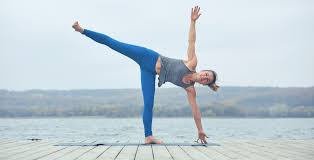
- Begin in Triangle Pose (Trikonasana) — Stand with your feet apart, right foot forward, and left foot slightly turned inward. Extend your arms wide, reaching toward opposite directions.
- Bend the front knee slightly — Keep your gaze down and bring your right hand to your hip.
- Shift your weight forward — Slowly move your body weight onto your right foot.
- Lift your left leg — As you exhale, lift your left leg parallel to the ground or slightly higher. Keep it strong and extended, with the toes pointing outward.
- Place your right hand on the mat — Your right fingertips should be about 12 inches ahead of your standing foot. Use a yoga block if you can’t reach the floor comfortably.
- Extend your left arm upward — Reach your left arm toward the ceiling, opening your chest and hips. Your body should form one long diagonal line from the lifted foot to the top hand.
- Gaze upward if balanced — If you feel steady, turn your gaze toward your left fingertips. If not, keep your gaze on the floor to maintain balance.
- Breathe and hold — Stay in this position for 30 seconds to a minute, breathing slowly and evenly.
- Release gently — Exhale, lower the raised leg, and return to standing. Repeat on the other side.
Half Moon Pose (Ardha Chandrasana) teaches that balance doesn’t come from stiffness but from awareness. The more you focus on your breath and alignment, the steadier you become.
Common Mistakes to Avoid in Half Moon Pose (Ardha Chandrasana)
When learning Half Moon Pose, it’s natural to wobble or lose balance. Mistakes are part of the learning curve, but understanding them helps refine your form.
- Collapsing the chest — Many people forget to open the chest, causing the pose to fold inward. Focus on expanding your chest and reaching outward through both arms.
- Bending the standing leg too much — A slight bend is fine, but excessive bending reduces stability. Engage your thigh muscles to stay firm.
- Lifting the top leg without control — Instead of jerking the leg upward, lift it slowly and maintain alignment with your hips.
- Placing too much weight on the bottom hand — The supporting hand should only guide you, not bear full weight. Let your core and legs support the posture.
- Holding the breath — Breath is your anchor. Keep it steady and rhythmic.
Remember, each correction brings you closer to the graceful balance that defines this pose.
Physical Benefits of Half Moon Pose (Ardha Chandrasana)
The Half Moon Pose offers an impressive combination of strength, flexibility, and coordination benefits. Here’s how it transforms your body:
- Improves balance and coordination — The pose strengthens stabilizing muscles in your legs and core, improving physical balance and focus.
- Strengthens the legs and glutes — Both legs engage deeply, toning your thighs, calves, and hips.
- Opens the chest and shoulders — Expanding your upper body improves posture and reduces stiffness from sitting or driving long hours.
- Stretches the spine and hamstrings — The elongated position releases tension in your back and legs.
- Improves core stability — Holding balance activates your abdominal and oblique muscles, creating a strong center.
- Enhances hip mobility — The outward rotation of the lifted leg helps open the hips gently yet effectively.
- Boosts circulation — Balancing poses stimulate blood flow and energize the entire body.
If practiced regularly, Half Moon Pose strengthens both the body’s physical structure and the mind’s endurance — much like fine-tuning a powerful car engine to run smoothly and efficiently.
Mental and Emotional Benefits of Half Moon Pose (Ardha Chandrasana)
Beyond its physical rewards, Half Moon Pose (Ardha Chandrasana) carries emotional and psychological power. It sharpens concentration, cultivates calmness, and builds self-confidence.
- Reduces anxiety and mental fatigue — Balancing on one leg requires focus, pulling your thoughts away from worries and into the present moment.
- Builds patience — Learning to balance teaches you not to rush; every movement requires calm awareness.
- Boosts self-confidence — When you finally hold the pose without wobbling, there’s a quiet pride in that accomplishment.
- Promotes inner harmony — The opposing directions of arms and legs represent mental balance — grounding in reality while reaching for dreams.
- Inspires emotional strength — Even when you fall, you rise again. Each attempt strengthens your perseverance.
The mental clarity that emerges from Half Moon Pose feels much like driving down a quiet road under a full moon — focused, peaceful, and free.
Symbolism of the Moon in Yoga Philosophy
In yoga, the moon represents the chandra nadi — the cooling, feminine, and introspective energy. Half Moon Pose (Ardha Chandrasana) activates this energy, calming the nervous system and restoring emotional stability.
Just as the moon reflects sunlight, this pose helps you reflect inner peace even when external life feels chaotic. It reminds you that balance doesn’t come from avoiding life’s turbulence but from finding calm within it.
Variations of Half Moon Pose (Ardha Chandrasana)
Yoga is beautifully adaptable. Depending on your experience level or physical needs, you can modify Half Moon Pose to make it more accessible or more challenging.
- Supported Half Moon Pose — Use a yoga block under your hand for stability. Perfect for beginners or those working on flexibility.
- Half Moon Pose with Wall Support — Stand near a wall so your lifted foot or back can touch it for balance.
- Revolved Half Moon Pose (Parivrtta Ardha Chandrasana) — A more advanced variation where you twist the torso and reach the opposite arm upward, stimulating detoxification and deeper focus.
- Half Moon Pose with Bind — For advanced yogis, adding a bind by wrapping your top arm behind your back enhances shoulder flexibility.
- Dynamic Half Moon — Gently transition in and out of the pose in rhythm with your breath for a flowing sequence.
Each variation brings its own challenge and reward, allowing you to grow at your pace.
Breathing Techniques During Half Moon Pose (Ardha Chandrasana)
Your breath is your invisible guide in every yoga pose, especially in balancing postures. During Half Moon Pose, the breath helps anchor your mind and steady your movements.
Try this simple pattern:
- Inhale as you lift and lengthen your body.
- Exhale as you deepen the pose and ground yourself.
- Maintain soft, rhythmic breaths throughout.
Never hold your breath; let it move through you like wind guiding a sail — steady, calm, and purposeful.
Integrating Half Moon Pose (Ardha Chandrasana) Into Your Yoga Practice
Half Moon Pose fits beautifully in both energetic and restorative yoga flows. You can include it after Triangle Pose or before Warrior III for smooth transitions. Here’s a simple flow to practice:
- Start in Mountain Pose (Tadasana).
- Move into Triangle Pose (Trikonasana).
- Transition into Half Moon Pose (Ardha Chandrasana).
- Return to Standing Forward Bend (Uttanasana).
- Repeat on the other side.
Practicing this flow regularly builds strength, fluidity, and confidence.
Half Moon Pose (Ardha Chandrasana) is one of those yoga postures that feels like poetry in motion—a blend of strength, grace, and balance. When you hold this pose, it’s as if your body becomes a bridge between the earth and the sky, grounded yet reaching, stable yet free. In this part, we’ll dive deeper into the heart of Half Moon Pose, exploring how to master it, its variations, the emotional impact it brings, and how it connects to your daily life.
The Inner Strength Behind Half Moon Pose
The beauty of Half Moon Pose lies in the contrast it represents. On the surface, it’s about physical balance—standing on one leg, stretching your arm upward, and expanding your chest. But on a deeper level, it’s about emotional stability. The pose teaches you how to stay centered even when life feels tilted or uncertain. When you stand strong in Half Moon Pose, you’re not just training your muscles—you’re training your mind to stay calm in chaos.
Every time you come into this pose, remind yourself that balance isn’t perfection. It’s the art of constant adjustment. Just as life sways, so does your body in this pose. The magic happens not in being still but in responding gracefully to the shifts.
Common Mistakes and How to Fix Them
Many practitioners struggle with maintaining proper alignment in Half Moon Pose, especially when they first start. Some of the most common mistakes include collapsing the chest, locking the standing knee, or overreaching the lifted leg.
Here’s how to correct them:
- Keep your chest open: Imagine you’re shining a light from your heart toward the ceiling. Don’t let your chest face the floor.
- Soften your standing leg: A locked knee can strain your muscles and joints. Instead, maintain a gentle micro-bend.
- Engage your core: Think of your core as your stabilizer. It’s what helps you stay steady and prevent wobbling.
- Use support when needed: If reaching the floor is difficult, place your hand on a block to keep your balance.
By paying attention to these small details, you not only improve your form but also deepen your awareness—one of the main purposes of yoga.
The Breath Connection
Breath is the bridge that connects the body and the mind, and in Half Moon Pose, it plays a crucial role. It’s easy to hold your breath when trying to balance, but that only creates tension. Instead, try breathing naturally—deep, steady, and rhythmic.
When you inhale, visualize yourself expanding—your chest opening, your arm stretching upward, and your lifted leg lengthening.
When you exhale, feel yourself grounding—your foot rooting firmly into the earth, your mind settling into calm focus.
This breathing pattern creates a sense of lightness and stability, helping you stay present in the moment.
Physical Benefits of Half Moon Pose
Half Moon Pose offers an impressive list of physical benefits. It’s a full-body engagement that tones, strengthens, and stretches at once.
| Area of Benefit | Effect of Half Moon Pose |
|---|---|
| Core and abs | Builds stability and strength |
| Glutes and legs | Improves endurance and tone |
| Shoulders and arms | Enhances flexibility and balance |
| Spine and chest | Opens up posture and improves breathing |
| Hips | Increases mobility and releases tightness |
| Balance and coordination | Sharpens focus and body control |
Practicing this pose consistently can help correct posture issues, strengthen your lower body, and boost your confidence—both physically and mentally.
The Emotional Journey
Beyond the physical, Half Moon Pose (Ardha Chandrasana) carries a profound emotional resonance. It teaches resilience. It reminds you that life’s balance is not fixed—it’s fluid. When you wobble, fall, or lose your balance, that’s not failure—it’s feedback. Every time you rise again, you’re building emotional endurance.
The pose also symbolizes openness and freedom. Your lifted arm and leg create a shape that feels expansive, almost like you’re embracing the possibilities around you. This openness reflects emotional release—letting go of fear, self-doubt, or hesitation.
As you hold the pose, notice what emotions surface. Do you feel challenged? Frustrated? Proud? These are reflections of your inner state. Yoga gives you a mirror to observe yourself—not with judgment, but with compassion.
Variations for Every Level
Every yogi, beginner or advanced, can enjoy the benefits of Half Moon Pose with the right modifications.
- Beginner Variation:
Use a block under your lower hand for support. This helps maintain balance and proper alignment. You can also perform the pose near a wall for extra stability. - Intermediate Variation:
Once you’re comfortable, start shifting your gaze upward toward your lifted hand. This improves focus and strengthens neck muscles. - Advanced Variation:
Try holding your top foot with your raised hand for a deep stretch. This version challenges balance, flexibility, and core control.
Remember, the goal isn’t to perfect the most complex variation—it’s to find the one that feels steady and comfortable for you.
Integrating Half Moon Pose into Daily Life
The lessons you learn on the mat often mirror the challenges of daily life. In Half Moon Pose, you experience instability, adjustment, and eventual steadiness—the same elements you encounter outside yoga.
Here’s how to apply this yoga philosophy in everyday life:
- Stay balanced under pressure: Just as your body wobbles in the pose, life throws unexpected challenges. Stay calm, breathe, and adjust.
- Root before you rise: In yoga, your grounding leg gives strength to your lifted one. Similarly, grounding yourself emotionally helps you grow higher.
- Embrace imperfection: You’ll fall out of the pose sometimes—and that’s okay. Each fall is part of the journey toward mastery.
How to Deepen Your Practice
If you’re ready to take your Half Moon Pose further, consistency and mindfulness are your best allies. Start with shorter holds—10 to 20 seconds—and gradually increase. Focus on precision, not duration.
You can also pair Half Moon Pose with complementary asanas like Triangle Pose (Trikonasana), Warrior III (Virabhadrasana III), or Revolved Half Moon Pose (Parivrtta Ardha Chandrasana). These combinations enhance your strength, flexibility, and focus.
Journaling after your practice can also help. Write down how you felt before, during, and after holding Half Moon Pose. Over time, you’ll notice emotional and physical growth, reflecting the transformation yoga brings.
The Deeper Symbolism of Half Moon Pose
In yogic philosophy, the moon represents calmness, reflection, and intuition. Half Moon Pose, therefore, symbolizes balance between action (the sun) and awareness (the moon). It’s a dance of opposites—effort and ease, grounding and elevation, strength and surrender.
When you embody this pose, you tap into both energies—assertive yet serene, focused yet free. It’s a gentle reminder that true balance isn’t about controlling everything but aligning with your inner rhythm.
A Reflection to End Your Practice
As you complete your practice, return to a standing position. Close your eyes and take a deep breath. Feel your heartbeat slow down. Let the energy you built in Half Moon Pose settle gently in your body.
Ask yourself—what does balance mean to me today? Some days, balance might mean stillness; other days, it might mean embracing movement. There’s no single right answer—only awareness.
Every time you practice Half Moon Pose, you reconnect with that awareness. You learn that balance is not something to chase; it’s something to feel.
Final Thoughts
Half Moon Pose (Ardha Chandrasana) is more than just a yoga posture—it’s a story of alignment, strength, and grace. Whether you’re a beginner finding your footing or an experienced yogi refining your form, this pose holds lessons for everyone.
Through patience, presence, and persistence, you’ll discover that Half Moon Pose is a mirror for your inner world. It teaches you how to stand strong, open up, and find beauty in balance.
So, each time you step onto your mat and rise into this elegant form, let your breath guide you, your heart ground you, and your spirit lift you. Because in every Half Moon, there’s a whole world of calm waiting to shine through you.