

In the fast-moving world we live in, silence often feels like a luxury. The constant noise, the never-ending rush, and the endless screens can leave us drained and disconnected from ourselves. But in yoga, there is one posture that invites you to completely stop, to surrender, and to reconnect with your breath and being. This sacred moment of stillness is called the Corpse Pose.
Despite its name, the Corpse Pose is one of the most powerful and healing positions in yoga. It is the final resting pose, performed at the end of a yoga session, yet it holds a significance far beyond relaxation. The Corpse Pose is where the body learns stillness, the mind learns silence, and the heart learns to be free.
Many people underestimate this pose because it looks simple—just lying down. But the truth is, it’s one of the hardest to master. It asks for something that we often resist: to let go completely. To do nothing, to be still, and to allow life to flow through us without interference.
In this part of the post, we’ll explore what the Corpse Pose really is, how to practice it correctly, its benefits, the deep emotional meaning behind it, and how it transforms both body and soul.
What is the Corpse Pose?
The Corpse Pose, or Savasana in Sanskrit, is a restorative yoga posture performed at the end of a session. The word “Sava” means corpse, and “Asana” means posture. As the name suggests, it involves lying flat on your back, completely relaxed, as if your body were lifeless.
But while the body is still, the mind is fully awake. The Corpse Pose is not sleep—it’s conscious rest. It’s a meditative state where the practitioner observes their breath, body, and thoughts without attachment. This conscious relaxation allows the nervous system to reset and the mind to find clarity.
It may appear simple, but mastering this pose is a true test of awareness. It asks you to be present, to feel without reacting, and to trust the silence.
How to Practice the Corpse Pose
Practicing the Corpse Pose requires patience and mindfulness. It’s not just about lying down—it’s about creating a space for total surrender. Here’s a step-by-step guide to doing it correctly.
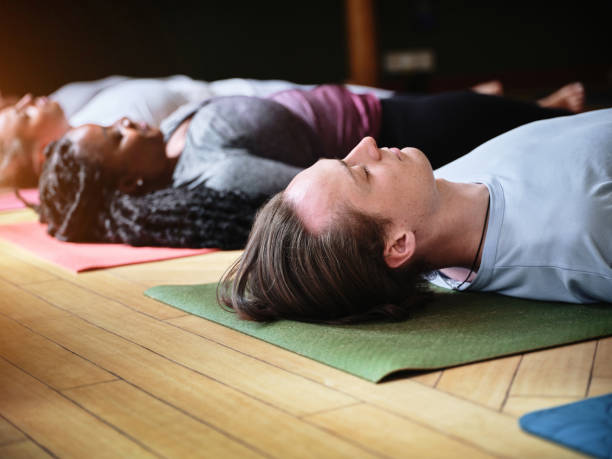
Step 1: Find a Quiet Space
Choose a calm and comfortable place where you won’t be disturbed. The environment plays a vital role in this pose. Dim the lights and remove distractions.
Step 2: Lie Down on Your Back
Gently lie down on your mat. Keep your legs apart, about hip-width distance, allowing your feet to fall naturally outward. Let your arms rest beside your body, palms facing upward, slightly away from the torso.
Step 3: Adjust for Comfort
Ensure that your spine is straight and your head aligned. If you feel strain in your lower back, place a small cushion under your knees. For neck support, use a folded towel under the head. Comfort helps your body surrender more easily.
Step 4: Close Your Eyes and Breathe
Close your eyes gently. Begin to focus on your breathing. Don’t control it—just observe it. Notice the rise and fall of your chest and abdomen. Let your breath become soft and natural.
Step 5: Scan Your Body
Starting from your toes, mentally scan each part of your body. As you focus on each area, release any tension. Move upward—through your legs, hips, abdomen, chest, shoulders, and finally to your face. Feel your whole body melting into the mat.
Step 6: Surrender to Stillness
Once you’ve relaxed every muscle, stop trying. Let go of all control. Let your breath, thoughts, and body move naturally. You are now in the Corpse Pose—alive yet still, aware yet silent.
Step 7: Stay for 5–10 Minutes
Stay in this position for at least 5 to 10 minutes. Experienced practitioners may stay longer, depending on comfort. When it’s time to come out, do so slowly—wiggle your fingers and toes, stretch gently, and roll to one side before sitting up.
The Meaning Behind the Corpse Pose
At first glance, the Corpse Pose might seem grim because of its name. But spiritually, it carries a profound lesson—the art of letting go.
In yoga philosophy, this pose symbolizes death not of the body, but of the ego and attachments. It represents the surrender of all identities, expectations, and struggles. When you lie still, you symbolically release control and accept the present moment as it is.
This “death” allows for rebirth. When you rise from the pose, you feel renewed, refreshed, and more connected to yourself. The Corpse Pose teaches that only when you let go can you truly begin again.
The Importance of Stillness
Stillness is not emptiness—it’s fullness waiting to be felt. In our daily lives, we are constantly in motion—working, thinking, worrying, achieving. But the Corpse Pose invites us to stop and just be.
When the body becomes still, the mind follows. This stillness reveals things we often overlook—the quiet rhythm of the heart, the gentle flow of the breath, the warmth of being alive.
Practicing Corpse Pose regularly cultivates patience, mindfulness, and inner peace. It helps you slow down and reconnect with your inner self—a skill that extends far beyond the yoga mat.
Physical Benefits of the Corpse Pose
While Savasana is primarily a relaxation posture, its physical benefits are remarkable. Let’s look at how it rejuvenates your body.
1. Reduces Fatigue
The Corpse Pose relaxes every muscle and organ in your body. It gives your system a chance to rest and recover, reducing fatigue and restoring lost energy.
2. Lowers Blood Pressure
By calming the mind and slowing the breath, this pose naturally lowers blood pressure and stabilizes the heartbeat.
3. Relieves Muscle Tension
Every time you consciously relax in Savasana, you release built-up tension in your muscles and joints. It’s a full-body reset that helps prevent stress-related aches.
4. Improves Sleep Quality
Practicing this pose regularly helps fight insomnia. It trains the mind to relax and the body to let go, promoting deeper, more peaceful sleep.
5. Enhances Circulation
As your body rests evenly on the mat, blood circulates more efficiently, bringing oxygen to every cell and aiding detoxification.
Mental and Emotional Benefits
The Corpse Pose is a sanctuary for the mind. It’s where the chaos of the day melts into calm awareness.
1. Reduces Stress and Anxiety
When you lie in stillness and breathe consciously, your nervous system shifts from “fight or flight” to “rest and digest.” This change reduces stress hormones and helps you feel grounded.
2. Increases Focus and Mental Clarity
By quieting mental chatter, this pose sharpens your awareness. It clears mental fog and enhances focus, preparing you for meditation or a calm return to daily life.
3. Encourages Self-Awareness
Stillness helps you observe your thoughts without judgment. This awareness is the foundation of mindfulness—it allows you to understand your emotions, reactions, and inner needs.
4. Promotes Emotional Healing
The deep relaxation of Savasana can unlock suppressed emotions. Many people experience a sense of emotional release—sometimes even tears—because the body finally feels safe enough to let go.
The Spiritual Aspect of Corpse Pose
Beyond physical and mental health, the Corpse Pose carries deep spiritual meaning. It mirrors the cycle of life—birth, death, and rebirth.
Each time you lie in Savasana, you symbolically let go of your identity and ego. You dissolve into stillness and reconnect with your true essence—the part of you that’s eternal, calm, and whole.
In this silence, you realize that peace is not something to find; it’s something that’s always been within you. The Corpse Pose simply helps you return to it.
When to Practice the Corpse Pose
While Savasana is usually practiced at the end of a yoga session, it can also be done anytime you feel tired, anxious, or overwhelmed.
You can practice it:
- After a long day at work to release stress.
- In the morning to set a calm tone for the day.
- Before sleep to promote rest.
- During breaks to refresh the mind.
Even a few minutes of Corpse Pose can have a profound effect on your mood and energy.
Duration and Frequency
You don’t need to practice for long periods. Start with five minutes and gradually increase to ten or fifteen. The key is quality, not duration. What matters is how deeply you relax and how fully you surrender to stillness.
Preparing the Body and Mind
Before practicing the Corpse Pose, it helps to do some gentle movements to release tension. Try light stretches, neck rolls, or slow breathing to prepare the body for relaxation.
Once you enter the pose, remind yourself: There’s nothing to do, nothing to fix, nothing to achieve. Just be.
Common Mistakes in Corpse Pose
Even a simple posture can go wrong without mindfulness. Here are a few common mistakes to avoid:
- Forcing Stillness: Trying to stop your thoughts or control your body defeats the purpose. Let stillness come naturally.
- Incorrect Alignment: Keep your spine straight and your body symmetrical.
- Falling Asleep: Stay aware, not asleep. You’re resting with full consciousness.
- Rushing the Pose: Don’t hurry out of it. Give yourself time to absorb the calm.
The Role of Breath
Breathing is the anchor in Corpse Pose. Each breath connects you to the present moment. As your breath softens, your heart rate slows, and your mind begins to rest. This gentle rhythm becomes a form of meditation.
Inhale peace, exhale tension—that’s the true essence of Savasana.
The Emotional Healing Power of Corpse Pose
Every yoga pose has a purpose. Some build strength, some enhance flexibility, but the Corpse Pose—it heals. It’s not just about physical rest; it’s emotional restoration. When you lie down and release control, you allow old emotions to rise and dissolve.
We spend most of our lives suppressing feelings—stress, guilt, sadness, or even joy that we don’t allow ourselves to feel. In Corpse Pose, there’s nowhere to run. The silence invites you to face what’s within. And instead of fighting it, you breathe through it.
This gentle surrender brings emotional freedom. Many practitioners describe a sense of peace washing over them, as if a weight has lifted. It’s not magic—it’s the power of stillness. In stillness, your nervous system finds safety, and your heart finds the courage to open again.
Corpse Pose and the Nervous System
One of the most important effects of the Corpse Pose lies in its impact on the nervous system. It activates the parasympathetic nervous system—the body’s natural “rest and restore” mode.
When you enter this state, stress hormones like cortisol decrease, while healing responses increase. Your heart rate slows, your digestion improves, and your immune system strengthens.
This is why after practicing Corpse Pose, you often feel deeply refreshed and balanced. It’s your body’s way of saying thank you for the pause.
In a world driven by constant motion, this deep relaxation becomes a necessity, not a luxury. It reminds your body that rest is not weakness—it’s wisdom.
Why the Corpse Pose Is the Most Important Yoga Pose
Though it looks like rest, Savasana is often called the most challenging yoga pose—and also the most important. Here’s why.
Every yoga session ends with it because this pose allows the benefits of your practice to sink in. It’s like pressing “save” on the work your body and mind just did. Without Savasana, your practice remains incomplete.
Moreover, it teaches the art of stillness and awareness—skills that are essential in daily life. It trains you to pause before reacting, to breathe before speaking, and to rest before breaking.
In Corpse Pose, you realize that relaxation is not laziness. It’s a state of power—a calm mind is stronger than a restless one.
Incorporating Corpse Pose into Daily Life
Even if you don’t practice a full yoga session daily, incorporating Corpse Pose into your routine can transform your day. Here are simple ways to do that.
1. Morning Reset
After waking up, lie down for five minutes in Savasana. Feel your breath and set an intention for the day. This helps you begin with calm energy rather than rushing into chaos.
2. Midday Recharge
During work or study breaks, lie down for a few minutes. It clears mental fog and recharges your focus. You’ll be surprised how much clarity comes from just pausing.
3. Evening Unwind
Before bed, practice Corpse Pose. It signals your body that it’s time to rest and helps you fall asleep faster.
4. After Exercise
Whether it’s yoga, running, or gym workouts, end with Savasana. It allows your muscles to recover and your breath to normalize.
These short practices can fit into any lifestyle and create long-lasting mental balance.
Variations of the Corpse Pose
For some people, lying flat on the back might be uncomfortable due to back pain or tension. In such cases, gentle modifications can make the posture more accessible.
Supported Corpse Pose
Place a bolster or pillow under your knees to relieve pressure from the lower back.
Reclined Corpse Pose with Blanket
Cover yourself with a light blanket to maintain warmth and comfort during long relaxation.
Wall-Supported Corpse Pose
Lie near a wall and place your legs up at a 45-degree angle. This variation helps improve blood circulation and relieve tired legs.
Side Corpse Pose (for Pregnancy)
Pregnant women can lie on their left side with a pillow between their knees. This keeps the body aligned and reduces pressure on the belly.
Remember, the goal is relaxation, not perfection. Adjust your posture until your body feels completely at ease.
The Science Behind Corpse Pose
Modern science has begun to uncover what ancient yogis already knew—stillness heals. Studies on relaxation response show that postures like Savasana reduce stress, lower blood pressure, and improve heart health.
Researchers also found that when the body enters deep relaxation, brain waves shift to alpha and theta states—these are the same frequencies associated with creativity, meditation, and calm awareness.
In simpler terms, Corpse Pose allows your brain to rest and rejuvenate, just like a computer reboot. This mental reset boosts focus, memory, and emotional resilience.
The Inner Journey
While the Corpse Pose restores the body, it also awakens the inner self. As you lie in stillness, the boundaries between body, breath, and consciousness begin to blur. You start to experience yourself beyond physical form—a moment of pure awareness.
This inner stillness connects you with your deeper essence. It’s where you realize that peace doesn’t come from the outside world—it lives within. The Corpse Pose simply opens the door.
Many yogis describe Savasana as a gateway to meditation. It teaches the art of observing without reacting, listening without judgment, and being without doing.
Overcoming Restlessness in Corpse Pose
Beginners often find it difficult to stay still in Corpse Pose. The mind races, the body fidgets, and silence feels uncomfortable. This is natural.
The key is patience. Every time you catch your mind wandering, gently bring it back to the breath. Don’t fight the thoughts—just watch them pass like clouds in the sky.
Gradually, the mind learns to quiet itself. Each practice takes you closer to deeper peace. Remember, mastery is not in stillness—it’s in the willingness to stay.
The Connection Between Corpse Pose and Meditation
The Corpse Pose is considered a doorway to meditation because it brings your body and mind into harmony. Once the body is still and the breath soft, your awareness naturally deepens.
In meditation, the goal is not to stop thinking but to observe thoughts without attachment. Savasana cultivates this exact mindset. Over time, it becomes easier to transition from Savasana into deeper meditative practices.
You may notice that after lying still for several minutes, your thoughts become lighter and your emotions calmer. This is the essence of mindfulness—the awareness of now.
Symbolism and Philosophy Behind the Pose
In yoga philosophy, the Corpse Pose symbolizes the ultimate surrender—death and rebirth. When you lie still, you symbolically let go of all your labels—your name, job, fears, and dreams. You become nothing, and in that nothingness, you discover everything.
It’s a practice of humility. The body rests, the ego dissolves, and the soul breathes freely. It’s a reminder that peace is not something you chase—it’s what remains when everything else fades away.
The Corpse Pose teaches us to embrace impermanence, to honor endings as much as beginnings. Every session that ends with Savasana is a small rebirth into clarity and calm.
The Mindset of Letting Go
Letting go is the hardest part of life, and Corpse Pose gives us the courage to do it. We hold on to control, to stress, to expectations—but the beauty of this posture lies in surrender.
When you lie down and release every ounce of control, something magical happens. The body finds harmony, the mind finds silence, and the heart feels light.
In that moment, you realize that peace doesn’t come from achieving—it comes from allowing.
Building a Daily Practice
If you wish to experience the full benefits of Corpse Pose, consistency is key. Here’s how to build a simple daily habit:
- Choose a Regular Time: Morning or evening works best.
- Create a Calm Space: Keep it free from noise and distractions.
- Start Small: Even five minutes a day can make a difference.
- Set an Intention: Before starting, remind yourself why you’re practicing—to rest, to heal, to reconnect.
- End Mindfully: Don’t rush up. Sit quietly for a moment before resuming your day.
Over time, these small sessions add up, and your life begins to reflect the calmness you practice on the mat.
Corpse Pose and the Modern Lifestyle
In our fast-paced digital world, Savasana feels more relevant than ever. We are constantly connected but rarely present. Our minds jump from one screen to another, leaving little room for peace.
Practicing Corpse Pose daily is like pressing pause on life’s noise. It gives you a few minutes of sacred stillness, a mental reset that improves your focus, mood, and energy.
Think of it as a daily act of self-care—a gentle reminder that your worth is not tied to your productivity, but to your presence.
Final Thoughts: The Gift of Stillness
The Corpse Pose might seem like the simplest yoga posture, but it holds the deepest truth. It teaches you that rest is powerful, stillness is sacred, and surrender is strength.
Each time you lie down in this pose, you let go of the chaos of the outside world and return to the quiet rhythm of your inner being.
You come face to face with yourself—not the busy, striving version, but the peaceful soul beneath. And in that silence, you rediscover balance, clarity, and love for life itself.
The Corpse Pose reminds us that we are not just human doings—we are human beings. To be still is to live fully, to breathe deeply, and to feel the quiet joy of existence.
So next time you finish your yoga session, don’t rush off the mat. Stay. Breathe. Feel the calm. In that quiet moment, you’re not just resting—you’re remembering who you truly are.