

When you step onto your yoga mat, you are not just entering a space of movement; you are stepping into a world of transformation. Among all the yoga poses that connect strength, grace, and stillness, one posture stands out for its power and purpose — Warrior I (Virabhadrasana I). This pose is not just about balance or flexibility. It’s a story, a feeling, and a practice that brings courage to your heart and fire to your spirit.
The Warrior I posture teaches us that strength is not only physical — it’s emotional and spiritual too. Each time you rise into the pose, you awaken the inner warrior within, a warrior who is fearless yet calm, strong yet gentle, focused yet compassionate.
Let’s dive deep into the world of Warrior I, its meaning, its beauty, and how it can completely transform your yoga practice and your mindset.
The Story Behind Warrior I (Virabhadrasana I)
Every yoga pose carries history and symbolism. Warrior I finds its roots in one of the most inspiring stories in Hindu mythology — the story of Virabhadra, the fierce warrior created by Lord Shiva. According to legend, Shiva created Virabhadra to restore balance after his wife, Sati, faced injustice. The warrior rose from the earth, powerful and determined, embodying strength, purpose, and divine courage.
This story symbolizes more than an ancient tale — it reflects our inner battle to rise above challenges. When you step into Warrior I, you’re not just stretching your body; you’re embodying that strength of spirit, the readiness to face whatever life brings with calm determination.
The Essence of Warrior I Pose
Warrior I is a foundational yoga pose that teaches stability, concentration, and strength. It engages almost every part of your body — the legs, core, arms, and spine — while also opening the chest and lungs. The combination of grounding and expansion makes it one of the most empowering postures in yoga.
This pose is a perfect reminder that strength doesn’t mean tension. Instead, it means being rooted in the ground but open to the sky — just like a true warrior who stands firm yet flexible.
Step-by-Step Guide to Practicing Warrior I
To truly embrace Warrior I (Virabhadrasana I), you must align your body, breath, and focus. Here’s a detailed step-by-step guide to mastering the pose:
- Start in Mountain Pose (Tadasana)
Stand tall with your feet together, arms by your sides. Ground your feet evenly into the mat and take a deep breath. Feel your body waking up. - Step Back
Take a big step back with your left foot (about 3 to 4 feet). Turn your back foot slightly outward (around 45 degrees) while keeping your front toes pointing straight ahead. - Bend the Front Knee
Gently bend your right knee so it’s directly above your ankle. Make sure your knee doesn’t extend beyond your toes. - Anchor the Back Foot
Press the outer edge of your back foot into the mat. This anchors your balance and builds strength in your legs. - Raise Your Arms
On an inhale, lift your arms overhead, reaching toward the sky with your palms facing each other or touching. Keep your shoulders relaxed and away from your ears. - Lift Through the Chest
Lengthen your spine and gently lift your chest upward, expanding through the heart. - Hold and Breathe
Stay in the pose for five to ten slow, deep breaths. With each inhale, feel your body grow taller. With each exhale, sink deeper into your stance. - Return to Standing
Exhale and step forward into Mountain Pose. Repeat on the other side.
Common Mistakes to Avoid
Even though Warrior I looks simple, alignment is key. Avoid these common mistakes to ensure a safe and effective practice:
- Knee Alignment: Make sure your front knee is above the ankle, not ahead of it.
- Hip Position: Try to square your hips forward. If they twist to the side, step your back foot slightly wider.
- Shoulder Tension: Relax your shoulders and neck; don’t force your arms upward.
- Arching the Back: Keep your core engaged to prevent your lower back from over-arching.
Proper alignment helps you experience both strength and balance in the pose.
The Physical Benefits of Warrior I
Practicing Warrior I regularly brings remarkable changes to your body. This pose strengthens and stretches multiple muscle groups while improving posture and balance.
| Body Area | Benefit of Warrior I |
|---|---|
| Legs | Strengthens thighs, calves, and ankles |
| Core | Builds stability and balance |
| Shoulders & Arms | Tones upper body and improves endurance |
| Spine | Increases flexibility and alignment |
| Lungs | Expands chest and enhances breathing capacity |
| Heart | Stimulates circulation and energy flow |
When practiced consistently, this pose can make your body more resilient and flexible — qualities that extend beyond your mat into everyday life.
The Mental and Emotional Power of Warrior I
The Warrior I posture is as much a mental practice as a physical one. As you hold the pose, you may notice thoughts, doubts, or distractions rising in your mind. This is where the true lesson begins.
The stillness in Warrior I teaches mindfulness. It reminds you to focus on the present, breathe through discomfort, and remain strong in your center. Over time, it builds emotional resilience — a calm courage that helps you face stress and uncertainty with balance.
It’s not just about the shape of the pose. It’s about becoming aware of your strength — not just in your muscles, but in your heart.
Breathing in Warrior I
Your breath is the soul of your practice. In Warrior I, it acts as your anchor. Deep inhalations lift your spirit, while exhalations ground your body. Try this breathing pattern:
- Inhale through your nose as you lift your arms and open your chest.
- Exhale slowly through your mouth, settling deeper into your stance.
- Keep the breath steady and rhythmic — this keeps your energy flowing smoothly.
Breath transforms the posture from a mere exercise into a meditation of movement.
The Inner Meaning of Warrior I
The Warrior I is not a pose of aggression — it is a pose of peace through strength. The raised arms represent openness and surrender, while the grounded feet represent stability and confidence. This balance mirrors life’s dualities — strength and softness, control and acceptance.
When you practice Warrior I, imagine that you are embracing your challenges instead of running from them. Feel the power rise from your feet to your fingertips. Let your breath remind you that even in struggle, there is beauty and purpose.
Practicing with Intention
The energy you bring into Warrior I shapes your experience. Approach the pose with a sense of gratitude and awareness. You can silently repeat an affirmation like:
- “I am strong and steady.”
- “I am rooted in peace.”
- “I rise with purpose and power.”
These simple affirmations can turn your practice into a deeply emotional and personal ritual.
Building a Flow Around Warrior I
Warrior I is often part of dynamic yoga sequences. You can include it in the following transitions for a balanced flow:
- Mountain Pose → Warrior I → Warrior II → Reverse Warrior
- Downward Dog → Step Forward → Warrior I
- Warrior I → High Lunge → Plank Pose → Upward Dog → Downward Dog
Each flow connects your breath with movement, keeping your mind focused and your body alive.
Why Warrior I Is for Everyone
Whether you’re a beginner or an advanced practitioner, Warrior I welcomes you. It’s adaptable and forgiving, allowing you to find your own strength at your own pace.
If balance feels challenging, you can shorten your stance. If flexibility limits your range, adjust the angle of your back foot. The essence of Warrior I is not perfection — it’s perseverance.
This is the beauty of yoga: every pose meets you exactly where you are.
Deepening Your Connection with Warrior I (Virabhadrasana I)
After discovering the foundational strength and meaning of Warrior I (Virabhadrasana I), it’s time to go deeper — beyond the physical form, into the heart and mind. This second part explores how to refine your alignment, discover variations for all levels, and unlock the inner transformation this posture can offer when practiced with consistency and purpose.
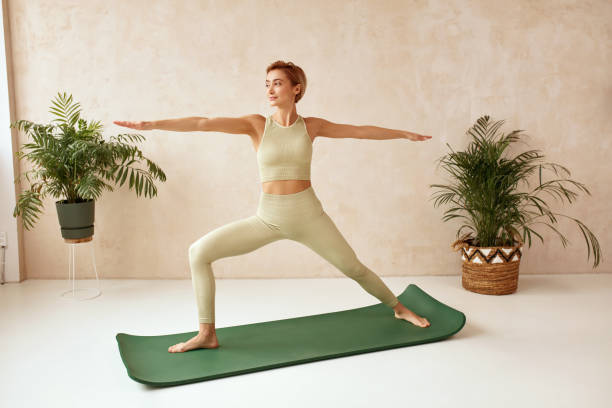
Refining the Alignment of Warrior I
Even small adjustments can completely change how Warrior I feels in your body. The goal isn’t just to look right but to feel balanced, strong, and open. Here are detailed alignment cues to help you deepen your practice:
- Feet and Foundation
Your feet are your roots. Press them firmly into the mat, distributing your weight evenly between the front heel and the back foot’s outer edge. A strong base allows stability throughout the pose. - Knees and Hips
Keep your front knee tracking over your ankle and facing forward. Imagine drawing your thighs toward each other energetically — this engages your inner strength and steadies your balance.
To square your hips, gently bring your right hip back and your left hip forward (if your right leg is in front). - Torso and Core
Draw your belly in slightly to support your lower back. Lift your chest without arching too much. Think of creating space between each vertebra as you grow taller through your spine. - Arms and Shoulders
Extend your arms overhead but keep your shoulders soft. You can separate your palms if your shoulders feel tight. The goal is length and openness, not tension. - Gaze and Mindset
Fix your gaze slightly upward or forward. This helps concentration and strengthens your focus — a reflection of a warrior’s calm determination.
Common Variations of Warrior I
Not everyone’s body moves in the same way, and that’s the beauty of yoga. The Warrior I can be adapted for every level of experience and flexibility.
| Variation | Description | Ideal For |
|---|---|---|
| Gentle Warrior I | Keep your back heel lifted off the ground and shorten your stance. | Beginners or those with tight hips or ankles. |
| Chair-Assisted Warrior I | Hold onto a chair in front of you for stability. | Older adults or people recovering from injury. |
| Deep Warrior I | Take a longer stance and lower your hips deeper. | Experienced yogis seeking intensity and strength. |
| Wall Warrior I | Press your hands against a wall to support alignment. | Those focusing on improving posture and balance. |
Every version carries the same strength, intention, and courage. The important thing is connection, not complexity.
Breathing Techniques for Greater Depth
Breathing transforms Warrior I from a static shape into a living, flowing experience. Try this mindful breathing pattern to deepen your awareness:
- Inhale — feel the expansion through your chest and ribcage. Imagine your breath creating space within you.
- Exhale — release tension in your shoulders and settle into your stance.
- Continue — maintain slow, steady breaths to stay grounded. Let each breath remind you of your balance between effort and ease.
When your breath becomes rhythmic, your movements gain harmony. Breath and posture become one.
Building Strength and Stability
Practicing Warrior I consistently enhances muscle endurance and stability. It is not merely a pose; it’s a full-body workout disguised as meditation. Here’s how it strengthens your physical form:
- Leg Power: Holding this position tones your thighs, glutes, and calves.
- Core Engagement: Your abdominal muscles work constantly to keep you balanced.
- Spine Alignment: The upward lift improves posture and spinal flexibility.
- Shoulder Endurance: Keeping your arms raised builds stamina and coordination.
You’ll begin to notice that over time, your body feels more centered — strong yet graceful, powerful yet light.
The Emotional and Spiritual Impact of Warrior I
Yoga is never just about flexibility or muscle tone. The deeper work happens within — in your mind and heart. Warrior I helps awaken your inner strength and emotional clarity.
When you rise into the posture, you are stepping into your power. You’re telling yourself, I am here. I am capable. I am strong. The warrior you channel isn’t one of battle, but of resilience — the kind who faces challenges without fear.
Regularly practicing Warrior I builds confidence, mental focus, and emotional calm. It teaches you to hold your ground even when life feels unstable.
Mindfulness Practice within Warrior I
To experience the deeper side of Warrior I, combine it with mindfulness:
- Enter Slowly — notice how your feet meet the ground, how your body adjusts, and how your breath supports you.
- Stay Aware — feel the subtle sensations in your muscles and the rhythm of your heartbeat.
- Quiet the Mind — let go of external distractions. Focus on the strength that rises from within.
The more present you are in this moment, the more transformative your practice becomes.
Creating a Flow with Warrior I
Warrior I can be a central pose in your yoga routine. You can include it in sequences that flow smoothly with breath and movement. Here’s a simple but powerful sequence to try:
- Mountain Pose (Tadasana) – Center yourself.
- Downward Dog (Adho Mukha Svanasana) – Stretch your body.
- Step Forward into Warrior I – Breathe deeply and engage your legs.
- Transition into Warrior II – Open your hips and arms wide.
- Reverse Warrior – Lift your heart and expand your side body.
- Return to Downward Dog – Reset and breathe.
This flow enhances stamina, coordination, and mindfulness.
The Symbolism Behind Warrior I
The name Virabhadrasana comes from the Sanskrit words “Vira” (hero or warrior) and “Bhadra” (blessed or auspicious). The Warrior I pose symbolizes the strength of a peaceful fighter — one who fights for balance, self-awareness, and truth rather than aggression.
In a way, Warrior I is a reflection of life itself. Sometimes we must stand tall and brave in front of our fears, yet remain kind and centered within.
The raised arms in the pose can symbolize reaching toward your dreams, while the grounded feet remind you to stay humble and connected to reality. This beautiful duality makes Warrior I a moving meditation of strength and surrender.
Healing Benefits of Warrior I
Practicing Warrior I can be incredibly therapeutic for both the body and mind. Here’s how it contributes to holistic well-being:
| Benefit | Explanation |
|---|---|
| Reduces Stress | The controlled breathing calms the nervous system. |
| Improves Circulation | Enhances blood flow throughout the body. |
| Boosts Energy | Activates energy centers and relieves fatigue. |
| Enhances Focus | Sharpens concentration through steady gazing and balance. |
| Promotes Emotional Stability | Helps release stored tension and fosters peace. |
The pose serves as a bridge between movement and meditation — offering calm energy that carries through your day.
Tips to Improve Your Warrior I Practice
- Warm Up First: Prepare your hips and legs with stretches like Low Lunge and Downward Dog.
- Engage the Core: A strong core stabilizes the pose and prevents lower back strain.
- Check Your Breath: Never hold your breath — let it move freely through each stage.
- Stay Gentle: Avoid forcing flexibility. Ease into the position gradually.
- Consistency Matters: Practicing a little every day builds greater strength than occasional effort.
Remember — perfection is not the goal; awareness is.
Combining Warrior I with Mindful Living
Warrior I is not just a yoga posture; it’s a philosophy of life. It teaches you to meet challenges with grace, to stay grounded while reaching upward, and to keep your heart open even in times of struggle.
You can bring the spirit of Warrior I into your daily routine:
- Face obstacles with calm confidence.
- Speak your truth firmly but kindly.
- Stay focused on your purpose, even when things get hard.
When you embody these lessons, every moment becomes a reflection of your inner warrior.
The Emotional Message of Warrior I
At its core, Warrior I carries a beautiful emotional message: strength doesn’t have to be loud, and bravery doesn’t always mean fighting. True courage is standing tall with compassion, choosing peace over fear, and continuing to grow no matter how many times you stumble.
Each time you enter Warrior I, you remind yourself that your power lies not in control but in connection — connection to your breath, your heart, and the ground beneath your feet.
Final Thoughts on Warrior I
The Warrior I (Virabhadrasana I) is more than a yoga pose — it’s a practice of strength, awareness, and surrender. It teaches you how to find calm in challenge and grace in effort. The longer you hold it, the more you learn about yourself — your patience, your balance, and your resilience.
This pose is a reminder that even in stillness, there is power. Even in simplicity, there is meaning. Every time you rise into Warrior I, you stand not just as a body in movement but as a spirit in transformation.
Let Warrior I guide you to a deeper understanding of who you are — strong yet kind, grounded yet free, a true warrior of peace.