

There’s something profoundly satisfying about releasing pressure — whether it’s the hiss of air escaping a tire valve, the soft purr of an engine finding its rhythm, or the deep sigh of relief that comes when your body finally lets go of tension. The Wind-Relieving Pose (Pavanamuktasana) captures that exact feeling — a complete release, a freeing of energy that leaves your body light, refreshed, and renewed.
Much like maintaining a car’s engine ensures it runs smoothly, the Wind-Relieving Pose keeps your body’s internal “machinery” balanced and clean. It’s a posture that focuses on improving digestion, relieving gas and bloating, and calming the nervous system. Yet, beyond its physical benefits, it offers emotional release — a deep, soulful exhale that feels like your whole being has taken a cleansing breath.
For those who adore cars, think of this pose as the equivalent of clearing out old exhaust — the body’s way of flushing stale air, excess pressure, and waste to keep the system efficient and powerful.
Understanding the Meaning and Origin
The Sanskrit term Pavanamuktasana breaks down beautifully:
- Pavana means “air” or “wind.”
- Mukta means “release” or “freedom.”
- Asana means “pose” or “posture.”
Together, the term translates to “the pose that releases wind or air.”
This might sound simple, even humorous at first, but the wisdom behind it runs deep. In yoga philosophy, the movement of air or prana (vital energy) within the body is crucial for balance. When this energy becomes blocked—just like when fuel flow is restricted in a car—the system struggles, leading to discomfort, fatigue, and imbalance. The Wind-Relieving Pose restores this flow, helping your body function with ease and clarity.
The Science of the Wind-Relieving Pose
Imagine what happens when your car’s exhaust system gets clogged. Pressure builds up, the performance drops, and you can almost feel the engine labor. The human body works similarly. Poor digestion, irregular eating habits, stress, and sedentary lifestyles can cause internal “traffic jams” — particularly in the digestive system.
The Wind-Relieving Pose acts as a natural decongestant for your abdomen. By gently compressing the stomach and intestines, it stimulates peristalsis (the movement of muscles that push food through your digestive tract), releasing trapped gas and improving digestion.
This posture also massages vital organs like the liver, pancreas, and kidneys, ensuring that toxins are released and circulation improves. Think of it as your body’s internal oil change — cleaning the system for smoother performance.
How to Perform Wind-Relieving Pose (Pavanamuktasana)
Like starting a car, the sequence matters. Each step of this pose builds upon the last, ensuring safety, control, and maximum benefit.
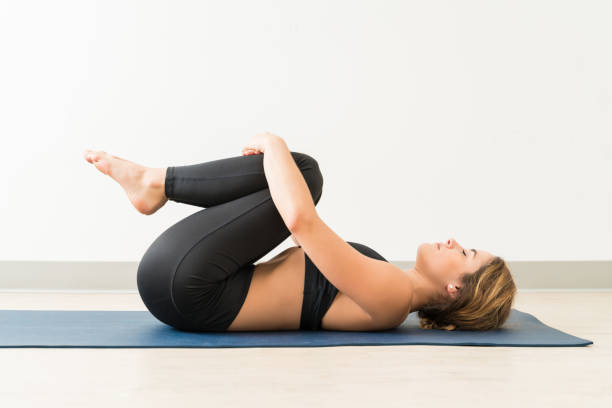
Follow this gentle guide:
- Lie flat on your back on a yoga mat. Keep your legs extended and arms relaxed at your sides.
- Take a deep breath in. Feel your chest rise as you fill your lungs completely.
- As you exhale, bend your right knee and bring it toward your chest.
- Clasp your hands around your knee, interlocking your fingers just below the kneecap.
- Pull the knee closer to your chest while keeping your other leg extended and flat.
- Hold this position for 20–30 seconds, breathing deeply and slowly.
- Release the leg and repeat on the left side.
- After both sides, draw both knees to your chest, hug them tightly, and hold for another 30–60 seconds.
- Rock gently side to side to massage your lower back before releasing.
Each movement should feel natural, never forced — like turning a steering wheel smoothly rather than jerking it. The beauty of Wind-Relieving Pose lies in its simplicity. It doesn’t demand strength or flexibility, just awareness and breath.
Common Mistakes and How to Avoid Them
Even simple actions can go wrong if done without mindfulness. Just as driving carelessly can wear out even the best car, poor form can reduce the effectiveness of your yoga.
Here’s a quick guide to common mistakes in Wind-Relieving Pose and how to correct them:
| Mistake | Why It’s a Problem | Correction |
|---|---|---|
| Pulling the knee too hard | Can strain lower back and hip joints | Pull gently and only as far as comfortable |
| Lifting the head forcefully | Creates neck tension | Lift the head softly or keep it on the mat |
| Holding breath | Reduces oxygen flow and calmness | Keep breathing deeply throughout |
| Pressing stomach too hard | Can cause discomfort | Maintain a soft, rhythmic pressure |
| Rushing through the pose | Prevents full relaxation | Hold each side for at least 20–30 seconds |
By treating your body like a well-designed machine, with care and attention, the results will always be smoother and longer-lasting.
Physical Benefits of Wind-Relieving Pose
Now, let’s explore the mechanics and magic this pose brings to your system.
1. Improves Digestion
The pose compresses the abdomen and massages the internal organs, stimulating digestion. It helps eliminate gas and bloating naturally, reducing discomfort after meals.
2. Strengthens the Lower Back
The gentle pressure and rocking motion stretch and strengthen the lower back muscles, relieving stiffness from sitting or driving for long periods.
3. Reduces Belly Fat and Tones the Abdomen
Regular practice of Wind-Relieving Pose engages the core muscles, tightening the abdomen and stimulating fat metabolism.
4. Enhances Blood Circulation
By stimulating abdominal organs and the spine, it boosts blood flow, promoting overall vitality.
5. Relieves Stress and Anxiety
When you release tension from the core, the entire body feels lighter. The deep breathing in this pose activates the parasympathetic nervous system, helping you relax fully.
6. Eases Constipation
By gently massaging the intestines, this pose improves bowel movement and reduces constipation — an issue that often arises due to poor diet or long sitting hours.
7. Detoxifies the Body
Every exhale in Wind-Relieving Pose acts like releasing exhaust — flushing out carbon dioxide and toxins while drawing in fresh oxygen for rejuvenation.
Emotional Healing Through the Wind-Relieving Pose
Though the name may sound purely physical, the Wind-Relieving Pose also works on emotional energy.
In yoga philosophy, our gut is often called the “second brain.” When emotions like fear, anger, or anxiety are suppressed, they tend to settle in the abdomen — creating tightness, cramps, or digestive troubles. This pose, with its gentle compression and release, helps move that stagnant energy out of the body.
Each time you exhale deeply while holding your knees, you’re symbolically letting go of emotional pressure. You’re saying to yourself, “It’s okay to release. It’s okay to breathe again.”
It’s a reminder that relief, whether mechanical or emotional, always comes after letting go.
Wind-Relieving Pose in Daily Life
Our modern lifestyle is full of tension — long hours at desks, endless commutes, heavy meals, and constant screens. The Wind-Relieving Pose serves as a quick reset button.
Even practicing it for five minutes a day can:
- Reduce back pain after driving
- Ease bloating after a meal
- Improve sleep quality
- Rebalance breathing and posture
You don’t need a yoga studio — just a mat and some quiet space. Think of it as your body’s “maintenance check.” When you take those few moments to stretch, breathe, and realign, you prevent small problems from turning into big breakdowns — much like keeping your car serviced regularly.
Breathing Technique During Wind-Relieving Pose
Breath is the fuel of yoga, the premium-grade energy that powers every movement.
In Wind-Relieving Pose, the breath plays a vital role in maximizing its benefits.
Try this pattern:
- Inhale as you draw the knees in, filling your lungs and expanding the chest.
- Hold the breath briefly while compressing the abdomen.
- Exhale slowly, feeling the stomach release as if emptying stale air.
This rhythm helps relax the diaphragm, enhance oxygen flow, and cleanse internal organs. It’s just like adjusting air pressure in your tires — you can feel the difference in performance immediately when the balance is right.
Why Car Enthusiasts Love Wind-Relieving Pose
It might sound unusual, but those who love cars often find yoga fascinating once they see the connection. Cars and bodies share the same principle — motion and maintenance.
A car performs best when all its parts work in harmony — when exhaust flows freely, pressure levels are balanced, and energy is efficiently converted. Similarly, the Wind-Relieving Pose helps your body maintain perfect balance by releasing built-up internal pressure.
It’s your body’s “release valve,” ensuring everything runs smoothly. For car lovers who spend long hours driving, this pose can ease stiffness, improve circulation, and refresh energy — the perfect pit stop for your body and mind.
The Breath: The Engine Behind the Wind-Relieving Pose
Think about your favorite car for a moment. What keeps it running smoothly? The engine, of course. Just like a car engine needs the perfect blend of fuel and air, your body needs the perfect synchronization of breath and movement.
In Wind-Relieving Pose, breathing plays the role of the engine oil that keeps the internal systems running effortlessly. When you pull your knees toward your chest and hold the pose, your abdomen presses against your lungs and diaphragm, forcing you to become deeply aware of your breathing pattern.
This mindful breathing enhances oxygen supply, massages the internal organs, and helps release trapped gas and toxins. In yoga philosophy, this process also helps clear “prana blockages” — the energy knots that prevent the free flow of life force within the body.
When you practice deep inhalations and slow exhalations during Pavanamuktasana, you are, in a way, tuning your body engine, just like how you’d tune a luxury car for smooth performance.
The Emotional Cleansing Aspect
One of the most underestimated benefits of the Wind-Relieving Pose is its emotional release. Modern life often fills us with mental clutter—stress, deadlines, arguments, and disappointments. Over time, these emotional burdens affect digestion, sleep, and even our posture.
When you lie on your back, draw your knees in, and hold your legs, you’re symbolically curling into yourself—a moment of emotional comfort and self-care. It’s like giving your inner self a warm hug. This gentle compression stimulates the solar plexus, the emotional center of confidence and self-worth, helping release anxiety and mental tension.
Practicing Wind-Relieving Pose regularly makes you more grounded. You feel calmer, lighter, and emotionally refreshed—just as you feel after taking your car for a long drive through open roads, with fresh air rushing by.
How Wind-Relieving Pose Affects Digestion
The digestive system is one of the biggest beneficiaries of Pavanamuktasana. The pose directly stimulates the colon, stomach, and small intestine, which helps relieve constipation, bloating, and indigestion.
When you compress the abdomen with your thighs, it acts like a natural massage for your internal organs. Blood circulation improves, the digestive fire (Agni) gets reignited, and toxins get flushed out more efficiently.
If you’ve ever felt sluggish or heavy after meals, practicing Wind-Relieving Pose can reset your system. It’s your body’s version of a car engine cleaning—it removes the residue, clears the filters, and ensures your system runs at optimal speed.
| Digestive Benefit | Effect of Wind-Relieving Pose |
|---|---|
| Relieves Gas | Releases trapped air from intestines |
| Reduces Bloating | Compresses abdomen to expel excess gas |
| Improves Metabolism | Enhances blood flow to digestive organs |
| Eases Constipation | Stimulates bowel movement naturally |
| Strengthens Core | Builds endurance in abdominal muscles |
This simple yet powerful pose is a natural detoxifier—no need for pills or supplements. Just your breath, your body, and your intention to heal.
Wind-Relieving Pose for Car Lovers: The Mechanical Magic
For those who love cars, think of Wind-Relieving Pose as your personal tune-up session. Just as your favorite car needs oil changes and engine flushing, your body also needs periodic internal maintenance.
Your intestines, lungs, and diaphragm are like the pistons of an engine. When they move efficiently, your body’s performance improves—energy increases, fatigue disappears, and your focus sharpens.
Yoga, especially this pose, keeps your “engine parts” running smoothly. It ensures that every system—respiratory, circulatory, and digestive—functions like a well-lubricated machine. The difference is that unlike cars, our bodies don’t come with replacement parts; we have to preserve and maintain them with care.
The Mindfulness Element
When you practice Wind-Relieving Pose, try closing your eyes and focusing on your breath. Feel the gentle rise and fall of your abdomen. Notice how your breath becomes deeper and smoother.
This mindfulness helps your nervous system relax. It reduces cortisol levels (the stress hormone) and improves serotonin production, which elevates your mood. You begin to experience the mind-body connection that is at the heart of yoga.
When the mind relaxes, digestion improves, energy levels rise, and the entire body starts functioning more harmoniously. It’s like your mental engine going from rough idle to a smooth, steady hum.
Step-by-Step Breathing Guidance During the Pose
- Inhale deeply – Feel your lungs expand fully as your chest rises.
- Exhale slowly – Draw your knees toward your chest, letting go of tension.
- Hold the breath momentarily – Feel the gentle pressure on your abdomen.
- Inhale again – Allow your chest to open, releasing your legs slightly.
- Exhale completely – Hug your knees tighter and relax your shoulders.
Repeat this cycle 5–7 times. Each breath cycle becomes smoother as your body adjusts to the rhythm.
The Symbolism Behind Wind-Relieving Pose
Every yoga posture has a symbolic meaning beyond its physical appearance. In Pavanamuktasana, “Pavana” means wind or energy, and “Mukta” means release. The wind here symbolizes more than air—it represents life force, thoughts, emotions, and everything that circulates within you.
By practicing Wind-Relieving Pose, you symbolically free yourself from what’s holding you back—be it emotional blockages, unhealthy habits, or negative thought patterns. It’s an act of letting go and embracing clarity.
Imagine this: every exhale you take while holding the pose releases a burden, a worry, or an unnecessary thought. You end the practice lighter, freer, and more alive.
Tips for a Safe and Effective Practice
- Empty Stomach: Practice on an empty stomach or at least 3 hours after eating.
- Gentle Pressure: Avoid pressing your knees too hard into your chest; find comfort.
- Relax the Neck: Keep your neck and shoulders relaxed to prevent tension.
- Don’t Overstretch: Respect your body’s limits, especially if you have back or hip issues.
- Consistency Matters: Practice daily for best results—small, consistent steps yield big changes.
Advanced Variation: Wind-Relieving Pose with One Leg
For those who want to go deeper, try Single-Leg Wind-Relieving Pose (Ardha Pavanamuktasana).
- Lie on your back.
- Keep one leg extended on the floor and bend the other knee toward your chest.
- Hold your knee and press it gently into your abdomen.
- Switch sides after 30 seconds.
This variation targets one side of the digestive system at a time, enhancing internal balance.
Building a Morning Routine with Wind-Relieving Pose
Start your day with Pavanamuktasana right after waking up. Here’s a short morning yoga flow:
- Cat-Cow Stretch – Warm up the spine.
- Child’s Pose – Relax the lower back.
- Wind-Relieving Pose – Massage internal organs.
- Bridge Pose – Strengthen the back.
- Corpse Pose – End with deep relaxation.
This five-step routine can do wonders for your physical and emotional health, especially if you sit long hours at work or spend time driving.
The Deeper Lesson: Release to Move Forward
In life, just as in yoga, we often hold onto unnecessary things—grudges, regrets, or worries. These weigh us down, just like carbon deposits slow down a car engine. Wind-Relieving Pose teaches the art of letting go.
Each time you exhale deeply, you symbolically release what doesn’t serve you anymore. You make space for joy, clarity, and calmness to enter.
When practiced regularly, Pavanamuktasana becomes a gentle reminder: progress doesn’t always come from holding tighter; sometimes, it comes from releasing.
Final Thoughts
The Wind-Relieving Pose may seem simple, but its benefits are profound. It connects your breath, body, and mind into a beautiful rhythm of healing. It strengthens your core, enhances digestion, and calms your emotions—all while teaching the deeper value of release.
For car enthusiasts and everyday dreamers alike, this pose reminds us that maintenance is key. Whether it’s a vehicle or our own body, regular care leads to smooth performance and longevity.
So, next time you roll out your yoga mat, take a deep breath, hug your knees to your chest, and feel the transformation begin from within. The Wind-Relieving Pose isn’t just an exercise—it’s your daily restart button, a moment of balance in a fast-moving world.