

When we talk about yoga, most people imagine soft mats, deep breaths, and graceful postures that flow like poetry. But there’s a part of this experience that often goes unnoticed — the silent struggle of discomfort in the knees. Whether you’re a beginner or a seasoned practitioner, knee pressure can quickly turn a peaceful pose into a painful distraction. That’s where the knee pad for yoga becomes more than just an accessory — it becomes your quiet ally in comfort and confidence.
The beauty of yoga lies in harmony: the balance between strength and surrender, movement and stillness, power and softness. But when your knees ache during a pose like Tabletop, Camel, or Low Lunge, it’s hard to find that harmony. You begin to hold back. You shift your focus from your breath to your pain. And slowly, the rhythm of peace breaks.
A knee pad for yoga might seem like a simple tool, yet its effect is transformational. Just like a well-tuned suspension system in a luxury car smooths every bump on the road, a good knee pad cushions your practice, helping you glide through each pose with ease.
Why Knee Comfort Matters in Yoga
Your knees are one of the most delicate joints in the body. They bear your body weight, absorb shock, and support transitions between postures. In yoga, where many poses require kneeling, balancing, or resting weight on the knees, proper cushioning becomes essential.
When your knees lack support, discomfort can escalate into strain, and strain can lead to injury. Over time, this pain can discourage you from practicing consistently. And consistency is the key to any transformative habit.
That’s where the knee pad for yoga steps in. It bridges the gap between comfort and endurance, allowing you to explore deeper poses without the fear of pain.
What Is a Knee Pad for Yoga?
A knee pad for yoga is a small, portable cushion designed to provide extra support for your knees, wrists, or elbows during your practice. Unlike a standard yoga mat, which offers uniform thickness, a knee pad targets specific pressure points, giving your joints the care they deserve.
These pads are usually made from high-density foam or eco-friendly materials that balance softness with firmness. The goal is not to make the surface too squishy, but to offer stable cushioning that absorbs impact while keeping you grounded.
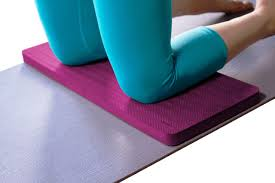
Just like a finely engineered car seat that supports your posture during long drives, a knee pad maintains your joint alignment, ensuring comfort without compromising balance.
The Importance of Stability and Cushioning
Comfort alone isn’t enough. Stability matters just as much. A pad that’s too soft can cause your hands or knees to sink, throwing off your balance in poses like Plank or Downward Dog. A good knee pad for yoga strikes the perfect balance — soft enough to ease pressure, yet firm enough to maintain alignment.
Think of it like driving a sports car with a perfectly tuned suspension: every movement feels fluid, precise, and supported. That’s the experience a good knee pad brings to your yoga flow.
Types of Knee Pads for Yoga
There isn’t one type of knee pad that fits all needs. Just like cars come in various designs for different terrains, yoga knee pads come in different forms to suit individual preferences. Let’s explore a few:
- Round Knee Pads: Compact and easy to position under your knees or wrists. Ideal for quick cushioning and portability.
- Rectangular Knee Pads: Larger and versatile, offering more surface area for different body parts like hips or elbows.
- Integrated Yoga Mat Pads: Some yoga mats have built-in padded zones for extra support, perfect for those who prefer minimal gear.
- Eco-Friendly Pads: Made from natural rubber, cork, or organic materials — designed for those who value sustainability alongside comfort.
- Memory Foam Pads: These adapt to your body’s pressure points, providing customized comfort that molds to your unique structure.
Each type of knee pad for yoga offers a distinct experience. The key is to find the one that feels right — not just for your body, but for your style of practice.
The Emotional Impact of Comfort
Yoga is not just about stretching muscles; it’s about softening the heart. When your body feels at ease, your mind follows. Imagine kneeling down in a pose and feeling no discomfort — just calm stillness. That’s when true connection happens.
Discomfort distracts. Comfort empowers. When you’re supported by a knee pad for yoga, you can focus entirely on your breath, your alignment, and your inner peace. The pad becomes more than a piece of foam — it becomes a bridge between pain and presence.
How Knee Pads Support Every Pose
Let’s look at how a knee pad for yoga enhances specific postures:
| Pose | Challenge Without a Pad | Benefit of Using a Knee Pad |
|---|---|---|
| Tabletop (Bharmanasana) | Pressure on kneecaps, especially on hard floors | Distributes weight evenly and prevents soreness |
| Low Lunge (Anjaneyasana) | Pain in back knee when grounded | Provides cushioning for the back knee, enhancing stability |
| Camel Pose (Ustrasana) | Discomfort in kneeling position | Allows deeper backbend without knee pain |
| Cat-Cow Pose (Marjaryasana-Bitilasana) | Knees dig into mat | Smooth motion through each transition |
| Child’s Pose (Balasana) | Hard floor pressure on joints | Deep relaxation with full knee support |
A small change in equipment can turn a challenging pose into a joyful experience.
Choosing the Right Knee Pad for Yoga
When buying a knee pad for yoga, it’s important to think about more than just color or price. Here are a few tips to help you choose wisely:
- Material Quality: Go for durable, non-slip materials that maintain grip on the mat. High-density foam or natural rubber are great choices.
- Thickness: Around ½ to 1 inch thickness provides optimal comfort without compromising stability.
- Size: Choose a size that fits your body type and practice style. If you move often between poses, a larger pad might work better.
- Portability: Lightweight and easy-to-carry designs make practice convenient anywhere — at home, studio, or even outdoors.
- Eco-Friendly Options: For environmentally conscious practitioners, pads made from sustainable materials add emotional value to your routine.
Just as every car has its ideal tire size and tread for performance, every yogi has their ideal pad thickness and density for comfort.
Caring for Your Knee Pad
To make your knee pad for yoga last longer, treat it as you would a cherished companion in your practice. Wipe it down regularly with a mild soap solution or yoga mat cleaner, and let it air dry. Avoid harsh chemicals that could break down the foam.
Store it flat or rolled up gently, away from direct sunlight. A well-cared-for knee pad will serve you faithfully for years — just like a well-maintained car keeps running smoothly mile after mile.
The Connection Between Cars and Comfort
If you love cars, you understand that comfort isn’t just a luxury — it’s performance. A car seat that supports you properly lets you drive longer and with better control. In the same way, a knee pad for yoga enhances your “driving” experience on the mat.
Both worlds share one truth: precision matters. In yoga, precision is found in the alignment of your body; in cars, it’s found in the engineering of every curve and line. Both require attention, care, and the pursuit of perfection.
When you’re comfortable, you perform better — whether you’re steering through traffic or holding Warrior Pose with grace.
The Journey of Mindful Practice
Comfort creates the space for mindfulness. When your knees stop hurting, your breath deepens, your awareness expands, and your focus sharpens. You begin to feel connected — to your body, your mat, and your intentions.
A knee pad for yoga doesn’t just protect your knees; it protects your peace. It allows you to explore the edges of your potential without fear. That’s where true transformation begins — in that space between effort and ease.
A Personal Reflection
Think of the first time you tried yoga. Maybe the mat felt too thin, or your knees protested during a long hold. You probably thought yoga wasn’t for you. But what if the only thing missing was the right support?
That’s what a knee pad for yoga offers — the chance to rediscover the joy of the practice without pain. It whispers encouragement to the hesitant beginner and offers relief to the seasoned yogi. It invites everyone to kneel without fear, to move without hesitation, and to breathe without distraction.
Like the quiet hum of an engine that reassures you on the road, the knee pad reassures your body during every pose — that it’s safe, supported, and strong.
Materials That Make a Difference
Choosing the right material for your knee pad for yoga can transform your experience. Let’s explore the options:
- Memory Foam:
Ideal for those who crave softness and shock absorption. Memory foam molds to your body shape and gives a gentle cushion feel. However, it might not be suitable for hot yoga, as it retains heat. - Natural Rubber:
Eco-friendly, non-slip, and highly durable. Natural rubber pads are ideal for eco-conscious yogis who prefer a firm base. - TPE (Thermoplastic Elastomer):
Lightweight, flexible, and easy to clean, TPE pads strike a great balance between comfort and portability. - NBR Foam (Nitrile Butadiene Rubber):
Excellent for joint support and shock absorption, NBR is perfect for beginners who want that extra cushioning.
If you love structure and durability, go for rubber or TPE. If you prefer a softer experience, memory foam or NBR will be your best bet.
How to Use a Knee Pad for Yoga Effectively
A knee pad for yoga can be placed in various ways depending on your pose and need:
- Under the Knees: For poses like Tabletop (Bharmanasana), Camel (Ustrasana), or Crescent Lunge, place it directly under your knees.
- Under the Elbows or Forearms: When practicing Dolphin Pose or Forearm Plank, this protects elbows from strain.
- Under the Wrists: For those with sensitive wrists, it reduces compression during poses like Downward-Facing Dog.
- As a Support Tool: Use it under your hips in seated poses to elevate your spine for better alignment.
A good knee pad for yoga doesn’t just protect—it enhances flexibility and improves balance by stabilizing pressure points.
Why Car Lovers Appreciate the Idea of Yoga Accessories
If you’re a car enthusiast, this might sound relatable—your car and your body both perform at their best when every component is tuned and protected. Just as you wouldn’t take a long road trip without proper tires, you shouldn’t enter a yoga session without adequate support.
A knee pad for yoga is like shock absorbers for your body. It ensures smooth transitions between poses, prevents wear and tear (just like brake pads prevent damage), and enhances your overall comfort during long “rides” on the mat.
Car lovers understand the value of precision, care, and endurance—all of which mirror the spirit of yoga. A good yoga pad system (mat + knee pad) is your performance kit, ensuring balance and comfort, just like a car’s suspension system ensures stability and control.
Choosing the Right Thickness and Size
Thickness and size are critical factors when picking your knee pad for yoga.
| Type | Thickness Range | Best For |
|---|---|---|
| Thin Pads (5–10mm) | Experienced yogis needing light support | Daily yoga on cushioned floors |
| Medium Pads (10–20mm) | Balanced comfort and stability | Ideal for most practitioners |
| Thick Pads (20–25mm) | Maximum cushioning | Hard floors or sensitive knees |
Size also matters. Compact round or rectangular pads are portable and easy to position, while larger ones can be used as mini-mats for full-body poses.
Caring for Your Knee Pad
To make your knee pad for yoga last longer:
- Wipe it down after every session with mild soap and water.
- Avoid exposing it to direct sunlight for prolonged periods.
- Roll it up loosely instead of folding it to prevent cracks.
- Store it in a dry, cool space.
Treat your pad the way you treat your yoga mat—it deserves respect, attention, and care.
The Emotional Connection: Comfort and Courage
Yoga is more than a sequence of poses—it’s a reflection of how you treat yourself. Using a knee pad for yoga isn’t a sign of weakness but of wisdom. It’s about listening to your body and giving it what it needs to thrive.
Imagine kneeling down during your morning practice without the sting of pain. Imagine feeling grounded, free from hesitation. This comfort empowers you to push your limits, explore deeper postures, and embrace yoga as a lifelong companion.
When your knees stop hurting, your spirit opens up. You find courage where there used to be discomfort. That’s the real power of mindful accessories—they let you focus on growth, not struggle.
How to Pair It with Other Accessories
To elevate your yoga experience even further, pair your knee pad for yoga with:
- A high-grip yoga mat for stable transitions.
- Yoga blocks for added balance and support.
- A yoga strap to enhance flexibility.
- A non-slip towel to absorb sweat during intense sessions.
These accessories together form a system of harmony—each complementing the other, much like the components of a luxury car engine working in unison for a smooth drive.
Why Beginners Need It the Most
If you’re new to yoga, your joints are not yet conditioned for the constant kneeling, stretching, and balancing. Without protection, you might develop soreness or injuries that make you quit too soon. A knee pad for yoga acts as a safeguard, ensuring your first experiences are comfortable and motivating.
When you start on the right note, you build confidence faster. Each pain-free pose strengthens your relationship with yoga. It’s the difference between forcing yourself to practice and looking forward to it every day.
Real-Life Inspiration: From Struggle to Serenity
Many yoga practitioners began their journey with discomfort. They loved the calmness yoga promised but dreaded certain poses due to knee pain. Then, something as simple as a knee pad for yoga changed everything.
They could suddenly hold poses longer. Meditation became peaceful again. Their yoga mats no longer symbolized struggle but serenity.
Sometimes, small changes lead to big transformations. A pad that costs less than a dinner out can rekindle your passion for yoga.
The Ultimate Buying Guide
When shopping for the best knee pad for yoga, consider these points:
- Thickness: Choose according to your body weight and floor surface.
- Non-Slip Base: Essential for safety, especially during dynamic poses.
- Portability: Lightweight and easy to carry for outdoor sessions.
- Material Safety: Non-toxic and odor-free materials protect your health.
- Durability: Look for tear-resistant, high-density foam or rubber.
If possible, test different models before purchasing. Comfort is deeply personal—what works for one person might not work for another.
Yoga for the Driven and the Dreamers
For those who love speed, power, and control—like car lovers—yoga might seem slow. But think about it differently: yoga fine-tunes your body the way tuning refines an engine. The knee pad for yoga ensures every pose is a smooth, well-calibrated motion, free from friction.
Driving fast feels exhilarating. Practicing yoga deeply feels liberating. Both require focus, care, and respect for the machinery—whether it’s your car or your body.
Conclusion: Empower Your Journey with Comfort
The knee pad for yoga is not a luxury—it’s a necessity for anyone who values both comfort and performance. It supports your foundation, reduces pain, and enhances your connection with each movement.
Yoga isn’t about pushing harder—it’s about moving smarter. And this simple tool helps you do just that.
Whether you’re a beginner seeking comfort or a car lover balancing passion and peace, remember this: every great journey begins with care. Protect your knees, embrace your flow, and let your knee pad for yoga carry you gracefully into your next session—stronger, freer, and more inspired than ever before.