

In the quiet world of yoga, some poses whisper peace, while others roar strength and balance. Then there’s one—Shoulderstand Yoga—that does both. Known traditionally as Sarvangasana, this posture translates to “the pose of all parts,” symbolizing total harmony between body, mind, and spirit.
It’s a pose that doesn’t just make you look graceful—it makes you feel powerful. Imagine lifting your body skyward, balancing gently on your shoulders, your heart open, your mind calm, and your soul elevated. That’s the silent poetry of Shoulderstand Yoga—a journey of turning yourself upside down to see life from a higher perspective.
The Emotional Meaning Behind Shoulderstand Yoga
Every yoga pose carries emotion, and Shoulderstand Yoga is no different. It represents reversal, renewal, and rebirth. When you invert your body, you challenge gravity, but more importantly—you challenge your fear. You learn that sometimes, to find clarity, you must first look at life from a different angle.
It’s a deeply symbolic pose. It whispers to your heart,
“You can rise even when the world feels upside down.”
This inversion isn’t only physical—it’s emotional. When your body flips, your blood flows differently, your breath deepens, and your mind resets. It’s as if you’re cleansing your thoughts, flushing out what doesn’t serve you, and breathing in light again.
That’s the hidden beauty of Shoulderstand Yoga—it doesn’t just strengthen your body; it renews your inner world.
How to Do Shoulderstand Yoga (Step-by-Step)
Before you begin, remember: this pose should be approached gently and mindfully. A warm body and calm mind are your best companions.
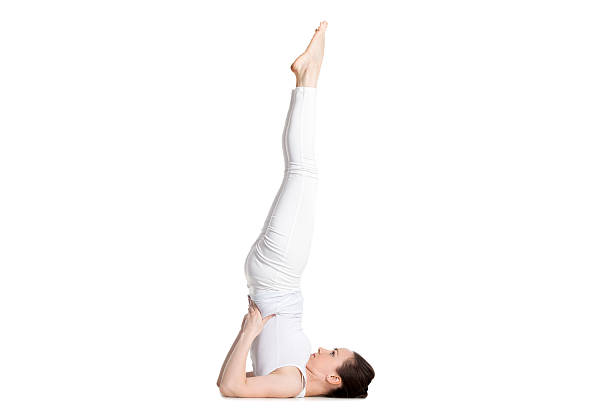
Step 1: Prepare Your Space
Find a quiet, soft surface. Use a yoga mat or even a folded blanket for extra shoulder support. Lie flat on your back with your arms resting comfortably at your sides.
Step 2: Engage Your Core
Take a deep breath in. As you exhale, draw your belly inwards—this activates your core. Bend your knees slightly and press your palms firmly into the mat.
Step 3: Lift Your Legs
Slowly raise both legs to a 90-degree angle. Keep them straight, toes pointing upward. Feel your lower abs engage as you support the motion.
Step 4: Raise the Hips
With your palms pressing into the mat, gently lift your hips off the floor. Roll your spine upward until your weight shifts toward your shoulders. You can support your lower back with both hands.
Step 5: Find Balance
Once your torso is vertical, let your elbows rest close to your body. Your hands should support your back while your legs remain straight and firm toward the ceiling. Keep your chin tucked slightly toward your chest.
Step 6: Breathe and Hold
Take slow, deep breaths. Stay in this pose for 15–30 seconds at first, then gradually extend the time as your strength increases.
Step 7: Release Gracefully
To come out, slowly lower your legs while keeping your hands on your back. Gradually bring your spine down, vertebra by vertebra, until you’re flat again on the mat. Rest in Corpse Pose (Savasana) for a minute to let your circulation normalize.
Safety and Precautions
Shoulderstand Yoga is powerful—but like all inversions, it must be done mindfully. Here are key points to remember:
- Avoid the pose if you have neck or shoulder injuries.
- Don’t practice immediately after eating.
- Keep your weight evenly distributed on your shoulders—not your neck.
- Beginners can use a folded blanket or yoga bolster under the shoulders for comfort.
- Pregnant women or people with high blood pressure should consult a professional before attempting.
Remember, yoga is not about perfection—it’s about awareness. Every slight lift, every deep breath counts as progress.
The Science Behind Shoulderstand Yoga
You might wonder—why is Shoulderstand Yoga called the “Queen of Asanas”?
It’s because this single pose influences nearly every system in your body. When you invert, gravity pulls blood toward the heart and brain, stimulating circulation and refreshing your nervous system.
Here’s what happens internally:
- Brain and Nervous System: The increased blood flow brings more oxygen to the brain, improving focus, memory, and calmness.
- Thyroid and Endocrine System: The compression at the throat region activates the thyroid gland, which helps balance metabolism and energy.
- Lymphatic System: By reversing gravity, lymph fluid drains efficiently, flushing toxins and boosting immunity.
- Heart and Circulation: The heart gets a rest as gravity helps return blood from the legs and lower body.
It’s like giving your body a mini detox and reboot—naturally, with no supplements or devices.
The Emotional Benefits: Beyond the Physical
The Shoulderstand Yoga pose is not only a physical inversion; it’s also an emotional inversion. You’re literally turning your world upside down—and that changes how you feel about challenges in life.
When you’re inverted:
- Your perspective changes—you start seeing problems as opportunities.
- Your mind becomes quiet, more aware of breath and balance.
- You feel more grounded, even while being upside down.
Many yoga practitioners describe a sense of inner peace during this pose. There’s something profoundly humbling about being upside down. It reminds you that control isn’t always the goal—sometimes, surrender is the path to strength.
The Connection Between Shoulderstand Yoga and Mindfulness
Every second in Shoulderstand Yoga demands concentration. You can’t think about yesterday or tomorrow when you’re balancing upside down—you’re fully here, in the now.
That’s mindfulness in its purest form.
As your breath deepens, the chatter in your mind begins to fade. You become more attuned to your heartbeat, your breath, your alignment. The world outside seems distant, while your inner world feels alive.
Practicing this pose regularly can teach you how to:
- Focus better in daily tasks.
- Stay calm under stress.
- React less emotionally and respond more consciously.
That’s why Shoulderstand Yoga isn’t just exercise—it’s mental therapy through motion.
How Shoulderstand Yoga Builds Inner and Outer Strength
When you first try the pose, your body may shake, your balance might waver, and your mind may doubt your ability. But here’s the secret: every attempt makes you stronger—not just physically but emotionally.
Your arms grow firm, your shoulders resilient, your back flexible—but your confidence also begins to bloom.
Because when you lift yourself upside down, you’re saying:
“I trust my body. I trust myself.”
That’s real strength—the kind that stays with you long after you roll up your mat.
Breathwork During Shoulderstand Yoga
Your breath is your foundation. Without steady breathing, balance is impossible.
Here’s a mindful breathing rhythm for Shoulderstand Yoga:
- Inhale: Lift and lengthen. Feel energy rising through your spine.
- Exhale: Ground yourself through your shoulders. Let tension melt away.
- Hold: Pause for a brief moment at the top—let silence fill you.
- Exhale gently: As you lower down, control your movement, not rush it.
Breathing this way not only improves focus—it connects your body’s motion to your soul’s rhythm.
Common Mistakes and How to Avoid Them
Even experienced yogis can misalign this pose. Here’s how to keep your practice safe and effective.
| Mistake | Effect on Body | Correction Tip |
|---|---|---|
| Putting weight on the neck | Can cause strain or injury | Keep weight on shoulders, not neck |
| Legs not straight | Reduces balance | Engage thighs and point toes upward |
| Elbows spread too wide | Weakens support | Keep elbows close under shoulders |
| Rushing into the pose | Increases risk of falling | Move slowly with full breath awareness |
| Forgetting to breathe | Causes tension | Maintain steady, rhythmic breathing |
Why Shoulderstand Yoga is Called the “Queen of Asanas”
In yoga tradition, Headstand is known as the “King of Asanas,” and Shoulderstand Yoga is its queen—because it nurtures, heals, and balances the body’s inner systems.
While Headstand brings power and focus, Shoulderstand offers gentleness, healing, and calm energy. It’s a nurturing inversion that harmonizes the body’s flow rather than forcing it.
This is why yoga masters have long said:
“If you can do one pose daily, let it be Shoulderstand.”
It energizes the tired, relaxes the anxious, and soothes the restless. It’s like medicine in motion.
Emotional Message: Rising from Within
Every time you rise into Shoulderstand Yoga, imagine that you’re lifting yourself above your fears, doubts, and limits.
This isn’t just a yoga posture—it’s a statement of self-belief.
It teaches patience. It rewards consistency. It heals silently.
Even if you hold it for five seconds today, and ten tomorrow—each attempt is a declaration: I am capable of lifting myself higher.
Advanced Variations of Shoulderstand Yoga
Once you’ve developed stability in the traditional form of Shoulderstand Yoga, you can explore gentle variations that bring new energy and focus into your practice. Each version opens a different aspect of your body and mind, teaching patience, control, and awareness.
1. Supported Shoulderstand
This version uses props—like folded blankets or a yoga bolster—to reduce strain on your neck. Place a blanket under your shoulders, allowing your head to rest off the edge. Lift your hips and support your back with your hands. It’s perfect for beginners or those looking for a restorative experience.
2. Half Shoulderstand (Ardha Sarvangasana)
In this variation, the legs remain slightly angled instead of straight up. It’s easier on the core and shoulders while still providing the same circulatory and calming benefits. It’s an excellent step between bridge pose and the full shoulderstand.
3. Lotus Shoulderstand
Once you’re confident in the standard position, you can cross your legs into the lotus position while inverted. This enhances balance and stimulates energy flow through the spine and hips. It’s more advanced but deeply meditative.
4. Plow Pose Transition (Halasana)
From the full Shoulderstand Yoga, gently lower your legs over your head until your toes touch the ground behind you. This deepens your stretch and enhances spinal flexibility. It also creates a soothing pressure on the back of the neck and shoulders, promoting relaxation.
5. One-Legged Shoulderstand
For balance training, try extending one leg at a time while keeping the other bent or supported. This variation strengthens your core and improves coordination while teaching focus and precision.
Each of these versions carries its own rhythm, its own lesson. What matters most isn’t how perfect they look—but how deeply they make you feel connected to your breath and your inner stillness.
Physical Benefits of Shoulderstand Yoga
Practicing Shoulderstand Yoga consistently nourishes every corner of your body. It is more than a posture—it’s a full-system reset. Let’s explore the incredible physical benefits it brings.
1. Improves Circulation and Heart Health
By reversing the pull of gravity, this pose encourages blood flow toward the heart and brain. It lightens the heart’s workload, promoting a balanced circulatory system and better oxygen delivery throughout the body.
2. Stimulates the Thyroid Gland
The gentle pressure on your throat region activates the thyroid gland, helping regulate metabolism and energy balance. This is why practitioners often report improved mood, vitality, and even better sleep.
3. Enhances Core Strength
Your core muscles—abdominals, lower back, and obliques—stay fully engaged during the pose. Over time, this improves posture, stability, and spinal alignment.
4. Strengthens the Shoulders and Upper Body
Supporting your body weight on your shoulders builds endurance and stability in your arms and back muscles. It’s a graceful way to tone your upper body without heavy strain.
5. Eases Fatigue and Calms the Nervous System
Inversions trigger the parasympathetic nervous system—the body’s natural relaxation response. This reduces stress hormones, eases anxiety, and leaves you feeling centered and calm.
6. Aids in Detoxification
With enhanced lymphatic drainage, the body clears waste and toxins more efficiently. This internal cleansing supports clearer skin, better digestion, and stronger immunity.
7. Improves Digestion
By stimulating abdominal organs, this pose helps relieve indigestion, constipation, and sluggish metabolism. It restores internal balance and lightness to your digestive system.
8. Relieves Leg Swelling and Fatigue
If you stand or sit for long periods, Shoulderstand Yoga is your body’s antidote. It reverses fluid buildup in the legs, reducing swelling and promoting comfort.
Emotional and Mental Benefits of Shoulderstand Yoga
The true power of Shoulderstand Yoga unfolds beyond the muscles—it touches the heart. The emotional depth of this pose is what makes it truly transformative.
1. Brings Inner Peace
Being upside down changes the way your brain processes thought. It quiets the mental noise, releasing stored tension. You begin to sense a calm confidence—a peace that comes from within, not from what surrounds you.
2. Builds Courage and Focus
It takes courage to lift yourself upside down. With every attempt, you train your mind to face fear and uncertainty. The moment you balance in stillness, you realize how powerful calm focus can be.
3. Enhances Self-Trust
Supporting your entire body weight teaches self-reliance. You begin to believe in your strength—physically, mentally, and emotionally. Every breath becomes a reminder that stability begins from within.
4. Promotes Emotional Release
Inversions like Shoulderstand Yoga release trapped energy in the neck, chest, and shoulders—areas where emotional stress often resides. You may even feel a subtle emotional shift after practice, like a gentle lightness within your chest.
5. Encourages Clarity and Reflection
The stillness of the pose acts like meditation. As you breathe and balance, your mind clears, allowing clarity and insight to arise. It’s a moving meditation that transforms confusion into understanding.
Creating a Daily Shoulderstand Yoga Routine
Consistency transforms yoga from exercise into evolution. To enjoy the full benefits of Shoulderstand Yoga, integrate it into your daily or weekly routine. Here’s a balanced sequence to guide you.
1. Warm-Up (10 Minutes)
Before attempting the inversion, warm your body with gentle poses like:
- Cat-Cow Stretch (Marjaryasana-Bitilasana)
- Bridge Pose (Setu Bandhasana)
- Plank Pose
- Downward-Facing Dog (Adho Mukha Svanasana)
This prepares your spine, shoulders, and core.
2. Main Practice (15–20 Minutes)
Move gradually into Shoulderstand:
- Begin with Half Shoulderstand or Supported Shoulderstand.
- Hold for 20–30 seconds, increasing to 1–2 minutes over time.
- Focus on slow, steady breathing.
- Transition into Plow Pose for a deeper stretch.
3. Cool-Down (5 Minutes)
After the inversion, rest in gentle poses:
- Fish Pose (Matsyasana) to release the neck.
- Child’s Pose (Balasana) for emotional relaxation.
- Corpse Pose (Savasana) for complete stillness.
4. Breath Awareness and Reflection (5 Minutes)
Close your practice with deep breathing or simple meditation. Focus on the rhythm of your heartbeat and the softness in your shoulders. Allow gratitude to fill you—thank your body for its strength, your mind for its patience, and your heart for its courage.
The Deeper Philosophy Behind Shoulderstand Yoga
Yoga isn’t just about flexibility; it’s a philosophy—a way to meet yourself in stillness. Shoulderstand Yoga represents humility and trust. When you surrender your weight to the earth, your heart opens, your breath expands, and your ego softens.
It teaches a lesson that applies far beyond the mat:
“Sometimes, to rise, we must first learn to yield.”
The moment you lift into the pose, you’re saying to life, “I am ready to see things differently.” You reverse your body, but in doing so, you correct your perspective. What once seemed heavy becomes light, and what once felt uncertain becomes a new form of peace.
The Healing Power of Stillness
In the silence of Shoulderstand Yoga, you can hear the language of your own body. It’s not loud or dramatic—it’s gentle, patient, and profoundly wise.
The heart beats a little slower.
The breath deepens.
The world outside fades into the background.
It’s in that stillness where true healing begins—healing from stress, exhaustion, and disconnection.
When practiced regularly, Shoulderstand Yoga becomes your sanctuary—a few minutes of sacred space where you can retreat from noise and find balance within yourself again.
How Shoulderstand Yoga Connects to the Energy Body
According to yogic philosophy, our bodies are woven with invisible energy centers known as chakras. Shoulderstand Yoga directly influences the Vishuddha Chakra (Throat Chakra)—the center of communication, truth, and self-expression.
When you engage this chakra through the throat’s gentle compression, it stimulates clarity, confidence, and authenticity. You begin to express your truth not with arrogance, but with grace.
This makes Shoulderstand Yoga not just a physical posture—it’s a spiritual gateway. It helps you speak your truth, live your truth, and listen to the truth within you.
Incorporating Shoulderstand Yoga into Modern Life
In today’s world of speed, screens, and stress, Shoulderstand Yoga offers balance. You don’t need an expensive studio, trendy clothes, or hours of free time—just your mat, your breath, and your willingness to rise.
Even practicing this pose for a few minutes can shift your energy. It sharpens focus before work, relaxes the body after a long day, and reconnects you to the peace you thought you had lost.
Inspirational Message: The Strength of Stillness
Every person’s journey with Shoulderstand Yoga is different. Some lift easily, others struggle, but the reward isn’t in perfection—it’s in persistence.
Every small progress, every tremble, every deep breath counts. You’re not just learning to balance your body—you’re learning to balance your life.
When the world feels upside down, Shoulderstand Yoga reminds you that you can still find grace, beauty, and peace in the middle of chaos. That’s its greatest lesson: stability doesn’t depend on circumstances—it grows from within.
Conclusion: Rise, Reflect, and Reconnect
The more you practice Shoulderstand Yoga, the more you’ll realize that it’s not just a yoga pose—it’s a way of living. It reminds you to pause, breathe, and look at life differently.
It challenges your limits but rewards your effort with serenity. It strengthens your body while softening your heart. And in those quiet moments, when you’re balanced on your shoulders, suspended between earth and sky—you understand something timeless:
You are both grounded and limitless.
You are strength and softness.
You are the balance you seek.
That is the spirit of Shoulderstand Yoga—a journey from effort to ease, from struggle to peace, from the outer body to the inner self.