

Introduction: The Gentle Beginning of Inner Peace
There’s a quiet power that lives within you — a space untouched by noise, rush, or worry. It’s the part of you that feels calm when the world feels too heavy. Meditation is how you visit that place.
Yet for many people, learning how to start a meditation habit feels almost impossible. You tell yourself you’ll begin tomorrow, but tomorrow comes and goes. You try to sit still for five minutes, but your thoughts start racing. You wonder if it’s really for you.
The truth? Meditation isn’t about stopping your thoughts. It’s about learning to befriend them. And once you understand that, starting a meditation habit becomes one of the most peaceful and life-changing decisions you’ll ever make.
In this complete beginner’s guide, we’ll go step-by-step through how to start a meditation habit — practically, emotionally, and with kindness to yourself.
Why Meditation Matters More Than Ever
Modern life is a storm of notifications, deadlines, and noise. Your mind never stops scrolling, planning, reacting. Meditation is your way back home.
Here’s what happens when you practice meditation regularly:
| Benefit | Description |
| Stress Reduction | Meditation lowers cortisol levels and calms your nervous system. |
| Emotional Balance | You respond instead of reacting to challenges. |
| Improved Focus | Your attention span strengthens — you feel more productive and peaceful. |
| Better Sleep | Meditation prepares your mind to rest deeply. |
| Greater Self-Awareness | You begin to understand your thoughts, patterns, and emotions clearly. |
Meditation isn’t just a spiritual practice; it’s a scientifically proven way to improve mental, emotional, and physical health.
But here’s the real secret: starting small is the only way to make it last.
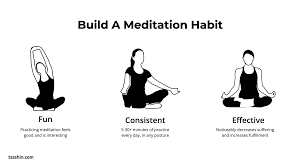
Step 1: Begin Small — The 2-Minute Rule
When learning how to start a meditation habit, your biggest mistake would be trying to meditate for 30 minutes on day one. That’s like running a marathon without training.
Instead, follow the 2-Minute Rule.
“Start smaller than you think you should.”
Sit for just two minutes every morning or evening. Set a gentle timer. Close your eyes. Feel your breath — in and out.
Why two minutes? Because the hardest part of meditation isn’t meditation itself — it’s starting.
Once you begin, your body remembers peace. Two minutes becomes five, then ten. Slowly, meditation stops being a task and starts becoming a moment you look forward to.
🪷 Step 2: Choose a Consistent Time and Place
Habits thrive in consistency. That’s why the best way to learn how to start a meditation habit is to link it to something you already do daily.
Here are some examples:
- Right after brushing your teeth in the morning
- Just before breakfast
- During your lunch break at work
- Right before bed
Choose a quiet corner — it could be your bed, a chair, or even a small mat near a window. Make that space your peace zone. Add a candle, a plant, or a photo that inspires calm.
Every time you sit there, your mind will begin to associate that spot with stillness.
Step 3: Focus on the Breath, Not Perfection
When you start meditating, your mind will wander — and that’s okay. The goal isn’t to stop thinking; it’s to notice when you’re thinking and gently return to the breath.
Try this simple breathing meditation:
- Sit comfortably.
- Close your eyes.
- Take a deep breath in through your nose — feel your lungs expand.
- Exhale slowly through your mouth.
- Focus on the rise and fall of your breath.
- When thoughts come, whisper to yourself: “Thinking.” Then gently return to breathing.
If you can do this for even five minutes, congratulations — you’re meditating.
Step 4: Be Kind to Yourself
Meditation teaches you self-compassion. When you catch your mind wandering, don’t get frustrated. Smile. You noticed. That’s mindfulness.
Remember: even the most experienced meditators have busy minds. The difference is, they don’t judge their thoughts — they observe them.
When learning how to start a meditation habit, self-kindness is your most powerful tool. Progress in meditation isn’t about “how long” you meditate; it’s about how gently you return each time.
Step 5: Explore Different Types of Meditation
Not everyone connects with the same style. Explore different types until you find one that feels natural:
| Type | Description | Best For |
| Mindfulness Meditation | Focusing on the breath and present moment. | Beginners seeking calm. |
| Loving-Kindness (Metta) | Sending love and goodwill to yourself and others. | Emotional healing. |
| Body Scan | Moving attention slowly through body parts. | Releasing tension. |
| Guided Meditation | Listening to a teacher or app. | Structure and support. |
| Walking Meditation | Mindful movement with focus on steps and breathing. | Active minds. |
Each form is a doorway to stillness. Try them and notice which one feels like home.
Step 6: Use Simple Tools and Apps
Sometimes a gentle voice helps guide your focus. These free apps can help beginners develop their practice:
- Insight Timer – thousands of free guided sessions.
- Headspace – great for beginners and stress relief.
- Calm – soothing meditations with nature sounds.
- YouTube – countless guided meditations by trusted teachers.
You don’t need fancy tools, but having structure can help you stay consistent — especially when forming a new habit.
Step 7: Connect Emotionally With Your “Why”
Every lasting habit begins with emotion, not logic.
Ask yourself:
- Why do I want to meditate?
- Is it to feel peaceful? To manage anxiety? To know myself better?
Write that reason down somewhere. Because when you feel lazy or restless, your “why” will remind you to come back to the mat.
When you sit in silence, you aren’t escaping the world — you’re meeting yourself. That realization can move you deeply.
Step 8: Track Your Progress Gently
Keep a small meditation journal. Each day, write down:
- How long you meditated
- How you felt before and after
- One thought or emotion you noticed
You’ll soon see patterns — your focus deepening, your mood lightening.
Progress in meditation doesn’t show in minutes logged; it shows in how you live between sessions.
Step 9: Overcoming Common Challenges
When learning how to start a meditation habit, beginners face a few common hurdles. Let’s handle them one by one:
| Challenge | Solution |
| “My mind won’t stop thinking.” | That’s normal. Each time you notice it, you’re practicing awareness. |
| “I get sleepy.” | Try sitting upright, morning sessions, or walking meditations. |
| “I forget to meditate.” | Add it to your routine — right after brushing teeth or before coffee. |
| “I get bored.” | Use guided meditations or focus on gratitude. |
| “I don’t feel progress.” | Be patient. Transformation happens quietly, like sunrise. |
Every challenge is a teacher. Stay curious instead of critical.
Step 10: Transform Routine Into Ritual
As you meditate daily, let it become sacred — not strict.
Light a candle before you start. Whisper an intention like, “May I find peace today.”
Rituals anchor habits in emotion. The more heartfelt your practice, the longer it lasts.
Soon, meditation won’t feel like something you “do.” It will become something you are.
🪞 The Emotional Rewards of Meditation
After a few weeks, something beautiful happens. You begin to notice moments of peace — not just during meditation, but in the spaces between.
You pause before reacting.
You breathe through anxiety.
You feel gratitude for small things — sunlight, laughter, the sound of rain.
This is how meditation changes your life — from the inside out.
It’s not about becoming someone new. It’s about remembering who you already are — calm, whole, and deeply aware.
A 30-Day Plan to Build Your Meditation Habit
| Week | Focus | Duration | Emotion |
| Week 1 | Learn to sit in stillness | 2–5 minutes | Curiosity |
| Week 2 | Focus on breath awareness | 5–8 minutes | Patience |
| Week 3 | Add loving-kindness or body scan | 8–12 minutes | Compassion |
| Week 4 | Practice gratitude & reflection | 12–15 minutes | Joy |
By day 30, you’ll have more than a habit — you’ll have a relationship with peace.
The Power of Gentle Consistency
Many people ask how long it takes to form a meditation habit. Studies say 21 days, but in truth, habits grow with heart, not numbers.
If you miss a day, smile and begin again. The magic lies not in perfection, but in persistence.
Every breath you take with awareness rewires your mind toward calm. Every moment of stillness strengthens your emotional resilience.
Conclusion: Your Journey Into the Stillness Within
If you’ve ever wondered how to start a meditation habit, the answer is simple:
Start with one breath. Then another. Then another.
You don’t need to be perfect. You just need to begin.
Meditation isn’t about escaping life. It’s about waking up to it — one mindful breath at a time.
Close your eyes. Breathe in peace.
Breathe out worry.
You are home.