
If I told you there was a tool, a technology of sorts, that could upgrade your mind’s processing power, enhance its clarity, and protect its core systems for the long haul, you’d probably be interested, right? What if I said this tool required no expensive subscription, no complicated hardware, and was something you could access right now, wherever you are?
This technology isn’t a new app or a futuristic gadget. It is one of the most ancient and profound practices known to humanity: meditation. And when we talk about meditation for brain health, we are talking about the ultimate tune-up for the most complex and beautiful machine you will ever own—your own mind.
Maybe you’re someone who loves the roar of a well-tuned engine, the feeling of a perfectly smooth gear shift, or the clarity of a responsive steering system. You understand that for a car to perform at its peak, it needs more than just fuel; it needs careful maintenance, clean oil, and a skilled driver. Think of your brain in the same way. It’s not just the engine of your body; it’s the driver of your entire life. Your thoughts, your reactions, your joys, and your sorrows all originate from this incredible three-pound universe inside your skull.
And just like a high-performance vehicle, your brain deserves the best care possible. This is where our journey with meditation for brain health begins. It’s not about becoming a different person, a monk on a mountaintop, or silencing your thoughts forever. It’s about learning to drive your own mind with more skill, more grace, and more intention. It’s about moving from being a passenger at the mercy of every mental bump and pothole to becoming the calm, confident driver, hands on the wheel, fully present for the journey.
The Silent Storm: Why Our Brains Need a Pit Stop
Let’s be honest. Modern life, for all its wonders, is a cognitive racetrack. We are constantly bombarded with information, notifications, deadlines, and demands. It’s a relentless stream of mental traffic. Your brain, specifically your amygdala—the tiny, almond-shaped alarm system deep within—is often stuck in a state of high alert. It’s like having a check engine light that’s constantly flickering, warning of dangers that are mostly mental projections, not physical threats.
This state, often called “fight or flight,” was designed for short bursts of life-saving action. But when it becomes our default setting, it takes a toll. It clouds our judgment, shortens our fuse, and leaves us feeling mentally drained and emotionally frayed. We lose access to the prefrontal cortex, the part of our brain responsible for logical thinking, wise decision-making, and focused attention. It’s like trying to navigate a complex GPS system while the engine is overheating and warning lights are flashing everywhere.
This is the profound need that meditation for brain health addresses. It is not an escape from life. It is the essential pit stop that allows you to cool down the engine, check the systems, and get back on the road with renewed focus and power.
The Science of Stillness: What Meditation Actually Does to Your Brain
For a long time, meditation was seen as a soft, spiritual practice, separate from hard science. But over the last few decades, neuroscientists have been peering into the brains of meditators, and what they’ve found is nothing short of breathtaking. Using fMRI and EEG scans, they have observed tangible, physical changes in the brain’s structure and function. Meditation for brain health is not a metaphor; it is a biological reality.
Let’s break down the neurological tune-up:
- The Amygdala: Calming the Alarm System
Imagine your amygdala is a hyper-vigilant security guard. When you practice meditation, you are essentially reassuring this guard that you’ve got things under control. Studies have consistently shown that regular meditation shrinks the gray matter in the amygdala. This isn’t a bad thing! It means the alarm bell becomes less sensitive. You still feel emotions, but you are less likely to be hijacked by them. The panic, the anger, the anxiety—they lose their sharp, overwhelming edge. This is the foundation of emotional resilience. - The Prefrontal Cortex: Strengthening the Command Center
While the amygdala calms down, the prefrontal cortex—the CEO of your brain—gets stronger. This is the region for focus, planning, empathy, and wise decision-making. Meditation thickens the prefrontal cortex, enhancing your ability to concentrate, regulate your emotions, and make choices from a place of calm clarity rather than reactive fear. It’s like upgrading your car’s central computer for better performance and smoother handling. - The Hippocampus: Boosting Memory and Learning
Nestled deep within the brain, the hippocampus is essential for memory and learning. It’s particularly vulnerable to the corrosive effects of chronic stress. Here’s the beautiful part: meditation has been shown to increase the gray matter density in the hippocampus. By practicing meditation for brain health, you are actively fortifying your memory banks and enhancing your capacity to learn new things. You are essentially giving your brain more storage space and a faster processor. - The Default Mode Network (DMN): Quieting the Mental Chatter
Have you ever been driving and realized you’ve zoned out for the last few miles, lost in a stream of random thoughts? That’s your Default Mode Network (DMN) in action. It’s the brain’s background noise—the mind-wandering, self-referential chatter that is often linked to unhappiness and worry. Meditation is like learning to turn down the volume on this internal radio. It helps you dis-identify from the endless stream of thoughts and simply rest in the present moment. This is the source of that deep, pervasive peace that seasoned meditators report.
This neural restructuring is a powerful testament to the concept of neuroplasticity—the brain’s lifelong ability to reorganize and rewire itself. You are not stuck with the brain you have. Through the intentional practice of meditation for brain health, you are literally sculpting a calmer, clearer, and more resilient mind.
This is just the beginning of our journey. We’ve looked under the hood and seen the incredible potential for change. In Part 2, we will move from the “why” to the “how.” We will roll up our sleeves and explore practical, accessible ways to start your own meditation practice, designed not as another chore, but as the most rewarding journey you will ever take—the journey back to yourself.
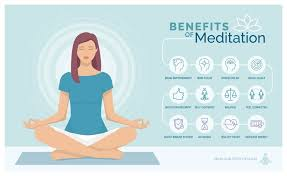
But knowing why is only half the battle. The real magic, the true transformation, happens in the doing. It happens in the quiet moments you carve out for yourself, in the gentle commitment to showing up for your own well-being. So now, let’s transition from the map to the territory. Let’s open the doors to your own personal mind garage—a sacred space where you can perform this daily tune-up.
I know what you might be thinking. “I can’t sit still.” “My mind is too busy.” “I don’t have time.” These are not obstacles; they are the very reasons to begin. Meditation is not about achieving a perfect state of blankness. It is about befriending the mind you have, with all its quirks and chaos.
Finding Your Posture: The Setup for Success
You don’t need a special cushion, a quiet room, or the ability to twist your legs into a pretzel. The foundation of a sustainable practice is comfort and dignity.
- The Chair Method: This is often the best place to start. Sit in a sturdy chair with your feet flat on the floor. Rest your hands on your knees or in your lap. Imagine a string pulling the crown of your head gently towards the ceiling, lengthening your spine. You are not rigid like a soldier, but dignified and alert, like a monarch on a throne. This posture signals to the brain that it is time for a different kind of activity.
- On the Floor: If you prefer the floor, sit on a cushion so that your hips are slightly elevated above your knees. This helps maintain the natural curve of your spine.
- The Most Important Thing: The goal is to be comfortable enough that your body doesn’t scream for attention, but alert enough that you don’t fall asleep. You are tuning in, not tuning out.
The Beginner’s Toolkit: Three Meditations to Start Your Engine
Start with just five minutes a day. Consistency is infinitely more valuable than duration. It’s better to meditate for five minutes every day than for one hour once a month.
Practice 1: The Anchor of the Breath
This is the foundational practice for all meditation for brain health. The breath is your ever-present anchor to the present moment.
- Settle into your posture and gently close your eyes, or soften your gaze.
- Bring your awareness to the physical sensation of your breath. Don’t try to control it. Just feel it. Notice the cool air entering your nostrils, the gentle rise and fall of your chest or abdomen.
- Your mind will wander. This is not a failure; it is the practice. The moment you realize your attention has drifted to a thought, a sound, or a bodily sensation, simply acknowledge it with a gentle, internal label like “thinking” or “planning,” and then, without any judgment, guide your awareness back to the sensation of the breath.
- This process of wandering and returning is like a rep in a mental workout. Each gentle return is strengthening your prefrontal cortex. Do this for five minutes. That’s it.
Practice 2: The Body Scan – A Systems Check
This practice is phenomenal for releasing physical tension and grounding yourself in the present. It’s a full-system diagnostic.
- Begin by bringing your awareness to the toes of your left foot. Just notice any sensations there—tingling, warmth, pressure, or even nothing at all.
- Slowly, gradually, move your awareness up through your left foot, your ankle, your calf, your knee, and all the way up to your hip. Then, repeat the process with your right leg.
- Continue this journey, part by part, through your torso, your back, your fingers and hands, your arms, your shoulders, your neck, and finally, your face and the top of your head.
- There is no goal other than to feel. If you notice tension, don’t try to force it away. Just breathe into that area, offering it a moment of kind attention. This practice teaches you to inhabit your body fully, pulling you out of the abstract world of anxious thoughts and into the reality of the present moment.
Practice 3: Loving-Kindness – Fueling the Heart Engine
Meditation for brain health isn’t just about calm; it’s also about connection. This practice, called Metta, directly cultivates feelings of compassion and kindness, for yourself and others.
- Start by sitting quietly and bringing to mind someone who easily makes you smile—a loved one, a pet, a mentor. Feel the natural warmth and care you have for them in your heart.
- Silently, gently, offer them these traditional phrases:
- May you be safe.
- May you be healthy.
- May you be happy.
- May you live with ease.
- After a few minutes, turn this kindness inward. Offer the same phrases to yourself: “May I be safe. May I be healthy…” This can feel strange at first, but it is a crucial part of the practice. You cannot pour from an empty cup.
- Finally, you can extend these wishes to a neutral person, then to someone you find difficult, and ultimately, to all living beings.
This practice actively strengthens the brain circuits associated with empathy and positive emotion, literally rewiring your mind for greater connection and joy.
Weaving Meditation into the Fabric of Your Day
You don’t have to be on a cushion to practice meditation for brain health. The ultimate goal is to bring this quality of mindful awareness into your entire life.
- Mindful Driving: The next time you’re in your car, try it. Instead of getting lost in thought or road rage, feel your hands on the wheel. Notice the pressure of your foot on the pedal. Be fully present with the act of driving itself. It becomes a moving meditation, transforming your commute from a stressful chore into a practice in presence.
- Mindful Eating: For one meal, just eat. Put away your phone. Truly taste the food. Notice its texture, its aroma. This simple act can revolutionize your relationship with food and bring a profound sense of calm to your day.
- The STOP Method: Whenever you feel overwhelmed, just STOP.
- Stop what you are doing.
- Take a single, conscious breath.
- Observe what you are feeling in your body and mind without judgment.
- Proceed with more awareness.
This takes ten seconds and can reset your entire nervous system.
The Long Road: A Journey, Not a Destination
There will be days when your meditation feels easy and peaceful. There will be more days when it feels frustrating, boring, or utterly futile. This is all part of the process. The “bad” meditations are often the ones where the most significant internal work is happening.
Be kind to yourself. You are not trying to win a meditation trophy. You are engaging in a lifelong practice of meditation for brain health. You are committing to the maintenance of your most precious vehicle. Some days it will be a quick oil change; other days, a deeper repair. But every single time you sit down, you are sending a powerful message to yourself: “I am worth this time. My peace matters. My health is a priority.”
This journey inward is the most important one you will ever take. It doesn’t require you to change who you are. It invites you to return to who you have always been, beneath the noise and the hurry—a being of inherent calm, clarity, and connection. So, take a deep breath. Start with five minutes. Be gentle. Be consistent. Your brain, the magnificent engine of your life, will thank you for it, not just today, but for all the miles to come.
I know what you might be thinking. “I can’t sit still.” “My mind is too busy.” “I don’t have time.” These are not obstacles; they are the very reasons to begin. Meditation is not about achieving a perfect state of blankness. It is about befriending the mind you have, with all its quirks and chaos. Think of it this way: you wouldn’t expect a high-performance engine to purr perfectly after years without a tune-up. You’d show it patience and care. Your mind deserves that same compassionate attention.
Finding Your Posture: The Setup for Success
You don’t need a special cushion, a quiet room, or the ability to twist your legs into a pretzel. The foundation of a sustainable practice is comfort and dignity.
- The Chair Method: This is often the best place to start. Sit in a sturdy chair with your feet flat on the floor. Rest your hands on your knees or in your lap. Imagine a string pulling the crown of your head gently towards the ceiling, lengthening your spine. You are not rigid like a soldier, but dignified and alert, like a monarch on a throne. This posture signals to the brain that it is time for a different kind of activity.
- On the Floor: If you prefer the floor, sit on a cushion so that your hips are slightly elevated above your knees. This helps maintain the natural curve of your lower back.
- The Most Important Thing: The goal is to be comfortable enough that your body doesn’t scream for attention, but alert enough that you don’t fall asleep. You are tuning in, not tuning out.
The Beginner’s Toolkit: Three Meditations to Start Your Engine
Start with just five minutes a day. Consistency is infinitely more valuable than duration. It’s better to meditate for five minutes every day than for one hour once a month. This is about building a habit, not achieving enlightenment overnight.
Practice 1: The Anchor of the Breath
This is the foundational practice for all meditation for brain health. The breath is your ever-present anchor to the present moment. It’s the steering wheel you can always grip when your mental car starts to skid.
- Settle into your posture and gently close your eyes, or soften your gaze.
- Bring your awareness to the physical sensation of your breath. Don’t try to control it. Just feel it. Notice the cool air entering your nostrils, the gentle rise and fall of your chest or abdomen. This is your anchor.
- Your mind will wander. This is not a failure; it is the practice. The moment you realize your attention has drifted to a thought, a sound, or a bodily sensation, simply acknowledge it with a gentle, internal label like “thinking” or “planning,” and then, without any judgment, guide your awareness back to the sensation of the breath. It’s like gently guiding a car back into its lane.
- This process of wandering and returning is like a rep in a mental workout. Each gentle return is strengthening your prefrontal cortex. Do this for five minutes. That’s it. You’ve just given your brain a powerful dose of maintenance.
Practice 2: The Body Scan – A Systems Check
This practice is phenomenal for releasing physical tension and grounding yourself in the present. It’s a full-system diagnostic, moving from your tires to your taillights.
- Begin by bringing your awareness to the toes of your left foot. Just notice any sensations there—tingling, warmth, pressure, or even nothing at all. There is no right or wrong thing to feel.
- Slowly, gradually, move your awareness up through your left foot, your ankle, your calf, your knee, and all the way up to your hip. Then, repeat the process with your right leg.
- Continue this journey, part by part, through your torso, your back, your fingers and hands, your arms, your shoulders, your neck, and finally, your face and the top of your head.
- There is no goal other than to feel. If you notice tension, don’t try to force it away. Just breathe into that area, offering it a moment of kind attention. This practice teaches you to inhabit your body fully, pulling you out of the abstract world of anxious thoughts and into the reality of the present moment.
Practice 3: Loving-Kindness – Fueling the Heart Engine
Meditation for brain health isn’t just about calm; it’s also about connection. This practice, called Metta, directly cultivates feelings of compassion and kindness, for yourself and others. It’s the high-octane fuel for your emotional engine.
- Start by sitting quietly and bringing to mind someone who easily makes you smile—a loved one, a pet, a mentor. Feel the natural warmth and care you have for them in your heart.
- Silently, gently, offer them these traditional phrases:
- May you be safe.
- May you be healthy.
- May you be happy.
- May you live with ease.
- After a few minutes, turn this kindness inward. This can be the hardest part, but it is the most crucial. You cannot pour from an empty cup. Offer the same phrases to yourself: “May I be safe. May I be healthy. May I be happy. May I live with ease.”
- Finally, you can extend these wishes to a neutral person, then to someone you find difficult, and ultimately, to all living beings.
This practice actively strengthens the brain circuits associated with empathy and positive emotion, literally rewiring your mind for greater connection and joy.
Weaving Meditation into the Fabric of Your Day
The ultimate goal of meditation for brain health is not to create a separate, peaceful part of your life, but to bring this quality of mindful awareness into your entire life. It’s about making mindfulness your default setting, not just a special event.
- Mindful Driving: The next time you’re in your car, try it. Instead of getting lost in thought or frustration, feel your hands on the wheel. Notice the pressure of your foot on the pedal. Be fully present with the act of driving itself. See the trees, feel the breeze from the vent, hear the sound of the engine. It becomes a moving meditation, transforming your commute from a stressful chore into a practice in presence.
- Mindful Eating: For one meal, just eat. Put away your phone. Truly taste the food. Notice its texture, its aroma, the colors on your plate. Chew slowly. This simple act can revolutionize your relationship with food and bring a profound sense of calm to your day.
- The STOP Method: Whenever you feel overwhelmed, stressed, or about to react in anger, just STOP.
- Stop what you are doing.
- Take a single, conscious breath.
- Observe what you are feeling in your body and mind without judgment.
- Proceed with more awareness.
This takes ten seconds and can reset your entire nervous system, preventing you from saying or doing something you might regret.
The Long Road: A Journey, Not a Destination
There will be days when your meditation feels easy and peaceful. There will be more days when it feels frustrating, boring, or utterly futile. This is all part of the process. The “bad” meditations, where your mind feels like a chaotic whirlwind, are often the ones where the most significant internal work is happening. You are building resilience by simply showing up.
Be kind to yourself. You are not trying to win a meditation trophy. You are engaging in a lifelong practice of meditation for brain health. You are committing to the maintenance of your most precious vehicle. Some days it will be a quick oil change; other days, a deeper repair. But every single time you sit down, you are sending a powerful message to yourself: “I am worth this time. My peace matters. My health is a priority.”
This journey inward is the most important one you will ever take. It doesn’t require you to change who you are. It invites you to return to who you have always been, beneath the noise and the hurry—a being of inherent calm, clarity, and connection. So, take a deep breath. Start with five minutes. Be gentle. Be consistent. Your brain, the magnificent engine of your life, will thank you for it, not just today, but for all the miles to come.