
There’s a moment in yoga when your body lifts off the mat, your hands root down like the earth itself, and for a few magical seconds — you feel both grounded and weightless. That moment is the yoga crow pose.
Crow Pose, known in Sanskrit as Bakasana, is one of those postures that looks almost impossible until the very moment it’s not. It’s the point where strength, balance, courage, and mindfulness meet. It’s not just about lifting your feet off the floor — it’s about learning to trust yourself, finding stillness in movement, and discovering the quiet power within your body.
In this post, we’ll explore every aspect of yoga crow pose — from its physical alignment to the emotional transformation it brings. Whether you’re a beginner looking to build confidence or someone who wants to master the finer details of balance, this journey will teach you how to rise — not just on your arms, but in life.
What is Yoga Crow Pose?
Yoga Crow Pose, or Bakasana, is an arm-balancing posture that requires you to lift your feet off the ground while balancing your knees on your upper arms. It might sound simple, but the true art lies in the harmony of strength, focus, and breath.
Unlike many yoga postures that stretch or lengthen, Crow Pose demands concentration and courage. It trains both your body and mind to overcome hesitation. The moment you lift your toes off the mat, you realize that the balance you were searching for physically was always rooted mentally.
At its essence, yoga crow pose is a metaphor for life itself — it teaches you that even when things feel shaky, balance is possible if you trust yourself.
The Meaning and Symbolism Behind the Pose
In yoga philosophy, animals often represent qualities we aspire to embody. The crow is known as a messenger of transformation and intelligence. It’s adaptable, quick, and observant.
When you step into the Crow Pose, you’re channeling these very traits — alertness, presence, and adaptability. The pose teaches you to focus your mind, quiet distractions, and embrace change. You’re no longer fighting gravity; you’re flowing with it.
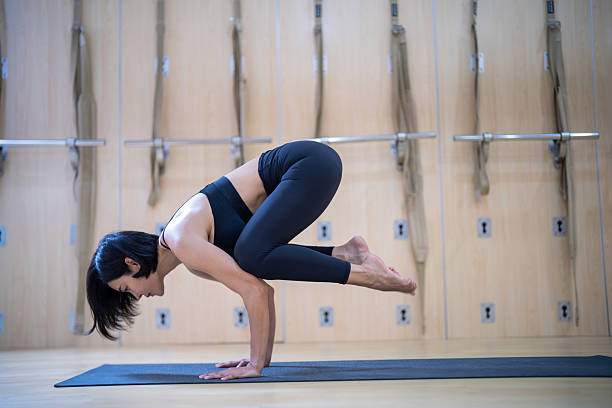
Symbolically, this posture represents transition — moving from grounded fear to fearless flight. It’s a dance between earth and sky, between strength and surrender.
Physical Benefits of Yoga Crow Pose
Though it’s visually impressive, yoga crow pose offers far more than aesthetic appeal. It strengthens your arms, tones your core, and sharpens your balance. Below are its key physical benefits:
- Core Strength:
Your abdominal muscles are the hidden heroes of Crow Pose. They stabilize your body and prevent you from tipping forward. - Arm and Shoulder Strength:
As you balance your body weight on your hands, your triceps, shoulders, and wrists grow stronger over time. - Improved Coordination:
The pose refines your sense of spatial awareness, helping you develop better control over your movements. - Enhanced Focus:
Balancing on your arms requires mindfulness and mental clarity. It strengthens your concentration. - Postural Alignment:
Practicing this pose teaches you how to engage your core and align your spine correctly — improving posture in everyday life.
The beauty of this posture lies in how it strengthens your body without aggression. It builds power gently, helping you discover muscles and balance points you didn’t know existed.
Emotional and Mental Benefits
Yoga crow pose doesn’t just challenge your body; it challenges your self-belief. At first, you might fear falling, but with patience, you learn to replace fear with trust.
- Overcoming Fear:
The first lift-off in Crow Pose is a profound moment of bravery. You realize that courage doesn’t mean not being afraid — it means trying anyway. - Building Confidence:
Each attempt strengthens not just your muscles, but your mindset. Every small success brings a sense of victory that extends beyond the mat. - Calming the Mind:
Crow Pose demands focus. You can’t think about yesterday or tomorrow while balancing on your hands. In that moment, your mind becomes still. - Patience and Persistence:
You might not master the pose in a day or even a week. But through steady practice, you cultivate patience — a quality that flows into all areas of your life.
Yoga isn’t about perfection; it’s about connection. Crow Pose helps you connect your breath with your movement, your body with your emotions, and your effort with your peace.
Preparing for Yoga Crow Pose
Before attempting the full pose, preparation is key. Your wrists, arms, and core need time to build strength and flexibility. Here are some preparatory poses and exercises:
- Plank Pose (Phalakasana):
Strengthens your core and shoulders while teaching alignment. - Chaturanga Dandasana (Low Plank):
Builds triceps and wrist stability essential for arm balancing. - Garland Pose (Malasana):
Opens your hips and prepares your legs for positioning on the arms. - Boat Pose (Navasana):
Strengthens your abdominal muscles — vital for lift-off in Crow Pose. - Cat-Cow Pose (Marjaryasana-Bitilasana):
Increases spinal flexibility and builds awareness in your core.
Spend a few minutes in each of these postures before attempting Crow Pose. Remember, your body will open up gradually — respect its pace.
Step-by-Step Guide to Mastering the Yoga Crow Pose
- Start in Garland Pose (Malasana):
Squat down with your feet slightly apart and your hands pressed together at your chest. - Place Your Hands on the Mat:
Spread your fingers wide and place your palms shoulder-width apart. Your wrists should be directly under your shoulders. - Lift Your Hips:
Straighten your legs slightly so your hips rise higher than your knees. - Position Your Knees:
Gently place your knees onto your upper arms, near your armpits. - Shift Forward:
Slowly lean forward until your weight begins to balance on your arms. - Lift One Foot:
Engage your core and lift one foot off the ground, then the other when you feel ready. - Balance:
Look slightly forward (not down). Keep your gaze steady and your breath smooth. - Hold:
Stay in the pose for a few breaths, feeling the strength and balance unite within you. - Release Gently:
Slowly lower your feet back down to the mat. Rest in Child’s Pose to release tension.
Common Mistakes and How to Avoid Them
Even experienced practitioners can make small alignment errors that hinder progress or cause discomfort. Here are common mistakes and how to fix them:
- Looking Down Instead of Forward:
This often causes you to tip over. Keep your gaze slightly ahead. - Elbows Too Wide:
When elbows splay out, you lose stability. Keep them tight to your body. - Not Engaging the Core:
The core supports your lift. Without engagement, your weight collapses into your wrists. - Fear of Falling:
This is natural. Place a cushion in front of you to practice safely and reduce fear.
Remember, balance is built one breath at a time.
Breathing Techniques During Yoga Crow Pose
Your breath is your guide. Shallow or rushed breathing can throw you off balance. Try these techniques:
- Inhale deeply before lifting off to prepare your body.
- Exhale slowly as you engage your core and lean forward.
- Maintain steady, rhythmic breaths once you’re in the pose.
Breathing keeps you connected to your body and helps your muscles remain calm under pressure.
Modifications and Variations for All Levels
If you’re new to yoga crow pose, you can modify it to build confidence and strength:
- Tiptoe Crow Pose:
Keep your toes on the mat while practicing the forward shift. - Block Support:
Place a yoga block under your feet to elevate your hips and make balancing easier. - One-Leg Crow:
Once comfortable, try lifting one leg higher for added challenge and balance training. - Crane Pose (Bakasana Variation):
Straighten your arms for a more advanced version that increases strength.
Each variation has its own beauty and lesson — the goal isn’t perfection, but progress.
The Emotional Energy Behind the Yoga Crow Pose
Every yoga pose carries its own energy, and yoga crow pose vibrates with themes of bravery and transformation. When you first attempt this pose, fear often appears—fear of falling, fear of failing, fear of letting go. But here lies the secret of Crow Pose: you only learn to fly when you stop fearing the ground.
As your hands press into the mat, as your knees tuck into your upper arms, and as your toes slowly lift, you realize something powerful—you are capable of holding yourself up. That realization is emotional. It touches a part of your spirit that’s been waiting to feel strong again.
The yoga crow pose becomes a mirror reflecting your inner resilience. Each time you fall and rise again, you rebuild self-trust. You start to believe not only in your body’s balance but in your soul’s strength.
How to Progress Safely into Crow Pose
Transitioning into yoga crow pose requires patience. Rushing can lead to frustration or injury. Below are stages to build strength, flexibility, and balance for a stable and confident pose.
1. Strengthening the Arms and Wrists
Your hands are your wings in this pose.
- Practice Plank Pose and Chaturanga daily to build forearm strength.
- Perform wrist circles and palm stretches before each attempt.
- Hold Downward Dog for at least 60 seconds, engaging the fingers and pressing through the knuckles to prepare your joints.
2. Engaging the Core
The secret of yoga crow pose lies in your core—not your arms.
Try the following exercises:
- Boat Pose (Navasana) – strengthens abs and hip flexors.
- Forearm Plank – builds deep abdominal stability.
- Knee-to-Chest in Plank – activates lower abs.
3. Opening the Hips
Tight hips can make it harder to balance the knees on the arms.
- Use Garland Pose (Malasana) to create more space.
- Add Pigeon Pose or Butterfly Pose after practice.
4. Finding Balance
Balance comes from patience and stillness of mind. Try this:
- Place a block under your forehead as a “safety net.”
- Keep your gaze slightly forward, not down.
- Shift weight slowly until your toes naturally float up.
Common Mistakes and How to Fix Them
When practicing yoga crow pose, small adjustments can transform your balance.
| Mistake | What Happens | Correction Tip |
|---|---|---|
| Looking straight down | You lose balance easily | Gaze slightly forward, not at the floor |
| Bent elbows collapsing | Arms feel weak | Push firmly into palms and engage triceps |
| Not engaging the core | Body feels heavy | Draw the belly in and lift hips higher |
| Holding breath | Creates tension | Keep a steady inhale and exhale |
| Fear of falling | Prevents progress | Place a soft pillow ahead to reduce fear |
Breathwork: The Hidden Strength of Crow Pose
Breath is your invisible support system in yoga. In yoga crow pose, breath anchors your mind when balance wavers.
Try this pattern:
- Inhale – lengthen your spine and lift your chest slightly.
- Exhale – engage your core and lean forward gently.
- Hold the breath briefly – just as your feet lift, letting stillness settle in.
- Slow exhale as you release the pose with control.
The rhythm of your breath transforms this pose from a struggle into a moving meditation.
Spiritual Dimension of the Yoga Crow Pose
Beyond muscles and joints, yoga crow pose touches the energy of your solar plexus chakra (Manipura)—the seat of personal power, confidence, and transformation.
When this chakra awakens, you feel a surge of inner fire—a warm sense of “I can do this.” Each attempt at Crow Pose feeds that fire, reminding you that you are stronger than your doubts.
Practicing yoga crow pose regularly can also:
- Improve emotional resilience.
- Strengthen decision-making and willpower.
- Cultivate mindfulness and body awareness.
As your balance deepens, so does your trust in life’s balance. You begin to carry that same steady confidence beyond the yoga mat—into work, relationships, and dreams.
Crow Pose Variations to Explore
Once you’ve mastered the standard yoga crow pose, try these variations for a deeper challenge:
- Crane Pose (Bakasana Advanced)
- Straighten your arms fully while keeping your core tight.
- This version demands more arm and wrist strength.
- Side Crow (Parsva Bakasana)
- Twist your torso to one side, balancing both knees on one arm.
- Excellent for strengthening obliques and improving spinal rotation.
- One-Legged Crow (Eka Pada Bakasana)
- Extend one leg backward while balancing on the other knee.
- A true test of focus and grace.
- Flying Crow Transition
- Flow from Crow Pose into a Chaturanga push-up or Headstand.
- Perfect for intermediate yogis exploring dynamic transitions.
Mental and Physical Benefits of Yoga Crow Pose
Let’s look deeper into how yoga crow pose transforms your body and mind.
| Category | Benefit |
|---|---|
| Physical Strength | Strengthens arms, shoulders, wrists, and core |
| Balance & Coordination | Improves focus and neuromuscular control |
| Flexibility | Opens hips and enhances mobility in spine |
| Confidence | Builds courage and trust in your body |
| Mindfulness | Trains awareness of breath and movement |
| Stress Relief | Encourages mental clarity through concentration |
Every time you rise into yoga crow pose, you are not just performing an exercise—you’re elevating your consciousness.
Tips for Building Daily Practice at Home
A consistent home practice builds the muscle memory and confidence needed for the yoga crow pose.
Here’s how to start:
- Choose a quiet space with good lighting.
- Place a non-slip yoga mat or towel on the floor.
- Warm up for 10–15 minutes with sun salutations.
- Add strength poses like Plank, Chaturanga, and Downward Dog.
- Dedicate 5–10 minutes to Crow Pose practice.
- End with restorative poses—Child’s Pose or Supine Twist—to release tension.
Even five minutes daily is better than an hour once a week. Consistency fuels progress.
Motivational Insight: Learning to Fly Beyond Fear
Falling is part of the process. Every yogi has fallen forward from yoga crow pose more times than they can count. But here’s the beauty: each fall brings you closer to flight.
When you finally lift off—when both feet float above the ground—you experience something magical. It’s not just physical elevation; it’s spiritual liberation. You feel light, fearless, and fully alive.
Remember this:
- You don’t master Crow Pose overnight.
- You master it one breath, one heartbeat, one fall at a time.
- And each attempt is a victory of courage.
Conclusion: Embrace the Flight Within
The yoga crow pose is more than a test of strength or flexibility—it’s a meditation in motion. It teaches you to trust your hands, your body, and your courage. It transforms fear into focus, and doubt into faith.
So next time you roll out your mat, take a deep breath and tell yourself:
“Today, I am ready to rise.”
Whether your toes lift or not doesn’t matter. What matters is the courage to try—the willingness to believe in your wings. Because one day, you’ll look down and realize… you’re flying.