
There are some postures in yoga that seem to hold the entire spirit of the practice within them. Among all those poses, Downward-Facing Dog (Adho Mukha Svanasana) stands as one of the most familiar, loved, and deeply transformative. It’s that posture you often see in yoga classes, in peaceful parks, and even on glossy covers of wellness magazines — a simple shape, yet one that tells the story of balance, strength, and calm.
But Downward-Facing Dog is far more than just a physical exercise. It’s an act of grounding, a way to connect your breath with your body, and a gentle reminder that strength and serenity can coexist. Whether you are a beginner stepping onto your mat for the first time or someone returning to yoga after a long break, this pose can meet you where you are.
In this part, we’ll explore the origins, emotional connection, physical benefits, and the deeper meaning behind Downward-Facing Dog (Adho Mukha Svanasana) — and how this seemingly simple posture can reshape your mind, body, and spirit.
The Meaning Behind the Name
In Sanskrit, Adho Mukha Svanasana literally means “Downward-Facing Dog Pose.”
- Adho means “downward,”
- Mukha means “face,”
- Svana means “dog,” and
- Asana means “pose” or “seat.”
This name is inspired by the natural stretch that dogs instinctively perform — that lovely, long stretch when a dog rises from sleep and presses its chest downward while its tail lifts toward the sky. The body lengthens, the spine decompresses, and energy flows freely from head to tail. Nature itself teaches this pose.
When you practice Downward-Facing Dog, you mirror this same organic motion. It’s not about forcing the body but letting it find its own rhythm — a balance between effort and ease.
The Story of Stillness and Strength
At first glance, Downward-Facing Dog may seem like a resting posture, but it carries within it a quiet challenge. It engages the whole body — the arms pushing, the legs grounding, the spine stretching, and the breath guiding.
Each time you enter the pose, you’re invited into a dialogue with your own body. You might notice tension in your shoulders or stiffness in your hamstrings. You might even feel resistance — both physical and emotional. But the beauty of Downward-Facing Dog lies in this moment of awareness. It encourages you to listen, not to force; to find space, not perfection.
Many yoga teachers call it a “home base” — the pose you return to between sequences, the posture that allows you to reset your energy and reconnect with your breath. And in life, don’t we all need a home base? A place where we can pause, stretch, breathe, and begin again?
Why Downward-Facing Dog Is So Important
If you observe closely, you’ll find that Downward-Facing Dog is one of the few yoga postures that truly unites the upper and lower body, the front and back of the body, and the inner and outer world of the practitioner. It teaches alignment, patience, and stability — and offers a profound range of benefits that extend far beyond the yoga mat.
Let’s break this down.
1. Physical Benefits
| Area of Focus | Benefit |
|---|---|
| Arms and Shoulders | Strengthens and tones muscles while releasing shoulder tension. |
| Spine | Lengthens and decompresses the vertebrae, relieving back pain. |
| Legs and Hamstrings | Stretches tight muscles, improving flexibility. |
| Core | Engages abdominal muscles for stability and posture. |
| Circulation | The mild inversion encourages blood flow to the brain, improving focus. |
When performed regularly, Downward-Facing Dog helps align the spine and strengthens the foundation of your body. It balances the muscular structure and boosts flexibility — an essential element for overall body harmony.
2. Emotional Benefits
This pose also touches something deeper — something invisible but powerful. The act of grounding your palms and feet while lifting your hips creates a feeling of both surrender and strength. It’s as though the pose whispers, “You are supported. You are steady. You are enough.”
Downward-Facing Dog is a posture of release — releasing fear, fatigue, and the weight of overthinking. It opens the heart slightly, allowing a subtle sense of lightness to rise. That’s why so many practitioners describe a sense of peace or emotional clarity after holding this pose for a few breaths.
How to Practice Downward-Facing Dog (Adho Mukha Svanasana)
For beginners or anyone refining their posture, here’s a clear step-by-step guide to mastering Downward-Facing Dog safely and effectively.
Step 1: Begin on All Fours
Start in a tabletop position — wrists directly under shoulders, knees under hips. Spread your fingers wide and press evenly into your palms.
Step 2: Tuck the Toes and Lift
On an inhale, tuck your toes under and lift your knees away from the floor. Gradually straighten your legs as much as your flexibility allows.
Step 3: Find Your Alignment
Your body now forms an inverted V shape. Keep your feet hip-width apart and your hands shoulder-width apart. Spread your weight evenly between your hands and feet.
Step 4: Engage and Breathe
Press your chest gently toward your thighs. Let your head hang naturally between your arms. Take deep breaths — in through the nose, out through the nose. Feel the stretch grow with each exhale.
Step 5: Adjust and Settle
It’s perfectly fine if your heels don’t touch the mat. Don’t chase perfection; chase comfort and alignment. With time, your flexibility will grow.
Step 6: Hold for 5–10 Breaths
Stay steady. Feel your heartbeat slow. Feel your breath become a wave moving through your body.
Common Mistakes and How to Fix Them
Even experienced yogis can make subtle mistakes in Downward-Facing Dog that affect its benefits. Here are some of the most common — and how to correct them.
| Mistake | Problem | Correction |
|---|---|---|
| Rounding the back | Strains the shoulders and spine | Bend your knees slightly to keep the spine long |
| Collapsed shoulders | Puts pressure on wrists | Rotate your arms outward and press through the fingertips |
| Heels too high | Causes instability | Keep heels heavy, even if they don’t touch the floor |
| Locked elbows | Reduces flow and flexibility | Keep a soft micro-bend in the elbows |
| Neck tension | Causes stiffness | Let your head hang freely and relax your neck |
Remember, Downward-Facing Dog isn’t about how it looks — it’s about how it feels. You’re not performing; you’re participating in your own well-being.
The Emotional Depth of Downward-Facing Dog
There’s something poetic about how Downward-Facing Dog blends opposites. You root down to rise up. You push the earth away to feel closer to your center. You surrender, yet you strengthen.
In many ways, this posture becomes a metaphor for life. Sometimes, you must bow your head to lift your spirit. Sometimes, stillness leads to the greatest movement within.
In difficult moments — when stress builds, when things feel heavy — returning to Downward-Facing Dog can act like a quiet reset. It invites calm into chaos, order into disorder, and breath into moments of tension.
Yoga practitioners often say that every asana (pose) tells a story. The story of Downward-Facing Dog is about coming home — home to your breath, your body, and your truth.
Who Can Practice Downward-Facing Dog?
One of the reasons Downward-Facing Dog is so beloved is that it’s adaptable to almost anyone. Whether you’re a beginner, a seasoned athlete, or simply someone seeking relief from the stiffness of daily life, this posture meets you where you are.
However, if you have wrist injuries, high blood pressure, or glaucoma, it’s wise to modify the pose or consult a yoga instructor for a safer variation.
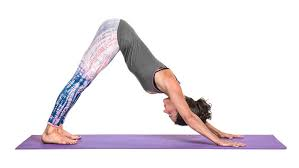
For everyone else, consistency is key. The more regularly you practice, the more naturally the pose will flow through you.
Why Your Body Will Thank You
In today’s world, where we spend hours sitting — driving, typing, scrolling — our bodies often ache for balance. Our shoulders round forward, our hips tighten, our backs stiffen.
Downward-Facing Dog gently reverses this pattern. It opens what’s closed, strengthens what’s weak, and reawakens parts of the body that modern life tends to silence.
In a way, it’s an antidote to the digital age. A posture that reminds your body of its natural design — strong, open, grounded.
Short Reflection Exercise
Try this:
Next time you enter Downward-Facing Dog, close your eyes for a moment. Feel your palms pressing into the earth. Feel your breath rise from your belly to your spine. Imagine all your worries flowing down through your fingertips into the mat — leaving you lighter, freer, more centered.
Each breath becomes a thread connecting you back to yourself.
The Power of Breath in Downward-Facing Dog
If the body is the structure of yoga, then breath is the heartbeat that brings it to life.
In Downward-Facing Dog, your breath becomes your guide, your anchor, and your strength.
When you breathe deeply, your body releases tension. Each inhale expands the lungs, filling your chest with energy; each exhale carries away the fatigue and stress that weigh you down.
Try this mindful breathing pattern:
- Inhale deeply through the nose – feel your spine lengthen, your shoulders broaden, your hips lift slightly higher.
- Exhale slowly – allow your chest to soften toward your thighs, your heels to draw closer to the mat.
- Repeat for 5–7 breaths – feeling each wave of air move through your entire being.
As you continue, your Downward-Facing Dog will start to feel less like a stretch and more like a moving meditation. You’ll sense calm replacing chaos, stillness replacing struggle.
Mindfulness in Motion
Yoga isn’t just about mastering postures; it’s about cultivating awareness.
When you hold Downward-Facing Dog, try to focus on one thing — your presence.
- Notice how your palms ground into the earth.
- Notice how your breath sounds in your ears.
- Notice how your body feels alive with every inhale and exhale.
You’ll find that the longer you stay mindful in this pose, the quieter your thoughts become. It’s as though the tension in your body melts into the floor, and your mind follows.
In a busy world that constantly asks you to do more, Downward-Facing Dog invites you to be more — more grounded, more patient, more aware.
Variations of Downward-Facing Dog for Every Level
Not everyone’s body moves the same way, and that’s perfectly fine. Yoga honors individuality. Whether you’re a beginner or an advanced yogi, there’s a version of Downward-Facing Dog that suits your body and goals.
| Level | Variation | Description |
|---|---|---|
| Beginner | Bent-Knee Downward-Facing Dog | Keep knees slightly bent to ease hamstring tension. Focus on spine length. |
| Intermediate | Heels-to-Mat Variation | Straighten the legs gradually and press heels toward the ground to deepen the stretch. |
| Advanced | Three-Legged Dog (Tri Pada Adho Mukha Svanasana) | Lift one leg toward the ceiling while maintaining hip alignment. Builds core strength and balance. |
| Restorative | Supported Downward-Facing Dog | Use a yoga block under the forehead or rest hands on a chair for gentler support. |
| Dynamic Flow | Pedaling Down Dog | Alternate bending one knee and then the other to stretch calves and hamstrings dynamically. |
Each variation carries the same essence — connection between body and breath — but allows you to explore the pose from a different perspective.
The Symbolism of Downward-Facing Dog
Beyond the muscles and alignment, Downward-Facing Dog carries rich symbolism that speaks to the heart.
- Grounding and Stability – Your hands and feet root firmly into the mat, reminding you that stability starts from your foundation.
- Humility and Surrender – The head bows below the heart, symbolizing humility and the courage to let go of ego.
- Balance Between Opposites – You’re both active and relaxed, strong yet soft. This mirrors life’s balance between doing and being.
- Renewal and Flow – Each time you enter and exit the pose, you move with purpose — a gentle cycle of release and renewal.
In a sense, Downward-Facing Dog becomes a physical prayer — a posture that whispers gratitude to the earth and to yourself.
A 7-Day Downward-Facing Dog Practice Plan
To experience the real transformation of Downward-Facing Dog (Adho Mukha Svanasana), consistency matters more than perfection. Here’s a simple, structured 7-day plan to guide your practice.
| Day | Duration | Focus | Goal |
|---|---|---|---|
| Day 1 | 2–3 minutes | Foundation | Focus on alignment and breathing awareness. |
| Day 2 | 3–4 minutes | Strength | Engage arms and core, hold the pose a little longer. |
| Day 3 | 4–5 minutes | Flexibility | Bend knees slightly and stretch the spine deeply. |
| Day 4 | 5 minutes | Mindfulness | Focus solely on breath and sensations in the body. |
| Day 5 | 6 minutes | Flow | Add gentle movement — pedal the legs or shift hips. |
| Day 6 | 7 minutes | Stillness | Hold steady, embracing calmness and surrender. |
| Day 7 | 10 minutes | Reflection | Feel the strength, gratitude, and peace in your practice. |
After seven days, you’ll likely feel a remarkable difference — not just in flexibility or strength, but in how grounded and emotionally centered you feel. That’s the secret gift of Downward-Facing Dog: it changes how you move through life.
Physical and Emotional Healing Through the Pose
The physical benefits of Downward-Facing Dog are well-documented, but the emotional healing it provides is equally powerful. When your head is lower than your heart, something shifts inside you — your perspective, your breath, your energy.
Physical Healing:
- Relieves tension from the spine and shoulders.
- Enhances blood circulation to the brain.
- Strengthens wrists, arms, and legs.
- Boosts overall body alignment and posture.
Emotional Healing:
- Reduces anxiety through deep, rhythmic breathing.
- Encourages focus and clarity.
- Promotes emotional release through mindful movement.
- Nurtures a sense of inner safety and calm.
Each time you flow into Downward-Facing Dog, you remind yourself that healing doesn’t always come through grand gestures — sometimes it begins with a simple breath, a stretch, and a moment of silence.
When Life Feels Overwhelming — Return to Downward-Facing Dog
There will be days when everything feels heavy — when your mind runs faster than your breath, when your body aches from exhaustion, when the world feels too loud.
On those days, pause. Step onto your mat. Place your hands down. Breathe.
Downward-Facing Dog will meet you there.
It will cradle your tiredness, stretch away your tension, and quietly remind you that balance is not lost — it just needs to be rediscovered. The simplicity of pressing your palms into the earth and lifting your hips skyward can bring you back to the present moment — to the peace that lives inside you, waiting to be felt.
Incorporating Downward-Facing Dog Into Daily Life
You don’t need to be in a yoga studio to experience the benefits of Downward-Facing Dog. You can practice it anytime, anywhere — after waking up, before bed, or even during a break at work.
Morning Practice
Start your day with three rounds of Downward-Facing Dog. It awakens your body, boosts circulation, and sets a calm tone for the day ahead.
Midday Reset
If you sit for long hours, take a few minutes to stretch into this pose. It refreshes the mind and releases stiffness from the back and shoulders.
Evening Relaxation
Before bedtime, hold the pose gently with soft knees and slow breathing. It helps calm the nervous system and prepares you for restful sleep.
In every setting, this pose works as a small act of self-care — a quiet reminder that your well-being matters.
What Downward-Facing Dog Teaches Us About Life
The lessons we learn on the mat often mirror those we need most in life.
Here’s what Downward-Facing Dog (Adho Mukha Svanasana) gently teaches us:
- Strength Comes Through Surrender – You don’t have to push to prove your power. Sometimes, it’s the act of letting go that reveals true strength.
- Progress Takes Patience – Just as your heels slowly move closer to the mat over time, your goals in life unfold when you stay consistent.
- Balance Is a Journey – Every day feels different. Some days, the pose feels effortless; others, it feels hard. And that’s okay — balance is not fixed, it’s lived.
- You Are Your Own Foundation – Just like your hands and feet root you into the earth, your own values and self-belief ground you through challenges.
Advanced Tips for Perfecting Your Downward-Facing Dog
If you’re ready to take your practice deeper, here are a few advanced tips:
- Press Through All Ten Fingers: This distributes your weight evenly and protects your wrists.
- Engage Your Core: Imagine drawing your belly button toward your spine. This stabilizes your entire body.
- Externally Rotate Your Arms: It opens the shoulders and prevents collapsing into the joints.
- Lift Through the Sit Bones: Visualize your hips pulling up toward the ceiling — this lengthens your spine beautifully.
- Stay Soft but Strong: Avoid rigidity. Let your breath guide the pose; let movement stay alive within stillness.
When you integrate these small details, Downward-Facing Dog becomes less of an exercise and more of a graceful expression — a dance between strength and serenity.
The Heart of the Practice
At its core, Downward-Facing Dog is not about flexibility, perfection, or performance. It’s about connection — connecting to your breath, to your body, and to the quiet wisdom that lives inside you.
Every time you step onto your mat, you make a choice — to show up for yourself, to listen, and to grow.
And each time you enter Downward-Facing Dog, you take that choice a little deeper — rooting down to rise up, surrendering to strength, breathing life into stillness.
It’s a pose that teaches presence.
It’s a pose that reminds you: you are capable, grounded, and infinitely enough.
Conclusion: The Everyday Miracle of Downward-Facing Dog
In a world full of noise and speed, Downward-Facing Dog (Adho Mukha Svanasana) is a quiet miracle. It’s a daily moment of reconnection — between the body that carries you and the soul that guides you.
You don’t need to be perfect to begin; you only need to begin. With every breath, every hold, every release, you rediscover the beauty of being human — strong, tender, grounded, and alive.
So the next time you roll out your yoga mat, let this pose become more than a posture. Let it be your pause button. Let it be your prayer. Let it be the place you return to — again and again — whenever you need to find balance in both body and mind.