
When you first hear the name “Peacock Pose,” an image immediately comes to mind — a majestic bird standing tall, radiant in its full glory, feathers spread like a living jewel. In yoga, Peacock Pose or Mayurasana captures that same essence — beauty born from strength, grace shaped by control. It’s not merely a posture; it’s an expression of inner power and elegance.
The Peacock Pose is one of yoga’s oldest and most symbolic asanas, known for its blend of physical challenge and spiritual awakening. To master it is to balance the entire body on your hands, with the legs extended behind — a true harmony of strength, focus, and willpower.
This pose teaches us more than physical balance. It teaches resilience, patience, and the courage to rise even when we’re trembling. Just like the peacock that carries its beauty with confidence, the practitioner learns to hold poise in the face of challenge.
The Origins and Symbolism of Peacock Pose
The name Mayurasana comes from the Sanskrit word “Mayura,” which means peacock, and “Asana,” meaning posture. The peacock, in many Eastern traditions, symbolizes immortality, purity, and inner beauty. It’s believed that the bird can consume poisonous snakes and yet remain unharmed, transforming poison into beauty.
In the same way, the Peacock Pose symbolizes our ability to transform negativity — anger, jealousy, fear — into light, confidence, and spiritual power. The pose demands intense concentration and core strength, but it also calls for mental clarity and emotional balance.
This symbolic posture has been practiced for centuries, appearing in ancient yoga texts such as the Hatha Yoga Pradipika, which highlights its purifying effects on the body and mind.
Physical Benefits of Peacock Pose
At first glance, Peacock Pose seems to test your strength — but its rewards go far beyond muscular endurance. Regular practice brings remarkable benefits to your entire body system.
- Strengthens the Arms and Wrists – Holding your entire body weight on your hands develops powerful arms and stable wrists.
- Tones the Core – Your abdomen works intensely to maintain balance, strengthening deep core muscles.
- Improves Digestion – The pressure on the abdomen stimulates digestive organs, aiding metabolism and reducing toxins.
- Enhances Focus – Balancing in this pose demands mindfulness, improving concentration and calmness.
- Increases Confidence – Every successful hold reminds you of your own capability and control.
- Boosts Blood Circulation – The inverted position promotes better oxygen flow and revitalizes the nervous system.
Emotional and Mental Benefits
The Peacock Pose doesn’t just sculpt your body — it reshapes your mind. It’s a mirror reflecting your internal state. The moment you lift your body off the floor, fear might arise — fear of falling, fear of failing. But when you hold steady, even for a second, you learn to quiet that fear.
It’s a deeply empowering experience. You begin to see that with focus and patience, what once felt impossible becomes natural. That’s the emotional beauty of yoga — every pose is a story of triumph, and Mayurasana is one of courage, grace, and endurance.
Step-by-Step Guide to Performing Peacock Pose
Before attempting Peacock Pose, warm up your wrists, shoulders, and core thoroughly. It’s an advanced pose that requires patience, so never rush the process.
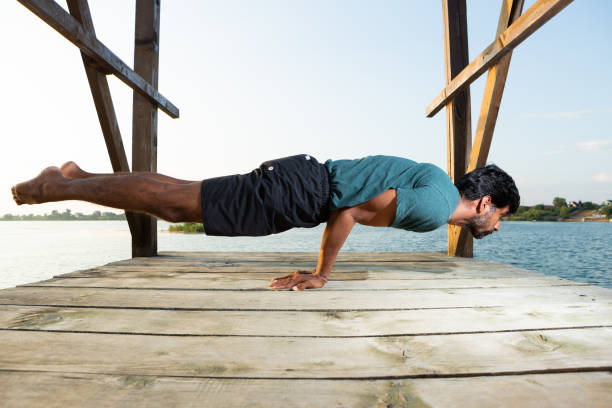
Step 1: Preparation
Sit in a kneeling position on your yoga mat. Spread your knees slightly apart and place your palms flat on the floor, fingers pointing toward your body.
Step 2: Position Your Elbows
Bend your elbows and bring them close together. Gently press your elbows against your abdomen — just above your navel.
Step 3: Shift Forward
Lean forward and rest your chest on your upper arms. Keep your neck long and steady.
Step 4: Lift Your Legs
Slowly extend your legs straight behind you. Engage your core and begin to lift your feet off the ground.
Step 5: Balance and Hold
Once you find balance, lift your head slightly and look forward. Hold the pose for 5 to 10 seconds initially, increasing with practice.
Step 6: Release Gently
Exhale slowly, lower your feet to the mat, and rest in Child’s Pose to relax your wrists and shoulders.
Safety Tips and Precautions
The Peacock Pose is a powerful asana but must be approached with care. Here are some essential tips to ensure a safe practice:
- Always warm up your wrists, shoulders, and abdomen before attempting the pose.
- Avoid this pose if you have wrist, elbow, or shoulder injuries.
- Do not perform the pose on a full stomach. Wait at least 3 to 4 hours after eating.
- If you are pregnant or suffer from hernia, heart problems, or high blood pressure, skip this pose.
- Use a folded towel under your wrists for support if needed.
- Practice near a wall for extra safety in the beginning.
Preparatory Poses
Before moving into Peacock Pose, it helps to practice foundational postures that build the necessary strength and flexibility.
| Preparatory Pose | Purpose |
|---|---|
| Plank Pose (Phalakasana) | Builds wrist and core strength |
| Crow Pose (Bakasana) | Teaches balance on hands |
| Chaturanga Dandasana | Strengthens arms and shoulders |
| Boat Pose (Navasana) | Improves core stability |
| Dolphin Pose | Opens shoulders and engages upper body |
These preparatory poses train your body to handle the demands of Mayurasana safely and efficiently.
The Role of Breath in Peacock Pose
Breathing is your anchor in Peacock Pose. Without steady breath, balance becomes fleeting. Your inhale lifts your spirit, and your exhale grounds your strength.
When lifting into the pose, inhale deeply to fill your lungs with calm determination. As you hold, breathe evenly and slowly. Feel your breath moving through your body, helping you stay centered. Exhale softly as you release, letting go of effort and tension.
Through mindful breathing, you begin to experience a sense of control that extends beyond the mat — into your thoughts, your emotions, and your daily challenges.
Spiritual Meaning Behind Peacock Pose
In yogic philosophy, Mayurasana represents the ability to burn away impurities — physical, emotional, and spiritual. Just like the peacock transforms poison into beauty, this pose reminds us that life’s hardships can be turned into wisdom.
The pose engages Manipura Chakra, the solar plexus energy center, associated with personal power and transformation. Activating this chakra helps you find inner courage, clarity, and confidence.
When you balance in this pose, you’re not just holding your body — you’re balancing your life energy, aligning your strength with serenity.
The Emotional Connection
The journey toward mastering the Peacock Pose often mirrors our emotional evolution. In the beginning, it feels impossible — your arms shake, your core trembles, and doubt clouds your mind. But with patience and self-belief, something beautiful unfolds.
You start realizing that every failed attempt is a step closer to grace. Every fall teaches balance, and every rise brings pride. When you finally hold yourself steady, even for a breath, you feel an indescribable joy — a connection between your body and soul that transcends words.
It’s that quiet moment of victory that makes yoga so profoundly human — it humbles you, strengthens you, and heals you all at once.
Why Practicing Peacock Pose is Worth It
The Peacock Pose is not for the faint-hearted, but it rewards every ounce of effort. Physically, it sculpts your body; mentally, it sharpens your focus; emotionally, it awakens your inner strength.
With consistent practice, you develop a body that’s light yet powerful, a mind that’s calm yet aware, and a spirit that’s grounded yet free.
The Peacock Pose teaches that real beauty isn’t about perfection — it’s about balance, endurance, and grace. It’s a lesson we can carry into every part of our lives.
The Philosophy Behind the Peacock Pose
In ancient yoga traditions, every pose carries a deeper message, a connection between the body and the spirit. The Peacock Pose symbolizes detoxification—not just of the body but of thoughts and emotions. Just as the peacock displays its feathers with pride, Mayurasana invites you to open your heart and express your inner self with confidence.
The ancient yogis believed this pose cleanses the body of toxins by stimulating internal organs, especially the digestive system. But beyond the physical, it is said to cleanse pride and ego—the two emotions that often weigh us down. When you balance your entire body on your arms, it is not just strength that keeps you there—it is focus, faith, and surrender.
Overcoming Fear and Finding Courage
Let’s be honest—when you first see someone doing the Peacock Pose, it might look impossible. Balancing your whole body on your hands seems beyond human strength. And yet, yoga reminds us: “Impossible is just a word.”
The first few attempts are humbling. You may lose balance, fall forward, or feel your arms trembling. But remember, that is where the magic begins. Each fall teaches balance, each tremble builds strength, and each breath brings you closer to success.
A powerful lesson the Peacock Pose teaches is that fear exists only until you face it. Once you do, it disappears like mist in the morning light. It is the same courage that drives a race car driver to push boundaries, or an entrepreneur to take a risk—the courage to trust your skill and move forward even when the path seems uncertain.
The Emotional Power of the Pose
The Peacock Pose has a unique emotional depth. It connects you with your inner fire—the “agni” within—that burns away doubt and insecurity. When you hold the pose, you engage every fiber of your being. You can almost feel your inner energy rising, your focus sharpening, and your confidence expanding.
Many yoga practitioners describe a moment of complete stillness in this pose, where time seems to stop. That moment is pure connection—between body, mind, and soul. It is a reminder that power is not about force, but about control and awareness.
The Science of Balance
To understand why the Peacock Pose works so deeply, let’s look at it scientifically. The pose involves balancing the body horizontally, supported by the forearms pressing against the abdomen. This pressure stimulates the digestive organs and liver, improving metabolism and detoxification.
At the same time, the arms, shoulders, and wrists strengthen significantly, enhancing endurance. Your core muscles engage completely, improving stability and coordination. This blend of muscular engagement and balance creates a perfect harmony between strength and control—two forces that every car enthusiast can relate to.
Just like tuning a high-performance engine requires precision, holding the Peacock Pose requires micro-adjustments. A slight shift in your elbow or wrist can make the difference between balance and collapse. Over time, your body learns to make these subtle corrections automatically, reflecting the discipline that yoga builds.
Building the Mindset of a Peacock
A peacock doesn’t rush to show its beauty—it waits for the right moment. Similarly, mastering the Peacock Pose requires patience. It is not about perfection but progression. Each day, you build trust with your body, listening to its rhythm and respecting its limits.
This mindset—calm, confident, and patient—is powerful not only on the mat but in life. It helps you stay grounded under pressure, much like a driver handling a powerful car at high speed. Balance becomes more than a physical act; it becomes a life philosophy.
Daily Practice Plan for Mastering the Pose
If you’re serious about mastering Peacock Pose, consistency is key. Here’s a simple daily plan you can follow:
| Day | Focus Area | Practice Duration | Goal |
|---|---|---|---|
| Day 1–3 | Wrist and Arm Strength | 15–20 minutes | Build foundational strength using Plank and Chaturanga |
| Day 4–7 | Core Engagement | 20 minutes | Practice Boat Pose and Forearm Plank |
| Week 2 | Forearm Balance | 25 minutes | Work on Crow Pose to learn control and lift |
| Week 3 | Gentle Attempts | 20 minutes | Try half Peacock Pose with support |
| Week 4 | Full Pose Practice | 25 minutes | Attempt full Peacock Pose; focus on breath and alignment |
| Ongoing | Maintenance | 15 minutes | Continue regular practice to improve balance and endurance |
Each phase should be done with mindfulness. Listen to your body—never rush. The goal is not to compete, but to grow.
Common Mistakes to Avoid
Even experienced yogis make small mistakes that affect the posture. Let’s highlight some common ones and how to correct them:
| Mistake | Effect | Correction |
|---|---|---|
| Elbows too wide | Loss of balance | Keep elbows close to the abdomen |
| Shoulders collapsing | Strain on wrists | Engage shoulders and keep chest lifted |
| Hips dropping | Less core engagement | Engage your abs to keep the body horizontal |
| Holding breath | Fatigue and imbalance | Breathe slowly and evenly |
| Forcing the pose | Risk of injury | Build strength gradually and stay patient |
The Spiritual Glow After Practice
After a successful session of Peacock Pose, something beautiful happens inside. You feel lighter—not just physically, but emotionally. It’s as if every drop of effort you invested returns to you as energy, confidence, and peace.
Your heart feels open, your mind clear, and your body strong. The inner dialogue that once doubted your ability fades away, replaced by a calm assurance: I can.
It is a deeply empowering experience, reminding you that limits exist only until you decide to move beyond them.
Lessons the Peacock Pose Teaches for Life
Yoga, like life, is not about reaching the final destination—it’s about the journey. The Peacock Pose is a teacher in itself. It shows you that balance comes from within, that beauty is found in control, and that strength is a product of persistence.
Here are a few life lessons inspired by this pose:
- Balance is the foundation of peace. Whether in yoga, relationships, or ambition, balance keeps everything steady.
- Patience brings progress. Every fall is a lesson, not a failure.
- Strength without awareness leads to burnout. True power comes from calm focus.
- Self-belief is the greatest fuel. Just like a car’s engine, belief keeps your journey moving forward.
A Gentle Reminder for Beginners
If you’re just starting out, remember that every expert was once a beginner. You don’t have to perfect Peacock Pose in a day. Celebrate small victories—the first lift, the first second of balance, the first steady breath.
Progress in yoga is not linear. Some days, you’ll feel strong; other days, you may struggle. But that’s okay. What matters is consistency and kindness toward yourself.
The Beauty of Stillness
When you finally master the Peacock Pose, there’s a quiet satisfaction that fills you. You realize it’s not just about balancing your body but aligning your life. Every effort, every drop of sweat, every moment of stillness adds up to something extraordinary.
It’s like polishing a car to perfection—each small act brings out the shine within.
Final Thoughts
The Peacock Pose (Mayurasana) is more than a yoga asana—it’s a statement of strength, balance, and inner radiance. It teaches that beauty comes from confidence, that control is born from calm, and that every human being carries within them the potential to rise above limitation.
Practice with passion, breathe with purpose, and let your inner peacock shine.
Because the moment you rise above the ground—supported only by your strength and belief—you’ll know that you’ve discovered something rare: your true power.