
Yoga is more than just a practice of movement; it’s a language of the soul, a deep connection between body, mind, and spirit. Among the countless poses that shape this discipline, the Eight-Angle Pose stands as a masterpiece of strength and grace. Known in Sanskrit as Astavakrasana, this arm-balancing posture is both physically demanding and spiritually rewarding. It’s not only a test of flexibility and strength but also a symbol of inner resilience and focus. The name itself carries a beautiful story that mirrors the purpose of yoga — to rise above limitations and embrace harmony within.
Let’s explore the world of Eight-Angle Pose deeply — its meaning, its technique, and the life-changing lessons it teaches those who attempt it. Whether you are new to yoga or have been practicing for years, understanding this pose can illuminate your path in ways you never imagined.
The Story Behind Eight-Angle Pose
The story of Astavakrasana comes from an ancient Indian legend about a wise sage named Ashtavakra. The word Ashta means “eight” and Vakra means “bent.” Ashtavakra was born with eight deformities in his body, and because of his unusual appearance, he was mocked by others. Yet, his wisdom was unmatched. Ashtavakra’s intelligence and inner strength helped him become one of the most respected sages of his time.
The moral of his story teaches us that our true power doesn’t come from the perfection of our body, but from the depth of our mind and soul. The Eight-Angle Pose symbolizes this same lesson — it’s not about external beauty or physical ease, but about balance, courage, and acceptance.
Understanding the Essence of Eight-Angle Pose
Eight-Angle Pose is an advanced arm-balancing posture that requires a blend of core power, arm strength, and hip flexibility. The body appears to twist and balance in a way that resembles the number eight. It’s one of those poses that demands patience and persistence, teaching us that mastery is never instant — it’s earned through consistency and self-belief.
When you practice this pose, you’re not just exercising your body; you’re awakening your awareness. Every muscle, every breath, every moment of focus counts. The Eight-Angle Pose is a metaphor for life — sometimes you feel twisted and challenged, yet if you remain calm and grounded, you find your balance again.
The Physical Preparation for Eight-Angle Pose
Before attempting Astavakrasana, it’s essential to prepare your body with a series of warm-up exercises that enhance strength and flexibility. This posture primarily engages your arms, shoulders, core, and hips, so these areas need to be properly opened and strengthened.
Here are some preparatory poses that help in building a solid foundation for Eight-Angle Pose:
| Preparatory Pose | Purpose |
|---|---|
| Downward-Facing Dog (Adho Mukha Svanasana) | Stretches hamstrings and strengthens arms |
| Plank Pose | Builds arm and core strength |
| Low Lunge (Anjaneyasana) | Opens hips and improves flexibility |
| Boat Pose (Navasana) | Strengthens abdominal muscles |
| Seated Forward Bend (Paschimottanasana) | Improves hamstring and spine flexibility |
| Four-Limbed Staff Pose (Chaturanga Dandasana) | Builds shoulder and arm stability |
Practicing these regularly helps your body become more comfortable with the balance and coordination required for Eight-Angle Pose.
How to Do Eight-Angle Pose Step-by-Step
Learning Astavakrasana should be approached with patience. Here’s a step-by-step guide to help you get into the posture safely:
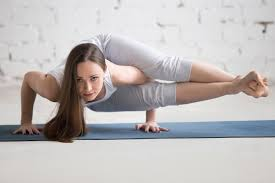
- Start in Dandasana (Staff Pose)
Sit on the floor with your legs extended straight in front of you and your hands resting beside your hips. Keep your spine tall and your breath steady. - Bend Your Right Knee
Bring your right knee toward your chest and hold your foot with both hands. - Hook the Right Leg Over Your Shoulder
Gently place your right leg over your right shoulder as high as possible. You can think of this like wearing your leg as a scarf. Keep your foot active and engaged. - Place Your Hands on the Floor
Once your leg is secure, place both hands on the floor beside your hips for support. Spread your fingers wide to create a strong foundation. - Cross the Ankles
Lift your left leg and cross your ankles in front of you, locking the right ankle over the left. - Engage Your Core and Lift Off the Floor
Press your palms firmly into the mat and engage your abdominal muscles. With one strong exhale, lift your hips off the floor, using your arms for support. - Straighten Your Legs Sideways
Once lifted, extend your legs to the right side while keeping them parallel to the ground. Maintain the cross at your ankles and keep your chest open. - Hold and Breathe
Stay in the pose for 15–30 seconds, focusing on steady breathing. Feel the power and grace in your body. - Gently Release
To exit, bend your elbows slightly, lower your hips, and bring your legs back to the mat with control. Repeat on the other side.
Common Mistakes to Avoid
Even experienced practitioners can make errors while performing Eight-Angle Pose. Here are some common mistakes and how to avoid them:
| Mistake | Correction |
|---|---|
| Not engaging the core | Focus on drawing the belly in to stabilize your center |
| Collapsing the shoulders | Keep shoulders firm and lifted away from the ears |
| Rushing the entry | Move slowly and mindfully through each step |
| Overlooking hip flexibility | Warm up your hips properly before attempting |
| Forgetting to breathe | Maintain deep, even breaths throughout |
Physical Benefits of Eight-Angle Pose
When practiced regularly, Astavakrasana brings incredible transformations both inside and outside the body.
- Builds Arm and Wrist Strength – The posture heavily relies on your arms and wrists, helping develop endurance and power in these areas.
- Enhances Core Stability – The balance in this pose comes from your core; engaging it helps you achieve stability in daily life too.
- Improves Hip Flexibility – Lifting one leg over the shoulder requires open hips, which this pose continually develops.
- Increases Focus and Balance – Maintaining the position without falling encourages mental clarity and single-pointed attention.
- Boosts Energy Flow – This pose activates the solar plexus chakra (Manipura), which governs willpower and self-confidence.
Emotional and Mental Benefits
Yoga is not only about the body — it’s also about nurturing the mind and heart. Practicing Eight-Angle Pose can bring emotional clarity and inner strength.
- Cultivates Confidence: When you achieve this challenging pose, it fills you with a sense of accomplishment that extends beyond your yoga mat.
- Teaches Patience: This pose can’t be mastered overnight. It requires persistence, reminding you that progress is built over time.
- Releases Emotional Tension: The deep stretch and balance help release pent-up emotions, bringing calmness and relief.
- Encourages Mindfulness: Every breath and movement in this posture demands presence, grounding you in the now.
Spiritual Meaning of Eight-Angle Pose
Every yoga posture holds a deeper spiritual symbolism, and the Eight-Angle Pose is no different. It’s not just an expression of physical control but a reflection of harmony between mind, body, and soul. The posture represents the idea of transcending obstacles. Just as Sage Ashtavakra’s wisdom outshone his physical deformities, this pose teaches that true beauty and power lie within.
When you balance yourself in this pose, you connect to a higher sense of awareness. It’s about accepting imperfections and realizing that every challenge in life — like every twist in this pose — is an opportunity for growth. The Eight-Angle Pose symbolizes enlightenment through struggle, showing us that balance is achieved when we surrender to the present moment.
Practicing Astavakrasana regularly helps quiet the inner noise. You stop competing, stop rushing, and start listening — to your breath, your body, and your emotions. That’s when yoga truly becomes meditation in motion.
Breathing Techniques During the Pose
Breathing plays an essential role in mastering the Eight-Angle Pose. Without proper breathing, the body stiffens, the mind loses focus, and the balance is lost. Controlled breathing creates steadiness. Here’s how to use your breath effectively:
- Inhale Deeply Before the Lift – Fill your lungs completely to prepare your body for the lift.
- Exhale While Lifting – Use your exhalation to engage your core and push the floor away with your palms.
- Maintain Slow, Rhythmic Breathing – Once balanced, breathe evenly to maintain focus. Avoid shallow breathing.
- Exhale to Release – When exiting the pose, exhale gently to ease your body down safely.
Deep breathing brings more oxygen to your muscles and calms your nervous system, helping you hold the pose longer and with greater awareness.
The Emotional Journey Through Eight-Angle Pose
For many practitioners, Astavakrasana feels like more than just a yoga asana — it’s an emotional revelation. When you first attempt this posture, frustration is common. Your arms may tremble, your balance may fail, and it may seem impossible. But as you continue, something magical happens. You begin to discover your inner resilience.
Each attempt becomes a reminder that failure is not the end — it’s a teacher. With every fall, you learn something new about your body, about patience, and about humility. Slowly, you start trusting yourself more. The day you finally lift off and hold the pose for even a few seconds, a quiet joy fills your heart. It’s not pride, but gratitude — gratitude for your effort, your breath, and your body’s cooperation.
The Eight-Angle Pose becomes a metaphor for life itself: we stumble, we struggle, and then, through persistence and faith, we rise.
Who Should Practice Eight-Angle Pose
Eight-Angle Pose is an advanced pose that demands physical strength and mental steadiness. However, it can be practiced by anyone willing to move gradually toward mastery.
It is especially beneficial for:
- Yoga practitioners looking to deepen their arm balance skills
- Athletes who want to improve coordination and muscle control
- Individuals under stress seeking better mental focus
- Anyone looking to challenge their limits in a mindful, safe way
But there are also some conditions where it’s best to avoid this posture:
- Wrist or elbow injuries
- Shoulder pain or instability
- Recent abdominal surgery
- Pregnancy or postpartum recovery phase
Always listen to your body and practice under the guidance of an experienced yoga teacher if you’re unsure.
How to Progress Toward Eight-Angle Pose
If you’re not yet ready for the full expression of Astavakrasana, don’t worry. Yoga is a gradual journey. Here are a few tips to help you progress steadily:
- Build Arm and Core Strength – Practice Chaturanga, Plank Pose, and Crow Pose regularly.
- Work on Hip Flexibility – Add stretches like Lizard Pose, Pigeon Pose, and Garland Pose to your routine.
- Use Props – A yoga block under your hands can lift you slightly higher, making it easier to balance.
- Engage Your Breath – Controlled breathing will help keep your mind calm as your body works hard.
- Stay Consistent – Even five minutes of daily focused practice makes a difference over time.
Consistency is key. Remember, yoga rewards persistence, not perfection.
The Transformation That Comes from Practice
The first time you attempt the Eight-Angle Pose, your body may resist. You may doubt yourself, your strength, and your flexibility. But as you keep practicing, something deeper begins to shift. Your body grows stronger, your balance improves, and your confidence blossoms.
But the transformation doesn’t stop there. The true gift of yoga is how it changes your perspective off the mat. You start handling life’s challenges with greater calm. When things twist and turn unexpectedly, you don’t panic — you breathe, balance, and move forward, just as you do in Astavakrasana.
It’s a powerful realization: what you learn through your body in yoga becomes wisdom for your life.
The Inner Reward of Mastering Eight-Angle Pose
Mastering the Eight-Angle Pose is not about showing off strength or flexibility — it’s about self-discovery. Each time you hold the pose, you feel a unique connection between your body and your soul. The weight of your body supported by your arms becomes symbolic of the strength within you that can support your dreams and responsibilities.
You learn that your limitations are not boundaries but doorways to growth. The moment you find balance, a calm silence fills your mind. That’s when yoga transforms from physical movement to a living meditation — a moment where the mind stops chasing and starts being.
Practical Tips for Success
Here are a few helpful suggestions to make your practice of Eight-Angle Pose smoother and safer:
- Warm up thoroughly before attempting the pose.
- Practice on a stable, non-slippery yoga mat.
- Keep your gaze slightly forward rather than down to maintain balance.
- Focus on engaging your core muscles throughout.
- Don’t rush — progress naturally with patience.
- After practicing, rest in Child’s Pose or Corpse Pose to relax your muscles.
Complementary Poses
To balance your practice, try these poses alongside Astavakrasana:
| Complementary Pose | Benefit |
|---|---|
| Crow Pose (Bakasana) | Builds arm strength and balance |
| Side Plank (Vasisthasana) | Strengthens obliques and arms |
| Lizard Pose (Utthan Pristhasana) | Opens hips deeply |
| Boat Pose (Navasana) | Improves core strength |
| Pigeon Pose (Eka Pada Rajakapotasana) | Enhances hip flexibility and relieves tension |
These complementary poses prepare your body for balance and recovery.
The Mindset of a Yogi
The Eight-Angle Pose is not just for athletes or experienced practitioners. It’s for anyone who wants to test the strength of their spirit. Every attempt teaches you humility and courage. You begin to understand that yoga is not a competition — it’s a personal dialogue between your breath and your soul.
When you step onto the mat, forget the world for a while. Forget comparison, expectation, and fear. Focus only on this moment, this breath, this balance. That’s where the beauty of yoga lies — in complete awareness of now.
Final Thoughts
The Eight-Angle Pose or Astavakrasana is a reflection of life itself — challenging, transformative, and deeply fulfilling. It teaches us that strength doesn’t come from rigid muscles but from flexible faith. It shows that balance is not found in stillness but in graceful adaptation.
When you finally hold this pose, even for a brief second, you’ll feel a surge of confidence and peace flowing through your body. That’s not just physical success — it’s emotional victory. You’ll realize that you are capable of so much more than you thought.
So, take a deep breath, roll out your mat, and meet yourself where you are today. Your journey through Eight-Angle Pose is not just about learning balance — it’s about discovering your inner fire, patience, and power. Let your body express its strength, let your heart embrace its courage, and let your mind find its calm in the twist of challenge.