
Wheel Pose (Urdhva Dhanurasana) is one of the most powerful, heart-opening, and confidence-building yoga postures ever created. It’s not just a stretch; it’s a statement of strength, courage, and emotional freedom. When you rise into the Wheel Pose, your body forms a perfect arch, symbolizing the bridge between your inner world and outer expression. This pose feels like freedom—like throwing your arms wide open to embrace life itself.
Today, we’ll explore every element of this majestic posture—the emotions it awakens, the techniques to perfect it, the mistakes to avoid, and how it helps you in body, mind, and soul. Whether you’re new to yoga or someone who has been practicing for years, this journey through Wheel Pose will remind you that growth begins when you open your heart—both physically and emotionally.
The Meaning and Essence of Wheel Pose
Wheel Pose, known in Sanskrit as Urdhva Dhanurasana, literally translates to “Upward Bow Pose.” Imagine the body forming a wheel—the arms and legs act as the spokes, while the heart stands proudly at the center. In yoga philosophy, the heart represents openness, joy, and emotional balance. When you lift into Wheel Pose, you don’t just stretch your spine—you expand your capacity for love, resilience, and self-belief.
This posture teaches surrender and strength at once. To lift into the Wheel Pose, you must push beyond fear and trust your body’s power. The first few times, it feels impossible. But once you rise, that moment of elevation fills you with an unforgettable sense of empowerment. It’s not just about the backbend—it’s about finding freedom where you once felt limited.
Physical Foundation of Wheel Pose
To perform the Wheel Pose correctly, understanding your body’s alignment is crucial. Every part of your body contributes to creating that perfect arc.
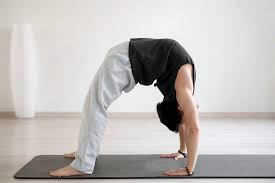
- Begin on your back.
Lie flat with your knees bent and feet hip-width apart. Place your feet firmly on the floor, close enough that your fingertips can lightly touch your heels. - Position your hands.
Bend your elbows and place your palms beside your ears, fingers pointing toward your shoulders. This setup forms the foundation for your lift. - Prepare mentally.
Take a few deep breaths. As you inhale, imagine filling your spine with light and strength. - Lift your body.
Press your feet and hands into the floor, engaging your thighs and arms. Lift your hips, then your chest, pushing upward until your arms straighten and your heart rises proudly toward the sky. - Hold and breathe.
Once in position, keep your head relaxed, breathing deeply. Feel the openness in your chest and the strength in your legs. - Lower down slowly.
To exit, bend your elbows and knees gently, bringing your spine down one vertebra at a time until you rest comfortably on your mat.
Every movement in Wheel Pose is a harmony between power and grace. The challenge is to maintain that balance, to lift with courage but also surrender with control.
The Emotional Journey of Wheel Pose
One of the most profound aspects of Wheel Pose is its emotional impact. Backbends, especially deep ones like this, open the heart center—known in yoga as the Anahata Chakra. When you open your chest, you create space for emotions that may have been hidden or blocked.
Some people feel energized and joyful after practicing this pose; others feel emotional release, even tears. Both are natural. The Wheel Pose teaches us that vulnerability is not weakness—it’s the beginning of healing.
When you rise into the pose, imagine yourself letting go of all emotional weight—stress, fear, sadness—and replacing it with lightness and love. Each breath becomes a reminder that your strength is far greater than your doubts.
The Benefits of Wheel Pose
Wheel Pose is a full-body rejuvenator. It stretches, strengthens, and energizes like few other yoga postures.
| Area of the Body | Benefits of Wheel Pose |
|---|---|
| Spine | Deep stretch and flexibility |
| Shoulders and arms | Increased strength and endurance |
| Legs and glutes | Improved tone and stability |
| Chest and lungs | Better breathing and heart health |
| Abdomen | Strengthens core and improves digestion |
| Nervous system | Boosts energy and reduces fatigue |
| Mind and emotions | Relieves tension and promotes positivity |
This pose revitalizes the entire nervous system by stimulating blood flow and oxygen throughout the body. The deep stretch also releases tension stored in the back, shoulders, and hips—areas that often hold emotional and physical stress.
Practicing Wheel Pose regularly can improve posture, enhance lung capacity, and boost energy levels. It’s a posture that wakes you up, inside and out.
Challenges and How to Overcome Them
Many yoga practitioners face difficulties when attempting Wheel Pose. The most common challenges include stiff shoulders, weak arms, tight hips, or fear of falling.
Here’s how to overcome them:
- For tight shoulders: Practice bridge pose and shoulder-opening stretches regularly.
- For weak arms: Strengthen your triceps, shoulders, and chest with plank variations.
- For tight hips: Include hip openers like Pigeon Pose or Lizard Pose in your warm-up.
- For fear of falling: Start practicing near a wall. Use props like yoga blocks to support your hands or feet.
Remember, patience is your greatest ally. Flexibility and confidence grow over time. Each attempt, even the ones that feel imperfect, brings progress.
The Science Behind Wheel Pose
Beyond its spiritual and emotional effects, Wheel Pose also has strong physiological benefits. It stimulates the thyroid and pituitary glands, which help regulate hormones and metabolism. The increased blood flow to the brain sharpens focus and reduces anxiety.
It’s also an excellent heart opener. By expanding the chest cavity, the lungs take in more oxygen, which enhances cardiovascular efficiency. This pose teaches you to breathe deeper and more fully, improving energy and endurance.
Wheel Pose also counteracts the effects of prolonged sitting—a common issue in modern lifestyles. The deep backbend strengthens spinal muscles and restores the natural curve of your spine, improving overall posture and reducing back pain.
The Energy of the Heart
In the Wheel Pose, the heart becomes the center of the posture. When the chest opens, it’s as though the heart itself is lifted toward the light. This energy shift creates emotional clarity. You begin to feel more compassionate, optimistic, and connected to yourself.
Yoga philosophy teaches that the heart chakra governs love and empathy. By opening it through backbends like the Wheel Pose, you clear emotional blockages and allow new, positive energy to flow.
As you practice, imagine your heart expanding with each breath. See it as a radiant source of strength and kindness. This visualization helps deepen both the physical and emotional aspects of the pose.
Safety and Precautions
While Wheel Pose is empowering, it’s also advanced. It should be practiced with care and awareness. Avoid forcing your body into the pose—progress naturally.
- Warm-up first: Prepare your spine and shoulders with gentler poses like Bridge Pose, Cat-Cow, or Cobra Pose.
- Listen to your body: If you feel sharp pain, stop immediately. Discomfort is normal; pain is not.
- Don’t skip the cooldown: After practicing Wheel Pose, neutralize your spine with gentle forward bends or twists.
Consistency matters more than intensity. Practicing even a few minutes a day can create remarkable transformation.
The Mindset of a Wheel Pose Practitioner
When you first see someone performing Wheel Pose, it may seem impossible. But every advanced yogi once started as a beginner filled with doubt. What separates success from struggle is mindset.
The Wheel Pose teaches courage—the courage to trust your body, to lean into discomfort, and to open yourself even when it feels vulnerable. Every lift off the ground reminds you that your strength comes not from control but from surrender.
This pose mirrors life itself. Sometimes you must bend before you can rise. Sometimes the hardest part is believing that you can. But once you do, everything changes.
Daily Practice Integration
Adding Wheel Pose to your daily routine can be transformative. Here’s a simple structure to follow:
| Step | Practice Element | Duration |
|---|---|---|
| Warm-up | Cat-Cow, Bridge Pose, and Shoulder Rolls | 10 minutes |
| Main Pose | Wheel Pose practice (2-3 repetitions) | 10-15 minutes |
| Cool down | Forward Bend, Child’s Pose, or Supine Twist | 5-10 minutes |
| Reflection | Deep breathing or meditation | 5 minutes |
The key is not the time but the intention behind your practice. Even short, mindful sessions bring long-lasting results.
The Philosophy Behind the Pose
In ancient yogic philosophy, backbends symbolize the courage to move forward in life. The Wheel Pose represents the cycle of renewal—every time you arch back, you open yourself to transformation.
It’s a reminder that life, like a wheel, keeps turning. You’ll have ups and downs, moments of ease and effort. But as long as you stay open-hearted and resilient, you keep moving forward.
Wheel Pose encourages you to trust the process. To release control and allow your body’s intelligence to guide you. In doing so, you realize that growth isn’t about forcing—it’s about flowing.
Wheel Pose (Urdhva Dhanurasana) represents more than a physical stretch; it’s a celebration of resilience and a symbol of personal growth. Now that we’ve understood the fundamentals of this dynamic posture, let’s dive deeper into the second part of our exploration. Here, we’ll uncover the emotional depth, breathing techniques, variations, and ways to connect this pose with the energy of everyday life—even for those who love the rush of engines and the calm of balance.
The Emotional Healing Behind Wheel Pose
Yoga isn’t just about movement—it’s about transformation. Wheel Pose has a remarkable way of unlocking stored emotions. Because it’s a heart-opening backbend, it physically expands your chest and energetically stimulates your heart chakra. For many practitioners, this brings a surprising wave of emotion—sometimes joy, sometimes tears.
This emotional release happens because the posture literally opens the area where stress and sadness are often stored. It’s not uncommon to feel lighter after practicing it, as though years of tension have melted away.
When you rise into the Wheel Pose, think of it as lifting emotional weight off your chest. Every breath becomes a declaration of self-trust. Every second in the pose is an act of courage—a decision to stay open even when the world feels heavy.
In time, this emotional openness extends beyond the mat. You’ll find yourself reacting to challenges with more calm, compassion, and clarity.
The Art of Breathing in Wheel Pose
Your breath is your greatest ally in Wheel Pose. Without proper breathing, this pose can feel tense and exhausting. But when you breathe consciously, it becomes effortless and graceful.
Here’s how to integrate your breath into the posture:
- Before lifting: Take slow, deep inhales through your nose. Feel your belly rise and your lungs expand.
- During the lift: As you exhale, press into your palms and feet. Use the power of your breath to guide your upward motion.
- While holding: Maintain steady breathing. Inhale into your chest, feeling expansion. Exhale through your nose, grounding your energy.
- As you release: Exhale slowly and mindfully, lowering one vertebra at a time to the mat.
This synchronization between breath and movement cultivates mindfulness. It keeps your body energized and your mind focused, turning each repetition into a meditative rhythm.
Advanced Variations of Wheel Pose
Once you’ve built confidence in the traditional Wheel Pose, there are advanced variations that deepen your flexibility, challenge your focus, and intensify your strength. Each variation carries its own beauty and purpose.
- One-Legged Wheel Pose:
Lift one leg off the ground while holding the pose. This requires strong core engagement and balance. It enhances hip flexibility and leg control. - Forearm Wheel Pose:
Place your forearms on the floor instead of your palms. This version emphasizes shoulder strength and stability while protecting the wrists. - Supported Wheel Pose:
Use yoga blocks beneath your hands or feet to lift higher and create a deeper backbend without straining your spine. - Wheel Pose with Walking Hands and Feet:
Once stable, slowly walk your hands and feet closer together. This builds greater control, awareness, and stamina.
Remember—these variations are about exploration, not perfection. Move only as far as your body feels comfortable. Yoga is not a race; it’s a relationship between you and your inner self.
The Connection Between Wheel Pose and Confidence
Confidence doesn’t come from external validation—it comes from inner strength. The Wheel Pose is one of yoga’s most empowering positions because it literally embodies openness and self-trust.
When you lift into the Wheel Pose, you’re physically opening your heart, which stimulates the nervous system and releases endorphins. This surge of positive energy makes you feel alive, capable, and renewed.
Think of it as standing tall after overcoming fear. Every time you push through hesitation and rise into the pose, you’re proving to yourself that your limits are not fixed—they’re meant to expand.
For people who love cars, this sense of controlled power might feel familiar. Just as a car’s engine must be finely tuned to perform at its best, your body and breath must work in harmony to achieve balance in Wheel Pose. You learn to channel energy efficiently—to accelerate when needed and to slow down when balance demands.
Wheel Pose and Everyday Life
The lessons of Wheel Pose extend far beyond your yoga mat. It teaches you how to stay strong yet flexible, grounded yet open. These are the same principles that lead to success in life, work, and relationships.
When life becomes overwhelming, Wheel Pose reminds you to open your heart instead of closing off. When challenges arise, it teaches you to lean into them with faith instead of fear.
Even car enthusiasts can relate—every curve on a track requires control, awareness, and trust. Similarly, every arch in Wheel Pose requires faith in your body’s design and willingness to move past resistance.
Here’s how the energy of this pose translates into daily wisdom:
| Lesson from Wheel Pose | Application in Daily Life |
|---|---|
| Stay grounded before rising | Build strong foundations before taking risks |
| Keep your heart open | Face challenges with empathy and understanding |
| Balance power and grace | Be assertive yet gentle in your actions |
| Breathe through discomfort | Stay calm in high-pressure situations |
| Trust your process | Growth takes time—progress is the reward |
The Healing Power of Consistency
Practicing Wheel Pose regularly can transform not just your body but your entire state of mind. In the beginning, you may struggle with tightness or fear. But with time and persistence, the pose becomes an empowering ritual—a reminder that strength and surrender can coexist.
Consistency builds muscle memory, increases flexibility, and deepens awareness. Even practicing for a few minutes daily can bring visible change in posture, energy, and confidence.
If you practice yoga in the morning, the Wheel Pose acts as a natural energizer. It awakens your nervous system, improves focus, and prepares your mind for the day. In the evening, it can help counter the effects of long hours of sitting, restoring vitality to your spine and shoulders.
The Spiritual Symbolism of the Wheel
In yoga philosophy, the “wheel” symbolizes the cyclical nature of life—endings that lead to new beginnings. Just as a wheel keeps turning, so does our journey of growth. Every fall, every challenge, every success is part of the motion that keeps us evolving.
The Wheel Pose encourages you to embrace this rhythm. When you arch your body backward, you’re not just bending—you’re learning to let go of control. It’s an act of trust, of believing that you can bend without breaking.
This spiritual openness brings peace. It reminds you that strength doesn’t always mean rigidity. Sometimes, the strongest thing you can do is surrender.
Recovery and Counterposes
After performing Wheel Pose, it’s essential to neutralize your spine with gentle counterposes. These postures help release any tension built up in your back and shoulders.
Recommended counterposes include:
- Child’s Pose (Balasana): Soothes the spine and calms the mind.
- Seated Forward Bend (Paschimottanasana): Stretches the back and relieves tightness.
- Supine Twist (Supta Matsyendrasana): Gently realigns the spine.
End your practice with a few minutes of relaxation in Savasana (Corpse Pose). Allow your breath to settle, your heart to soften, and your body to absorb the benefits.
The Inner Dialogue
As you practice Wheel Pose, listen to your inner voice. At first, it might whisper doubt—“I can’t do this,” or “I’m not strong enough.” But with persistence, that voice begins to change. You’ll start hearing words like “I can,” “I am improving,” and eventually, “I am free.”
This transformation of thought mirrors the transformation of your body. The pose teaches you not to give up just because it’s hard. Instead, it encourages you to keep lifting, breathing, and believing.
Combining Wheel Pose with Other Asanas
To build a strong and balanced yoga routine, combine Wheel Pose with complementary postures that prepare and restore the body.
Preparation Poses:
- Bridge Pose (Setu Bandhasana)
- Cobra Pose (Bhujangasana)
- Camel Pose (Ustrasana)
Balancing Poses:
- Warrior I and II (Virabhadrasana I & II)
- Triangle Pose (Trikonasana)
Cooling Poses:
- Forward Fold (Uttanasana)
- Happy Baby (Ananda Balasana)
These combinations enhance flexibility, stability, and awareness—creating a complete flow that supports the body’s natural rhythm.
The Transformation Within
When practiced with intention, Wheel Pose becomes a metaphor for transformation. You start with doubt, rise through strength, and end in peace. It’s not just your spine that opens—it’s your entire being.
Each time you lift, you create new possibilities. You learn that fear is temporary, but courage leaves a permanent mark. You understand that flexibility of the body mirrors flexibility of the mind.
And just as a car must be tuned regularly for optimal performance, your body too requires maintenance—care, patience, and mindfulness. Wheel Pose is that fine-tuning tool. It connects you to your body’s strength and your soul’s freedom.
Final Reflection
In the end, Wheel Pose (Urdhva Dhanurasana) is more than a yoga posture—it’s a personal revolution. It asks you to confront your fears, open your heart, and trust your journey. The first time you rise into this pose, it may feel like a mountain. But with practice, it becomes your victory—one breath, one lift, one moment of courage at a time.
So when you step onto your mat, remember that Wheel Pose is not about perfection—it’s about expression. It’s about finding strength in vulnerability, peace in motion, and confidence in openness.
Like a perfectly balanced car roaring down a sunlit road, your body and soul align in motion—steady, strong, and unstoppable. Each time you rise into the Wheel, you remind yourself that true power comes not from holding back, but from letting go.