
Introduction: When the Mind Refuses to Rest
There are nights when the world goes silent — yet your mind refuses to do the same.
You lie awake, staring at the ceiling, thoughts racing like restless waves in an endless ocean. The harder you try to sleep, the further peace seems to drift away.
If this sounds familiar, you’re not alone. Millions struggle every night with anxiety and sleeplessness, searching for a remedy that feels natural, gentle, and real.
In this fast-paced world, we’ve forgotten how to pause. How to breathe. How to simply be.
And that’s where meditation for sleep and anxiety becomes not just a practice — but a quiet revolution inside your heart.
What Is Meditation and Why Does It Matter?
Meditation is more than sitting in silence. It’s a doorway — a space where you reconnect with your truest self.
It’s not about forcing your mind to stop thinking; it’s about learning to watch your thoughts drift by like clouds in the sky.
At its core, meditation for sleep and anxiety is the art of calming the storm inside.
When practiced regularly, it teaches your nervous system to relax, your heartbeat to slow, and your mind to let go of the endless loop of “what ifs” that keep you awake.
Science now confirms what ancient monks knew centuries ago — that meditation changes your brain, balances your hormones, and improves emotional resilience.
The Science Behind Meditation for Sleep and Anxiety
Let’s take a gentle look at what happens inside your body when you meditate.
| Effect | Description | Benefit |
| Reduced Cortisol Levels | Meditation lowers the stress hormone cortisol. | Helps you feel calmer and reduces anxiety symptoms. |
| Increased Melatonin | Regular meditation boosts melatonin production. | Promotes natural, deeper sleep. |
| Activation of the Parasympathetic Nervous System | Your “rest and digest” system takes over. | Slows heart rate and eases muscle tension. |
| Brainwave Changes | Meditation increases alpha and theta brainwaves. | Brings a dreamy, calm state ideal for sleep. |
Meditation doesn’t force relaxation — it invites it.
Over time, your body starts recognizing meditation as a signal: “It’s safe to rest now.”
Why Anxiety Steals Your Sleep
Anxiety is like a constant hum — sometimes quiet, sometimes deafening — that makes it nearly impossible to relax.
Your mind keeps replaying past mistakes, worrying about tomorrow, and analyzing things that never even happened.
By bedtime, your brain is exhausted but refuses to switch off.
Here’s what anxiety does to your sleep cycle:
- Overthinking keeps your brain active when it should be resting.
- Stress hormones (like cortisol) rise, preventing deep sleep.
- Rapid heartbeat and muscle tension make it physically uncomfortable to rest.
- Nighttime panic or racing thoughts increase insomnia risk.
That’s why meditation for sleep and anxiety is so powerful — it helps rewire your emotional responses.
It teaches your body that night is for healing, not for worrying.
Types of Meditation for Sleep and Anxiety
There’s no one-size-fits-all. Different meditation styles work for different hearts.
Here are some of the most effective forms of meditation for sleep and anxiety:
1. Mindfulness Meditation
Focus on the present — your breath, the feeling of the sheets, the sound of your heartbeat.
Every time your thoughts wander, gently bring them back.
This strengthens awareness and teaches your mind to stay calm even during anxiety spikes.
2. Body Scan Meditation
Start at your toes and move upward, relaxing each body part slowly.
Feel the weight of your body sinking into the bed.
This method releases physical tension stored in muscles due to anxiety.
3. Guided Meditation
Perfect for beginners.
You listen to a calm voice guiding you through imagery, relaxation, or sleep preparation.
There are countless apps and YouTube channels that offer guided sessions for sleep and anxiety relief.
4. Breathing Meditation
Focus solely on your breath — slow, deep, intentional breathing.
This lowers your heart rate and signals your body that it’s time to rest.
Try the 4-7-8 breathing technique:
Inhale for 4 seconds → Hold for 7 → Exhale for 8.
Repeat until your body melts into calmness.
5. Loving-Kindness Meditation (Metta)
Send gentle thoughts of love and peace to yourself and others.
It’s deeply healing for those with emotional stress or self-doubt.
Repeat: “May I be calm. May I be safe. May I sleep peacefully.”
Creating the Perfect Meditation Environment
Meditation thrives in stillness.
To prepare your space for meditation for sleep and anxiety, follow these steps:
- Dim the lights or light a candle.
- Switch off screens at least 30 minutes before meditating.
- Play soft background music — ocean waves, rain sounds, or soft piano.
- Use a calming scent like lavender or sandalwood.
- Lie down or sit comfortably — the goal is ease, not perfection.
When your environment feels like peace, your mind learns to mirror it.
Emotional Healing Through Meditation
Meditation doesn’t just relax you — it heals you.
It lets you meet parts of yourself that you’ve ignored.
It teaches you that anxiety isn’t the enemy; it’s a signal — your body asking for care.
When you close your eyes and breathe deeply, you’re telling yourself:
“I am here. I am safe. I can let go.”
That moment — that quiet surrender — is where transformation begins.
Many people cry during their first few meditations. And that’s beautiful.
Tears aren’t weakness; they’re release.
They’re how your body says: “Thank you for finally listening.”
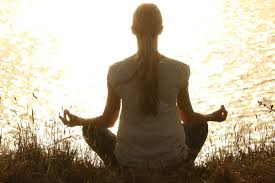
Meditation Techniques to Try Tonight
Here’s a simple 10-minute sleep and anxiety meditation routine you can follow before bed:
Step 1: Prepare (2 minutes)
- Dim the lights.
- Lie down comfortably.
- Take three deep breaths: in through the nose, out through the mouth.
Step 2: Body Awareness (2 minutes)
- Notice your feet.
- Relax your legs, hips, stomach, and chest.
- Let your arms rest heavily beside you.
- Feel your body sinking into the bed.
Step 3: Focus on Breath (3 minutes)
- Breathe slowly and deeply.
- Count your breaths: 1 on inhale, 2 on exhale — up to 10, then start again.
- If thoughts arise, simply return to your breath.
Step 4: Visualization (2 minutes)
- Imagine lying under a warm night sky, stars shining softly above.
- With each breath, your body grows lighter, your mind quieter.
Step 5: Let Go (1 minute)
- Whisper to yourself:
“I am safe. I am loved. I am at peace.” - Drift into sleep.
The Long-Term Benefits of Meditation for Sleep and Anxiety
Consistency is everything. The more you practice, the deeper the calm grows.
| Benefit | How It Helps |
| Improved Sleep Quality | Fall asleep faster and stay asleep longer. |
| Reduced Anxiety Symptoms | Lowers panic, worry, and overthinking. |
| Better Emotional Control | Respond instead of react. |
| Increased Focus During Daytime | A rested mind is sharper and more creative. |
| Stronger Immune System | Less stress = healthier body. |
The beauty of meditation is that its benefits don’t fade when you open your eyes — they ripple into every moment of your life.
Real People, Real Peace: Stories of Healing
Amira, a 27-year-old teacher, used to wake up at 3 AM with racing thoughts.
After a month of guided meditation for sleep and anxiety, she says:
“It felt like I found a switch inside me — the switch that finally turns off worry.”
David, a software engineer, struggled with burnout and insomnia.
Now he meditates for 15 minutes every night:
“I stopped needing sleeping pills. Meditation didn’t just help me sleep — it helped me live again.”
Stories like these remind us that meditation isn’t about perfection.
It’s about peace — gentle, forgiving, human peace.
Combining Meditation with Daily Habits
Meditation works best when paired with small lifestyle shifts:
- Limit caffeine after noon.
- Avoid doom-scrolling before bed.
- Take evening walks to clear your mind.
- Keep a gratitude journal — write three things you loved today.
- Set a sleep routine: same time every night, lights dimmed, no rush.
These little habits create a life that supports your calmness — not challenges it.
Overcoming Challenges in Meditation
It’s okay if your mind wanders.
It’s okay if you can’t focus.
It’s okay if you fall asleep halfway.
The point of meditation for sleep and anxiety is not perfection — it’s presence.
Every time you sit or lie down with the intention to calm your mind, you’re training your nervous system to trust stillness again.
Remember: even one minute of meditation is better than none.
Conclusion: Rest Is Your Birthright
You were not born to be at war with your thoughts.
You were born to feel peace — to close your eyes at night and drift into dreams that heal you.
Through meditation for sleep and anxiety, you don’t just learn to sleep better — you learn to live better.
You learn to breathe again.
You learn that calm isn’t something you chase — it’s something you allow.
So tonight, take a deep breath.
Let go of what you cannot control.
And whisper softly to your heart:
“I am calm. I am safe. I am ready to rest.