
There are few poses in yoga that blend balance, strength, and mental focus as beautifully as the Revolved Triangle Pose (Parivrtta Trikonasana). This posture is both grounding and liberating—it strengthens your core while opening your heart, demanding both patience and presence. Whether you’re a yoga enthusiast or a car lover who values precision, control, and elegance, this pose mirrors the discipline of maintaining balance—just like handling a finely tuned engine on a winding road.
The Revolved Triangle Pose is not just a physical stretch; it’s a symbolic twist that detoxifies the body and refreshes the spirit. It brings a sense of alignment between the left and right hemispheres of the brain, helping you feel more centered. It requires awareness, focus, and a bit of courage—qualities that every driver, yogi, and dreamer must cultivate.
The Origin and Meaning of the Revolved Triangle Pose
The Sanskrit name Parivrtta Trikonasana breaks down into three meaningful parts:
- Parivrtta means “revolved” or “twisted.”
- Trikona means “triangle.”
- Asana means “pose.”
Together, these words describe the essence of this posture—a triangle shape that is gently twisted, symbolizing harmony in motion. The triangle, one of the most stable shapes in geometry, reflects balance and strength. When revolved, it represents transformation and the courage to embrace change.
In ancient yoga philosophy, poses like the Revolved Triangle Pose were designed not only for physical health but also to stimulate inner clarity. The act of twisting helps remove toxins, not just from the body but from the mind—unwinding stress and emotional blockages that can weigh us down.
The Essence of the Pose: Balance Meets Strength
At first glance, Revolved Triangle Pose may appear challenging—it combines elements of flexibility, strength, and focus in one movement. Yet, much like learning to control a powerful sports car, mastery doesn’t come from brute force; it comes from precision and awareness.
In this pose, your legs are grounded like the tires of a car gripping the road, your core acts as the engine, and your spine becomes the elegant chassis connecting power to movement. Every part of the body must work together to maintain harmony.
The twist in this pose is not just physical—it is symbolic of how we must sometimes look at life from a new perspective. By rotating your torso and lengthening your spine, you create space where stiffness once existed. It’s a reminder that growth often requires us to turn toward discomfort and breathe through it.
Step-by-Step Guide to Performing the Revolved Triangle Pose
Let’s walk through the steps of achieving Revolved Triangle Pose safely and effectively. Take your time; yoga is not about rushing to the destination but savoring the journey.
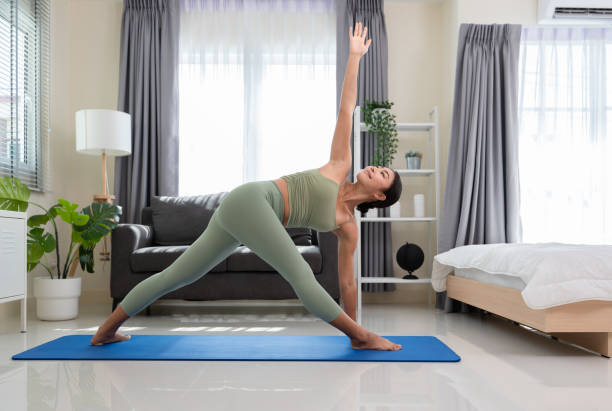
- Start in Mountain Pose (Tadasana)
Stand tall with your feet together and your arms resting by your sides. Ground yourself through your feet and take a deep breath in. Feel the connection between your body and the earth beneath you. - Step into a Wide Stance
Step your feet about 3 to 4 feet apart. Turn your right foot forward and your left foot slightly inward, ensuring your heels are aligned. This foundation provides the stability you need to twist with control. - Extend Your Arms
Raise your arms to shoulder height, parallel to the ground. Stretch through your fingertips as though reaching for balance between two worlds—strength and grace. - Hinge Forward from the Hips
As you exhale, hinge forward at your hips (not your waist) and bring your torso over your right leg. Keep your spine long and avoid rounding your back. - Twist Gently
Place your left hand on the outside of your right foot, shin, or floor (depending on your flexibility). Extend your right arm toward the sky, rotating your torso and opening your chest. Your gaze can follow your raised hand or stay downward for balance. - Engage Your Core and Breathe
Hold the pose for 3–5 deep breaths. With every inhale, lengthen your spine. With every exhale, twist a little deeper. Feel your ribs expand like the rev of a powerful engine, releasing stored tension and awakening your strength. - Return to Standing
Slowly release the twist, rise back to standing, and repeat the steps on the opposite side.
The Physical Benefits of the Revolved Triangle Pose
The Revolved Triangle Pose offers a multitude of benefits that go beyond flexibility. It strengthens the legs, tones the core, stretches the spine, and improves posture. Here’s a closer look at its impact on your body:
| Body Area | Benefits of Revolved Triangle Pose |
|---|---|
| Legs | Strengthens the hamstrings, calves, and thighs while improving stability. |
| Core | Engages the abdominal muscles for balance and support during the twist. |
| Spine | Enhances spinal mobility and helps relieve stiffness. |
| Shoulders | Opens the chest and strengthens shoulder muscles. |
| Digestive System | The twist massages internal organs, promoting detoxification and better digestion. |
| Balance | Develops focus and coordination, enhancing mental clarity. |
Practicing Revolved Triangle Pose regularly helps realign the body’s structure, correcting imbalances caused by long hours of sitting or driving. It’s a full-body reset that improves your overall physical harmony.
The Emotional and Mental Impact
What makes Revolved Triangle Pose truly special is not just its physical challenge—it’s the emotional liberation it brings. When you twist and lengthen your spine, you’re symbolically releasing emotional weight, much like opening a jammed window to let fresh air in.
Many practitioners describe a feeling of renewal after holding this pose—a clarity that extends beyond the mat. It encourages patience and resilience. When you find balance in an uncomfortable position, you learn to stay calm even when life feels off-balance.
This pose teaches that control comes not from tightening up but from learning when to let go. Just as a driver trusts the road ahead, the yogi trusts their breath to carry them through each twist.
Common Mistakes and How to Avoid Them
Even seasoned practitioners make mistakes in Revolved Triangle Pose. Here are some common errors and how you can correct them:
| Mistake | Correction |
|---|---|
| Rounding the back | Keep your spine long by hinging from your hips rather than your waist. |
| Losing balance | Press your back heel firmly into the mat for grounding. |
| Over-twisting | Focus on lengthening before twisting deeper to prevent strain. |
| Collapsing the chest | Lift through the sternum to keep the heart open. |
| Holding your breath | Breathe deeply and evenly to maintain steadiness. |
Remember, the goal is not to achieve the deepest twist but to maintain alignment and awareness.
The Connection Between Breath and Movement
Breath is the engine that drives the Revolved Triangle Pose. Each inhale expands your body, creating space, while each exhale allows you to move deeper into the twist. This rhythmic flow between breath and movement reflects the relationship between effort and ease—the balance that defines both yoga and driving.
When you breathe consciously, your movements become smoother, your mind quieter, and your body more in tune with itself. You’ll notice how each twist becomes more natural as your breath takes the lead.
Why the Pose Appeals to the Car-Loving Mind
It might seem surprising to connect yoga with cars, yet both share a deep similarity: precision, control, and fluid motion. The Revolved Triangle Pose mirrors the mechanics of a car in motion—it’s about keeping all components aligned while moving through resistance.
For those who love cars, this pose can be a reminder of what makes driving exhilarating—the balance between control and surrender, power and flow. Just as a finely tuned engine performs best when every part works in harmony, your body finds its peak performance when breath, balance, and awareness are united.
The Spiritual and Emotional Significance
In yoga, every pose tells a story. The Revolved Triangle Pose speaks of transformation and clarity. The twist represents the act of wringing out what no longer serves us—be it stress, fear, or negative energy—and replacing it with vitality and calm.
When we practice this pose, we connect the grounded nature of the legs with the expansive energy of the heart. This fusion of stability and openness mirrors the experience of driving down a quiet highway—the tires firm on the road, yet the horizon endless and inviting.
This pose also teaches surrender. As we twist, we realize that the only way to deepen the posture is to release resistance. The more you fight it, the harder it becomes. The more you let go, the easier it flows. That’s not just a yoga principle—it’s a life principle.
How Revolved Triangle Pose Awakens Inner Awareness
There’s something magical about how the Revolved Triangle Pose invites stillness in movement. When your body holds steady and your mind follows your breath, you enter a state of presence. This moment of awareness, where nothing else exists but the twist, the breath, and your heartbeat, is the very essence of mindfulness.
In that moment, you stop chasing perfection. You stop comparing. You simply are.
The pose becomes a metaphor for how we can live our lives—with awareness, grace, and balance. When faced with challenges, you remember to twist gently, breathe deeply, and keep your foundation strong.
Variations of the Revolved Triangle Pose
The beauty of yoga lies in its adaptability. Whether you’re a beginner, intermediate, or advanced practitioner, Revolved Triangle Pose offers variations for everyone. Let’s explore how you can modify the pose based on your comfort and goals.
1. Supported Variation (Using a Block)
If reaching the floor feels difficult, place a yoga block beside your front foot and rest your lower hand on it. This helps maintain alignment without straining your back or hamstrings.
2. Wall Support Variation
Practice near a wall to stabilize your balance. Press your back heel into the wall as you twist. This support can build confidence and strength.
3. Dynamic Revolved Triangle
Instead of holding the pose statically, move in and out of the twist with your breath. Inhale to lengthen your spine, exhale to revolve slightly deeper. This dynamic flow warms the body and enhances flexibility.
4. Advanced Variation (Bind)
For experienced practitioners, you can deepen the twist by binding your arms—bringing one arm behind your back and clasping the wrist or fingers. This variation opens the chest and shoulders more intensely, demanding both strength and humility.
Breathing Techniques to Deepen the Pose
Breath and movement are inseparable in yoga. The Revolved Triangle Pose becomes even more powerful when paired with conscious breathing.
- Inhale Deeply: As you lengthen your spine, feel the breath rising up from your feet to your crown.
- Exhale Gently: As you twist, allow your body to release tension and toxins with each out-breath.
- Maintain Even Rhythm: Keep your breath steady and rhythmic, like the hum of a calm engine cruising at the perfect speed.
- Avoid Breath-Holding: If you catch yourself holding your breath, ease back slightly. The goal is fluidity, not force.
With time, your breath becomes the silent teacher, guiding you through the discomfort and into serenity.
The Science Behind the Twist
Yoga’s effects are not mystical; they are rooted in physiology. The Revolved Triangle Pose stimulates key systems in your body:
| System | Effect |
|---|---|
| Digestive System | The twisting action massages the stomach, liver, and intestines, aiding digestion and detoxification. |
| Nervous System | Encourages parasympathetic activation (rest and relaxation response). |
| Musculoskeletal System | Strengthens the spine, improves flexibility, and enhances joint mobility. |
| Circulatory System | Boosts blood flow, improving oxygen delivery to muscles and organs. |
| Endocrine System | Stimulates glands in the abdomen, helping balance hormones. |
These internal effects make the Revolved Triangle Pose a holistic practice—nurturing both the body and the mind.
Aligning Body, Mind, and Motion
Practicing Revolved Triangle Pose can feel similar to driving a precision car—every small movement matters. You can’t rush the twist, just as you can’t speed through a tight turn without awareness. You must trust your intuition, feel your balance, and listen to the feedback your body provides.
As you learn to fine-tune your posture, you start noticing subtle details—the way your back heel grounds you, the way your ribs expand with breath, the way your gaze steadies your mind. This heightened awareness transfers into your daily life, making you calmer, more focused, and more present.
The body learns to move with intelligence, and the mind learns to think with patience.
The Psychological Benefits
Beyond the physical and spiritual, Revolved Triangle Pose offers a profound psychological transformation. It’s a pose that cultivates mental discipline and emotional release.
When you hold the twist, you face discomfort—tightness in your hamstrings, strain in your shoulders, or resistance in your mind. But as you breathe through it, something powerful happens. You learn that peace is not the absence of tension; it’s the ability to remain calm within it.
That realization can change how you approach life. Whether it’s a stressful day, a complex decision, or an emotional moment, the mindset cultivated through this pose reminds you that balance is always within reach.
Building a Routine with Revolved Triangle Pose
To maximize the benefits of Revolved Triangle Pose, consistency is key. Here’s how you can incorporate it into your daily yoga routine:
| Time of Practice | Recommended Approach |
|---|---|
| Morning | Practice after a brief warm-up. It energizes your day and stimulates digestion. |
| Afternoon | Combines well with standing poses for balance and focus. |
| Evening | Perform gently to release stress and detoxify after a long day. |
Pair it with complementary poses like Warrior II (Virabhadrasana II), Triangle Pose (Trikonasana), and Half Spinal Twist (Ardha Matsyendrasana) to create a complete sequence that strengthens and revitalizes your entire body.
Reflections from Within
Every time you enter the Revolved Triangle Pose, you take a symbolic journey inward. You’re reminded that the human body is not just a machine—it’s a vehicle for consciousness. Just as a car requires tuning and care, your body and mind need alignment and balance.
Through this pose, you begin to understand that flexibility is not just about touching your toes—it’s about softening your attitude. Strength is not just in your muscles—it’s in your patience. Balance is not just physical—it’s emotional and mental harmony.
There’s an unspoken joy that comes from mastering a challenging pose. Not because it looks perfect, but because it represents persistence and growth. Each practice is a step toward a calmer, clearer version of yourself.
A Car Enthusiast’s Reflection
For a car lover, the Revolved Triangle Pose might feel like that perfect corner on a smooth road—a moment where every muscle, every movement, and every breath comes together in effortless flow. Just as you listen to the hum of your car’s engine, you begin to hear the rhythm of your own breath guiding you.
That synchronization between power and peace mirrors what yoga teaches us. When everything is tuned just right—the alignment, the breath, the focus—you don’t just move; you glide.
The Journey Beyond the Mat
The Revolved Triangle Pose is more than just a physical exercise. It’s a lifestyle principle—a reminder that life is about finding stillness in motion, strength in surrender, and clarity in complexity.
When practiced with awareness, it awakens every corner of your being, from your grounded feet to your soaring spirit. It teaches patience, resilience, and self-acceptance—qualities that extend into every aspect of life, whether you’re on a yoga mat or behind the wheel.
Final Thoughts
The beauty of Revolved Triangle Pose (Parivrtta Trikonasana) lies in its simplicity and depth. It’s a twist that connects the mind and body, the external and internal, the mechanical and the emotional. It challenges you to stand tall, stay grounded, and open your heart—even when life pulls you in different directions.
Each breath you take in this pose is a promise—to move with grace, to let go of resistance, and to trust your journey. Over time, you realize that yoga is not about perfection but connection—between movement and stillness, effort and ease, mind and body.
So, the next time you step onto your mat, take a deep breath, ground your feet, and twist with intention. Let the Revolved Triangle Pose remind you that balance is not found—it’s created, breath by breath, moment by moment.