
Introduction: The First Breath of a New Beginning
Some journeys don’t start on distant roads — they start on your living room floor, with bare feet, quiet music, and the courage to take your first deep breath. If you’re searching for a way to feel calmer, stronger, and more balanced, yoga for absolute beginners at home might be exactly what your soul is calling for.
Yoga isn’t about touching your toes; it’s about what you learn on the way down. It’s not a competition or a trend. It’s an invitation — a way of connecting your mind, body, and breath in perfect harmony.
In this guide, we’ll explore everything you need to know to begin your yoga journey safely and joyfully right from home — no fancy studio, no pressure, just your authentic self learning to move with peace.
1. What Is Yoga, Really?
Yoga is thousands of years old, born from ancient India’s search for balance between the human and the divine. The Sanskrit word “yoga” means union — the union of body, mind, and spirit.
But in today’s busy world, yoga has become something beautifully simple: a way to pause. To listen. To breathe.
For beginners, yoga might feel like stretching, but as you continue, it becomes something deeper. It teaches patience, compassion, and gratitude — qualities we often forget in our rush through life.
When you practice yoga at home, you create a space where the world stops spinning for a while — and you remember what peace feels like.
2. Why Practicing Yoga at Home Is the Best Way to Start
Starting yoga in a studio can be intimidating. Everyone seems so flexible, so calm, so experienced. But at home, the pressure disappears.
You don’t need to compare yourself with anyone.
You don’t need expensive equipment.
You don’t even need perfect silence — just willingness.
Benefits of Home Practice
| Benefit | Description |
| Comfort | You move at your own pace, without judgment. |
| Flexibility | You can practice any time — morning or night. |
| Privacy | Mistakes don’t matter. No one’s watching. |
| Consistency | It’s easier to stay regular when yoga fits your lifestyle. |
| Emotional Safety | Your home becomes your peaceful temple. |
When you practice yoga at home, you create a sacred space for self-discovery — where growth feels natural, not forced.
3. Preparing Your Space and Mind
Before you roll out your mat, pause. Breathe. Feel the moment.
Creating a calm environment will help you relax and focus. You don’t need much — just:
- A quiet corner of your room
- A yoga mat or soft surface
- Comfortable clothes that let you move freely
- A bottle of water nearby
- Maybe a candle or soft music for ambiance
But more than space, you need presence. Yoga begins not on the mat but in the mind — when you decide to show up fully for yourself.
🌸 “You don’t need to be ready. You just need to begin.”
4. Simple Yoga Poses for Absolute Beginners at Home
Let’s start gently. You don’t need to force your body — yoga grows with patience, not power.
Here are 10 beginner-friendly poses to start your journey.
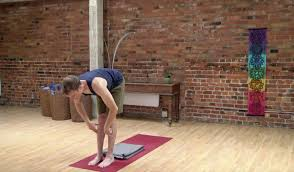
1. Mountain Pose (Tadasana)
Stand tall, feet together, shoulders relaxed. Breathe deeply and feel grounded.
This pose teaches confidence and balance — like standing strong against life’s storms.
2. Child’s Pose (Balasana)
Kneel down, fold forward, and rest your forehead on the mat.
This is yoga’s comfort pose — your safe place to rest and recharge.
3. Cat-Cow Pose (Marjaryasana-Bitilasana)
On your hands and knees, alternate between arching and rounding your back.
It’s a simple flow that awakens your spine and relieves tension.
4. Downward-Facing Dog (Adho Mukha Svanasana)
Lift your hips into an inverted V-shape.
It stretches your back, legs, and arms — and calms the mind.
5. Cobra Pose (Bhujangasana)
Lie on your stomach, press your palms down, and lift your chest.
Feel your heart open — this pose radiates strength and hope.
6. Warrior I (Virabhadrasana I)
Step one foot forward, bend your knee, and lift your arms overhead.
It teaches courage, stability, and focus.
7. Triangle Pose (Trikonasana)
Stand wide, stretch one arm to the sky, the other to your shin.
It improves balance and opens your chest.
8. Seated Forward Bend (Paschimottanasana)
Sit with legs straight and reach forward gently.
Don’t force it — this pose is about surrender, not success.
9. Bridge Pose (Setu Bandhasana)
Lie on your back, bend your knees, lift your hips.
This pose strengthens your core and lifts your spirit.
10. Corpse Pose (Savasana)
Lie flat, close your eyes, breathe slowly.
Savasana is rest — the reward your body and mind deserve.
5. Breathing: The Heart of Yoga
In yoga, breath is life — called “Pranayama.”
Most beginners forget to breathe properly during poses. But deep, mindful breathing connects every movement with awareness.
Try this simple exercise:
- Sit comfortably.
- Inhale deeply through your nose for 4 counts.
- Hold for 2 counts.
- Exhale slowly for 6 counts.
- Repeat for 5 minutes.
💫 “Your breath is the bridge between your body and your soul.”
Breath brings calm to chaos, clarity to confusion, and peace to panic.
6. Your 10-Minute Daily Yoga Routine at Home
You don’t need hours. Just 10 peaceful minutes a day can transform your mood and energy.
| Time | Pose | Duration | Benefit |
| 0–2 mins | Deep breathing | 2 mins | Calms the nervous system |
| 2–3 mins | Cat-Cow Pose | 1 min | Warms up spine |
| 3–5 mins | Downward Dog | 2 mins | Stretches body |
| 5–7 mins | Warrior I | 2 mins | Builds focus |
| 7–9 mins | Child’s Pose | 2 mins | Relaxes back |
| 9–10 mins | Savasana | 1 min | Full-body relaxation |
Do this every morning or evening — and feel your body grow lighter and your mind clearer with each session.
7. Emotional and Mental Benefits of Yoga
Yoga is not just a physical workout. It’s emotional therapy.
- It helps reduce anxiety and overthinking.
- It builds self-acceptance and confidence.
- It teaches you patience and inner calm.
When you move with your breath, your worries soften.
When you hold a pose, you build not only muscle — but peace.
“Yoga is not about escaping life. It’s about embracing it fully — one breath at a time.”
8. Common Mistakes Beginners Make
Even the most experienced yogis started somewhere. Here’s what to avoid:
- Forcing flexibility – Yoga is not gymnastics.
- Skipping breath – Without breathing, yoga becomes just movement.
- Comparing yourself – Every body is unique.
- Practicing too long – Start short, grow slowly.
- Expecting perfection – Yoga is progress, not perfection.
Be gentle with yourself — you’re learning something beautiful.
9. Tracking Your Progress
Progress in yoga isn’t measured by how far you bend — it’s how calm you feel afterward.
Keep a small yoga journal. Write how your body feels, what thoughts arise, what emotions soften.
When you look back after a month, you’ll notice how your body, mind, and spirit have evolved — not through pressure, but through peace.
10. The Power of Consistency
Even 10 minutes of yoga every day will make a difference.
You’ll start sleeping better.
You’ll handle stress with more grace.
You’ll breathe more deeply — in yoga, and in life.
🌻 “Tiny daily habits build enormous strength.
11. Free Resources to Learn Yoga at Home
If you want to learn visually, try:
- Yoga with Adriene (YouTube) – Perfect for absolute beginners.
- Daily Yoga App – Guided programs for short sessions.
- DoYogaWithMe.com – Free video classes for all levels.
Combine these resources with this guide, and you’ll never feel lost on your journey.
12. Frequently Asked Questions
Q1. Can I do yoga if I’m not flexible?
Absolutely! Yoga creates flexibility — you don’t need it to begin.
Q2. How often should I practice yoga?
Even 10–15 minutes daily is enough. Consistency matters more than duration.
Q3. Do I need special clothes or a mat?
No. Comfortable clothes and any soft surface work fine to start.
Q4. What’s the best time to practice yoga?
Early morning or before bedtime — when your mind is quiet.
Conclusion: Begin Where You Are
If your heart is whispering that it’s time for change, listen.
You don’t need to be strong, flexible, or spiritual to start yoga. You just need to breathe and begin — right where you are.
Remember, yoga is not about becoming someone else. It’s about remembering who you already are — calm, complete, and full of light.
So today, roll out that mat, take a deep breath, and start your journey with yoga for absolute beginners at home.
Your body will thank you.
Your mind will soften.
And your soul — it will finally feel at home.